Episode Details
Back to Episodes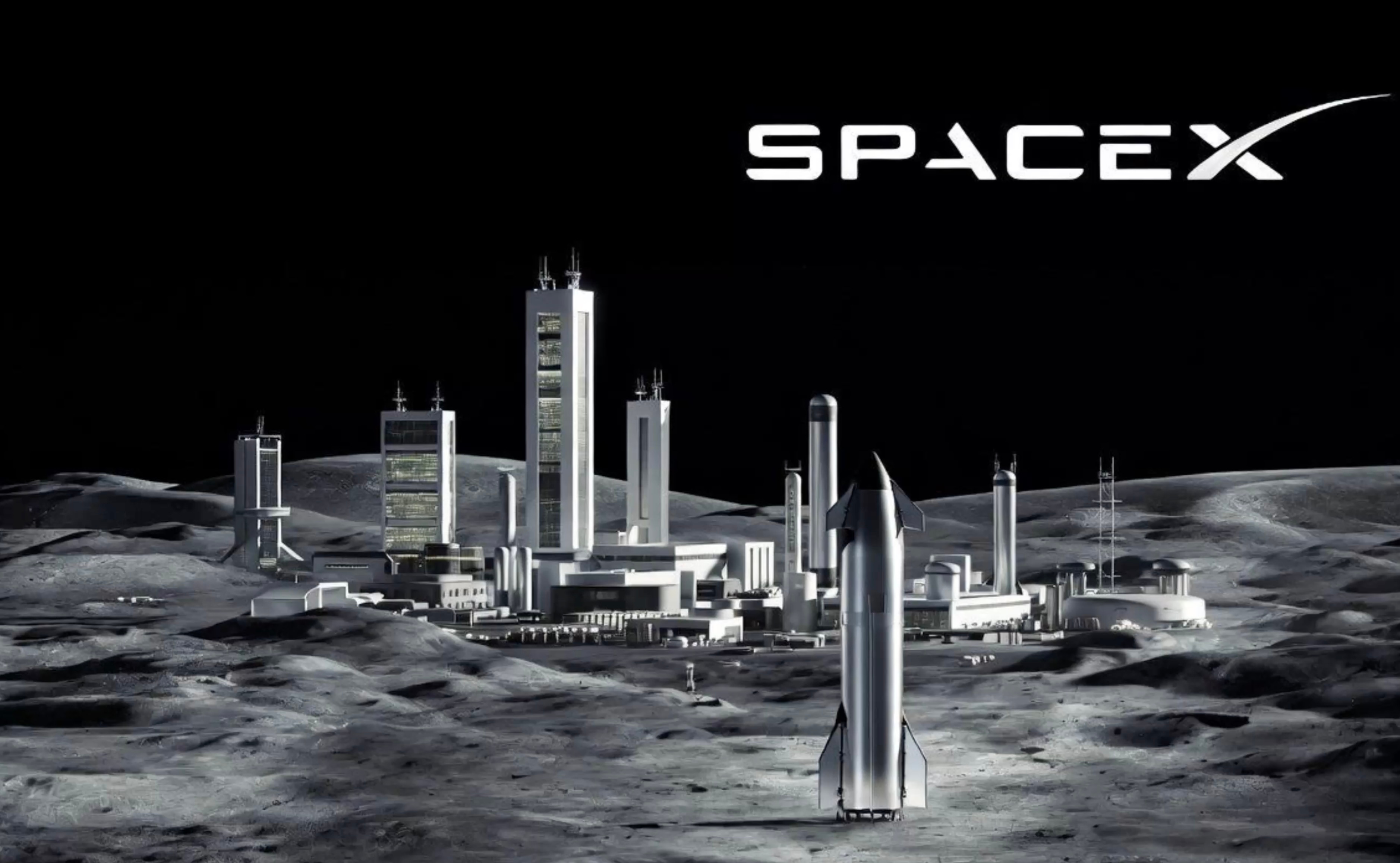
SpaceX Lunar City
Description
Prepared by The Innovation Attorney | March 2026
A. Executive Summary
On February 8 and 9, 2026, SpaceX chief executive Elon Musk announced that the company was formally redirecting its long-term settlement ambitions away from Mars and toward the Moon. The stated goal is a self-sustaining, self-growing lunar city to be operational within ten years, at an estimated capital cost of between $100 billion and $500 billion. The strategic rationale is rooted in logistics: the Moon offers a 10-day resupply cycle versus the 26-month synodic window for Mars, enabling an iteration rate that is roughly 13 times faster. That compounding advantage, combined with confirmed water ice deposits at the lunar south pole sufficient to produce both propellant and life support consumables in situ, transforms the Moon from a destination into a platform for proving and scaling the entire commercial space supply chain.
The engineering path runs through Starship, SpaceX’s fully reusable heavy-lift vehicle. Each lunar cargo mission currently requires 10 to 15 tanker flights in low Earth orbit to load 1,200 tons of liquid methane and liquid oxygen before the ship departs for the Moon. Starship Version 3 delivers 100 metric tons to the lunar surface per flight; Version 4, targeted for 2027, is designed to raise that figure to 200 metric tons while cutting required tanker flights to 5 or 6. The first 20 to 30 missions are planned as uncrewed cargo runs, establishing solar power arrays, nuclear fission backup power, in situ resource utilization (ISRU) equipment, and pressurized habitat modules. Each landed Starship vehicle, standing 50 meters tall and enclosing 1,100 cubic meters of pressurized volume, is intended to remain on the surface as permanent infrastructure.
The commercial economics hinge on a single transformation: once ISRU propellant production reaches operational scale, the tanker requirement per mission drops from approximately 15 to approximately 4. Every ton of oxygen and hydrogen produced on the Moon frees one ton of Earth-launched payload capacity for construction hardware, food systems, and mining equipment. The base then begins to finance its own expansion through compounding logistics savings. SpaceX, currently valued at approximately one trillion dollars, is betting that proving this supply chain at the Moon will build the operational playbook and investor confidence required for the longer and riskier Mars program.
B. Detailed Findings
B.1 Site Selection and Resource Geography
SpaceX has identified the rims and floors of south polar craters, principally Shackleton and Cabeus, as the primary construction zones. The engineering logic is threefold. First, NASA scientists estimate that 600 million metric tons of water ice are deposited in permanently shadowed crater floors under approximately 40 centimeters of dry regolith, providing the feedstock for oxygen, drinking water, radiation shielding mass, and 78 percent of the propellant mass for methalox rockets. Second, crater rim elevations receive near-continuous solar illumination for most of the lunar year, making them the most viable sites for photovoltaic power generation on a world where equatorial locations experience 14-day night cycles with temperatures dropping to minus 173 degrees Celsius. Third, constructing at the pole minimizes thermal cycling stress on materials and structures compared to equatorial sites where surface temperatures swing by 400 degrees Celsius between day and night.
The Intuitive Machines IM-2 mission, launched in early 2025, carried a suite of instruments including a NASA drill payload designed to prospect for water ice at Malapert Massif near the south pole. Results from that mission and the concurrent Lunar Trailblazer water-mapping orbiter are expected to sharpen the resource map SpaceX will use for ISRU site selection.
B.2 Starship Vehicle Architecture and Payload Capacity
Starship is