Episode Details
Back to Episodes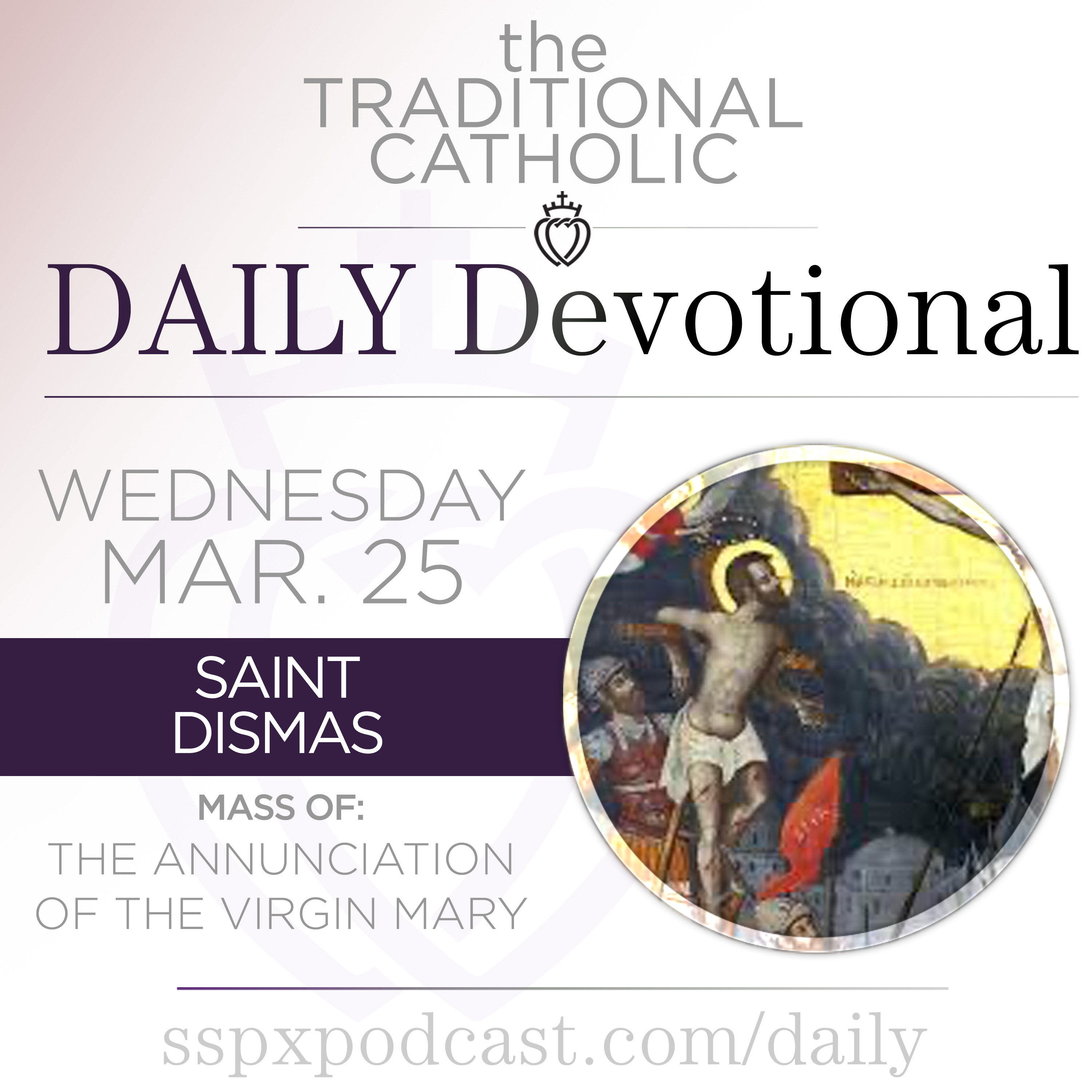
Mar 25 – Annunciation of BVM / S Dismas
Description
Sources Used Today:
- "Contradictions and Oppositions" — Toward Easter
- "The Synod Denounces Systemic ‘Machismo’ in the Church" (FSSPX.news)
- "Fiat Lux: From Creation to Christ" (SSPX Sermons)
- The Spiritual Life — Archbishop Marcel Lefebvre (Angelus Press)
Saint Dismas is known to us simply as the “good thief,” yet in the final moments of his life he became a powerful witness to mercy, repentance, and hope. The Gospel of Saint Luke places him beside Christ on Calvary, crucified for his crimes. Tradition has given him the name Dismas, but Scripture preserves something far more important: his words.
As he hung dying, Dismas first rebuked the other thief who mocked Our Lord. In that moment, he made a profound confession. He acknowledged his own guilt, admitting that he deserved his punishment, while recognizing the innocence of Christ. Then, turning to Jesus, he uttered a simple but extraordinary prayer: “Lord, remember me when Thou comest into Thy kingdom.” It is an act of faith made in darkness, when all outward signs seemed to deny that Christ was a king.
Christ’s response reveals the depth of divine mercy: “This day thou shalt be with Me in paradise.” With these words, Dismas becomes the first saint of the New Covenant, the first to enter heaven through the saving power of the Cross. He had no time for long penances or public works. His life had been marked by sin, yet in a single moment of grace, humility, and trust, he turned fully to Christ.
The Church sees in Saint Dismas a powerful sign of hope for all sinners. His conversion shows that no life is beyond redemption, and that even at the final hour, the door of mercy remains open. At the same time, his example calls for honesty and repentance. He does not excuse his sins or shift blame, but accepts responsibility and turns toward God with sincerity.
Devotion to Saint Dismas has often been connected to those seeking conversion, especially those who feel far from God or burdened by past sins. He is invoked by prisoners, the dying, and all who desire a final perseverance in grace. His feast is traditionally observed on March 25, a date that also recalls the Annunciation, linking the beginning of Christ’s earthly life with the