Episode Details
Back to Episodes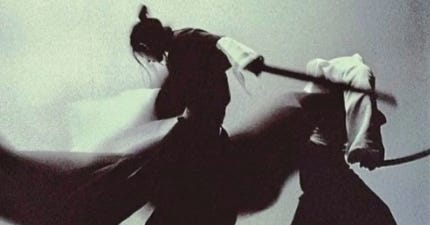
Conflict as Mutation
Description
NOTE: I wrote part of this text as small posts that I shared in FOTT community, but I thought that it’s a universal thought process that I want to share with you as outer and inner conflict are one and the same. These days, I don’t feel like sharing that much. I’ve been in very slow-internal processes of decoding a bunch of projections that I didn’t know were my shadows hence decoupling from them has been extremely liberating. So when I saw the light, it was poof, like the brain emoji exploding 🤯 in slow-motion.
It could be something as visceral as the terrible, impregnating smell coming out of my windows that mixes stench with vices and that I can’t control, or any other outside triggers that turn me off my line of equilibrium. Smell, like noise, has no boundaries. It is my biggest challenge, as I am learning to integrate this through somatic awareness to stop blaming myself and carrying the weight for the ways I previously failed to notice red flags or care for my own needs first. Thus, the article that I wanted to put out about digital privacy is still in the draft box and will be posted in due time. Instead I decided to share the text below.
Conflict as Mutation
I’ve written about conflict (read hexagram 6 below) before from a Taoist cosmology slash Human Design perspective.
Here I’m bringing a different angle.
Heraclitus, who was a pre-Socratic philosopher, understood reality as constant flux. And Borges, the great Argentinian writer, used the metaphor of this flux in the river and time, where everything exists through continuous change. Heraclitus saw tension, or Polemos (πόλεμος), as the force that keeps the whole thing from falling apart, generating some sense of order, because the bow and the lyre depend on opposing forces held together.
I’m also bringing forward Gurdjieff, whose ideas I have made more operational and applied when I read financial charts, and, funny enough, I can reflect my nervous system through them. He speaks about intervals or shocks inside any process. He describes how any flat line that doesn’t have tension tends to lead to entropy.
When a movement begins, it follows the line and then it deviates. Without an additional impulse at that point, the process weakens or changes direction. With the right shock, it continues and transforms. That’s why we have transits in astrology with hard angles, like squares and oppositions, which are great opportunities to evolve.
A wave carries a frequency, yet it only becomes readable to variation, through points where the movement hits a wall, shaping the pattern and allowing the flow.
Conflict is that point of tension. It is the place where continuity alone turns into a flat line.
Through resistance and tension, the new can emerge. When I read financial charts, I’m always looking for those points of resistance, either where the price reaches a top or where it reaches a bottom or support. These are points of resonance, this is how I have learned to read anything that has a wavelength, whether financial charts, astrological charts, or my emotional body through my nervous system.
So I bring on the conflict for the sake of evolution, for the sake of mutation. The flow leads to deviation, to tension, to intervention, and to the emergence of a new alignment. That alignment will meet a different frequency and will resonate as something new.
Connecting back to Borges and Ars Poetica that I used in one of my artwork site-interventions back in the year 2000 and it’s here below. He writes in it that the river flows, yet it forms, and it is never uniform.
The identity of this river emerges through these variations, and it is the observer who meets these points as they read them and tries to find their own projection.
Conflict in a sense is when the pattern of tension triggers the opportunity to resurface, giving the human a place to evolve.
<