Episode Details
Back to Episodes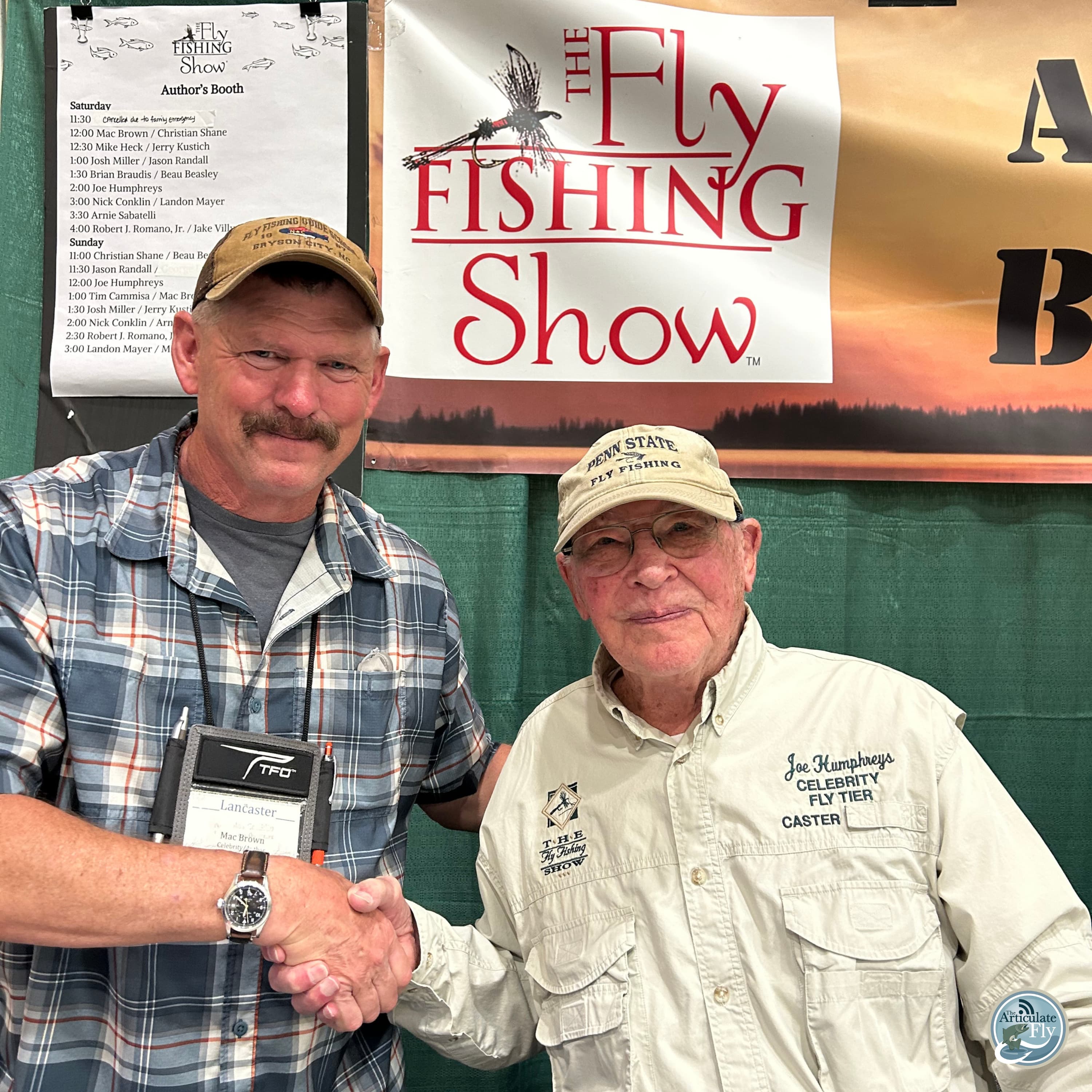
The Learning Curve: Mac Brown on Effective Teaching Methods
Description
Episode Overview
In this Casting Angles episode of The Articulate Fly fly fishing podcast, host Marvin Cash and Master Casting Instructor Mac Brown close out the fly fishing show season with a candid debrief on what happens after students leave the classroom. Recorded immediately after both Marvin and Mac wrapped up their teaching schedules at the Lancaster Fly Fishing Show — the final show of the year — the conversation digs into one of the most practical and underexplored questions in fly fishing education: how do you structure a class so students can actually keep improving on their own once they leave? Mac Brown, owner of Mac Brown Fly Fish in Bryson City, North Carolina, and a Master Casting Instructor through Fly Fishers International, draws on decades of coaching experience and current sports physiology research to frame the core tension between teaching to immediate performance versus teaching for long-term self-correction. The episode explores how video on smartphones has transformed what's possible in a single class session, why saturation happens faster than most instructors expect during hands-on practice, and how foundational mechanics — particularly the elbow drop and correct arm path — give students a reliable framework to diagnose and fix their own casting long after the lesson ends. Mac also previews his spring guide school season starting in late March in Bryson City, making this a timely listen for anyone considering casting instruction before the season ramps up.
Key Takeaways
- How to structure a casting class so students leave with both foundational understanding and the self-correction tools to keep improving independently.
- Why teaching entirely to immediate performance — without covering the underlying mechanics — leaves students unable to troubleshoot when their casting breaks down.
- How using smartphone video during a lesson gives students a concrete reference point so they know exactly what to look for when they practice at home.
- Why 15 to 20 minute practice sessions, repeated several times a week, produce better results than long, unfocused practice blocks that lead to early saturation.
- How the elbow drop and correct arm path mechanics — grounded in 160-plus years of casting science — deliver a measurable, immediately felt difference in loop speed and efficiency that converts skeptical students on the spot.
Techniques & Gear Covered
This episode is focused entirely on casting instruction methodology rather than on-water tactics, so there are no fly patterns or gear brands discussed. The core technical concept Mac returns to throughout the conversation is the relationship between arm path and loop quality: when casters move the rod hand horizontally straight forward — essentially throwing like a shot put — they generate far less line speed than when the elbow drops and the rod tip travels on a proper path. Mac uses a practical field demonstration to make this concrete, counting out a slow, soft cast aloud (1001-1002-1003-1004) and contrasting it with the sub-half-second delivery produced by the elbow drop, then asking students which loop they'd want in a 30-knot Belize or Montana wind. Beyond the mechanics, Marvin and Mac discuss a drill-based curriculum structure — roughly six drills covering power, pa