Episode Details
Back to Episodes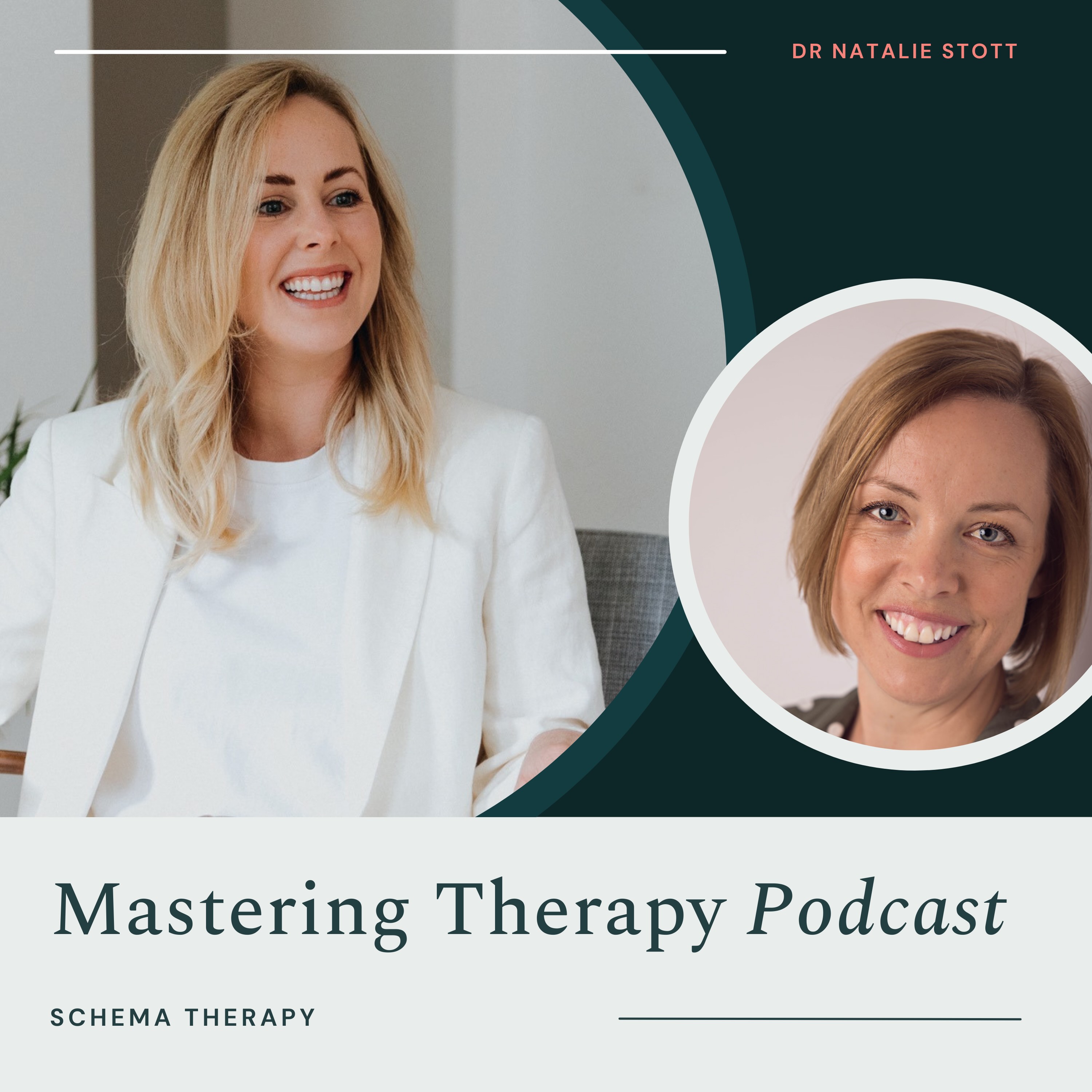
S4E6: The Power of Empathic Confrontation and Mode Mapping: Schema Therapy | Dr Jo White
Description
S4E6: The Power of Empathic Confrontation and Mode Mapping: Schema Therapy | Dr Jo White
Ever had a client say, “I know it’s not logical, but I just feel… defective”?
This episode of Mastering Therapy unpacks schema therapy with ISST-certified schema therapist and supervisor Dr Jo White. Hosts Dr Natalie Stott and Jo tackle the origins of schema therapy, why Jeff Young developed it when CBT wasn’t cutting the mustard, and what exactly a “schema” is. Expect practical metaphors, mode maps, and hear how limited reparenting can shift entrenched patterns. From how schemas form in childhood, to the therapist’s role with healthy adult mode, this episode is full of clinical pearls for anyone curious about alternative models or thinking beyond core beliefs. There’s even a nod to chairwork, imagery rescripting, and handling those confrontational moments in therapy.
TIMESTAMPS
• 00:00 What is schema therapy and why did it emerge?
• 04:22 How to explain a schema to clients (metaphors that actually work)
• 09:48 Introducing “modes”—and why behaviours matter
• 17:58 Limited reparenting: what it is and how boundaries play a role
• 21:59 Empathic confrontation: cold tap, hot tap, and getting the balance right
• 28:29 Schema therapy in brief: is short-term work possible?
• 31:15 Mapping out modes and schemas with clients
• 33:53 Experiential techniques: chairwork, imagery, and mode mapping
• 40:11 Therapist schemas and supervision: you’re in it too
• 45:39 Training routes and schema therapy resources
KEY TAKEAWAYS
• Use “schema glasses” as a client-friendly metaphor—schemas filter every situation.
• Limited reparenting is in-session modelling of healthy adult responses; boundaries are key.
• Modes describe how schemas play out: learn to identify vulnerable child, coping, critic and healthy modes.
• Empathic confrontation helps clients change entrenched patterns—adjust the “hot and cold” for effectiveness.
• Always map modes and schemas collaboratively—help clients spot their emotional triggers and bodily responses.
• Imagery rescripting can reduce schema sensitivity; the therapist actively steps in to rewrite old memories.
• Long-term schema therapy is ideal, but elements can be adapted for briefer interventions (with caution).
Guest Information: Dr Jo White
ISST-certified schema therapist, trainer, and supervisor. Experienced in integrating schema therapy into clinical practice and supervision. Clear, practical approach to teaching therapists.
Website: https://www.schematherapyworks.co.uk/dr-jo-white
Resources mentioned:
** Check out Mastering Therapy’s Youtube Channel for all podcast episodes **
For notification on up coming episodes and for occasional summaries of tools discussed on the podcast sign up here: www.masteringtherapy.com
To recommend a topic you’d like to hear about, or if you’d like to appear on the podcast please get in touch at www.masteringtherapy.com/guest
For private psychology services and therapy visit www.drnataliest