Episode Details
Back to Episodes
Website Rebuilds, AI Tools, and UX in 2026
Description
This month, Paul and Marcus get into a tool that has made Paul cancel his Figma subscription, walk through how Paul has completely changed the way he approaches website rebuilds thanks to AI, and round things off with the latest thinking from Nielsen Norman Group on where UX is heading in 2026.
App of the Week: figr.design
Paul has been road-testing AI design tools as part of a workshop he ran on AI and UI, and after going through dozens of them, one stood out: figr.design.
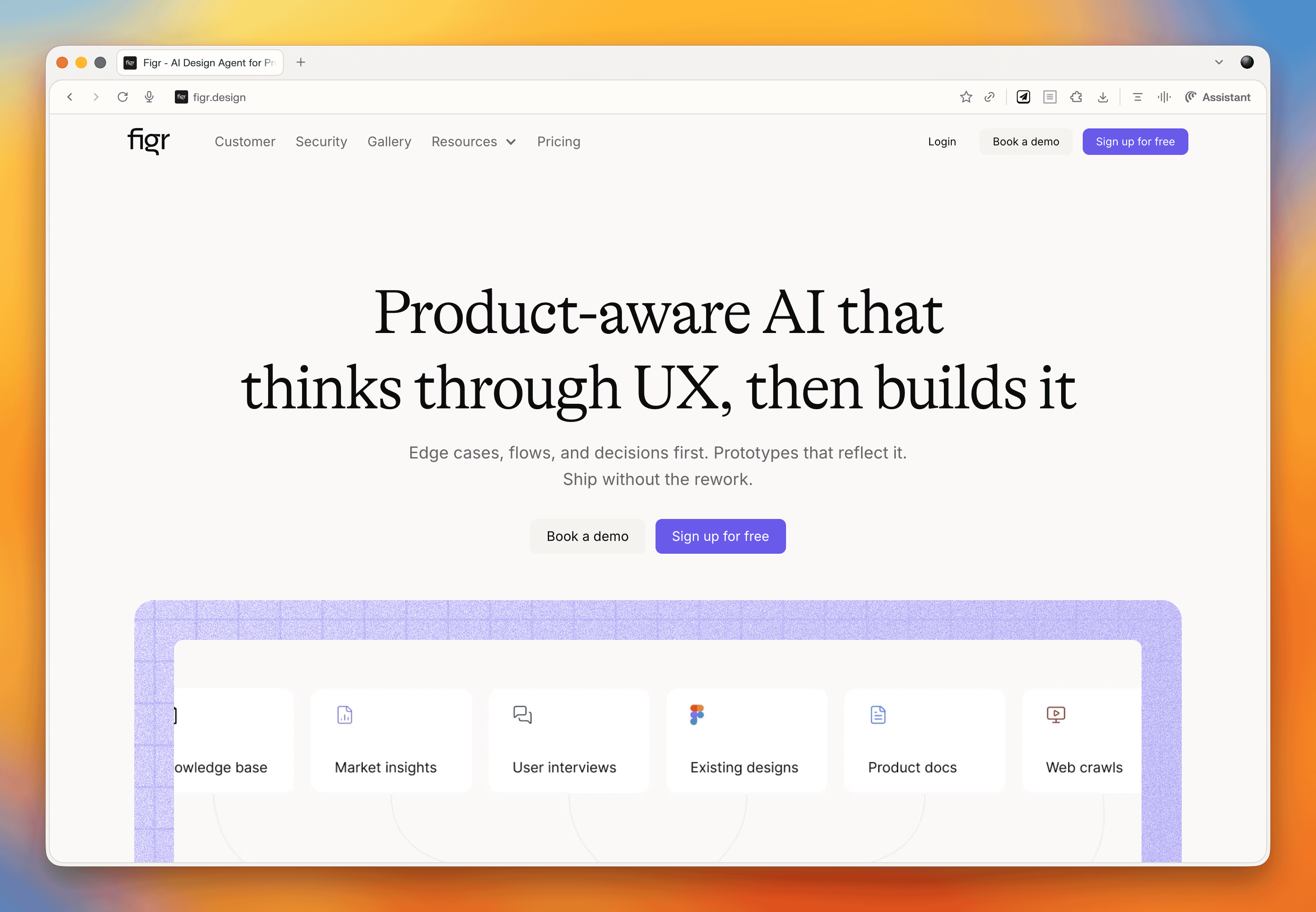
What makes it work where others fall short? A few things. It lets you feed in a significant amount of context upfront, things like style guides, design systems, and personas, which means the output is far more tailored than the generic average you often get from AI design tools. Iteration is also genuinely fast. You can queue up a whole list of changes and it processes them all in one go, rather than making you wait between each tweak.
The prototypes it produces are more realistic than what you would typically get out of Figma. Text fields you can actually type in, accordion states that open and close, button states, fully responsive layouts. Not exactly revolutionary in theory, but refreshingly functional in practice. Export to Figma is available when you need it.
The main limitation is that you cannot manually adjust elements yourself. Everything goes through the conversational interface. Paul has also been looking at a tool called Inspector, which runs locally and connects to the Claude API so you pay as you go rather than a flat monthly token allocation. It has been a bit fiddly to set up but worth keeping an eye on.
For anyone regularly using Figma for wireframing and prototyping, it is worth giving figr.design a proper look. The shift Paul describes, from hunching over Figma to leaning back and having a conversation with the tool, is a fairly good summary of where this kind of work is heading.
Rebuilding a Website in 2026
Paul has fundamentally changed how he approaches website rebuilds, and the shift is largely down to AI making a genuinely hard problem, getting good content onto a website, a lot easier.
The old problem
Website rebuilds have traditionally meant migrating existing content into a new design. Which sounds fine until you remember that most of that content was written by subject matter experts who know their field but have never thought about writing for the web.
The result is pages that lecture rather than help, that bury the things users actually want to know, and that rarely arrive on time, because the content phase is almost always where projects stall.
Why things are different now
AI has changed three things meaningfully.
- First, generating content is no longer the enormous manual effort it used to be.
- Second, doing the research that informs good content, finding out what users actually ask, worry about, and need, is much simpler with tools like Perplexity.
- Third, AI-powered search engines are pushing toward a more question-oriented approach to content anyway, which makes getting this right more important than it used to be.
How Paul works now
Here is the process Paul walks through for a rebuild project.
1. Online research
Using Perplexity, Paul researches the audience. For a well-known client, he'll ask specifically about them. For a smaller or niche client, he looks at the sector. He is looking for the questions people are asking, the tasks they are trying to complete, their objections, goals, and pain points