Episode Details
Back to Episodes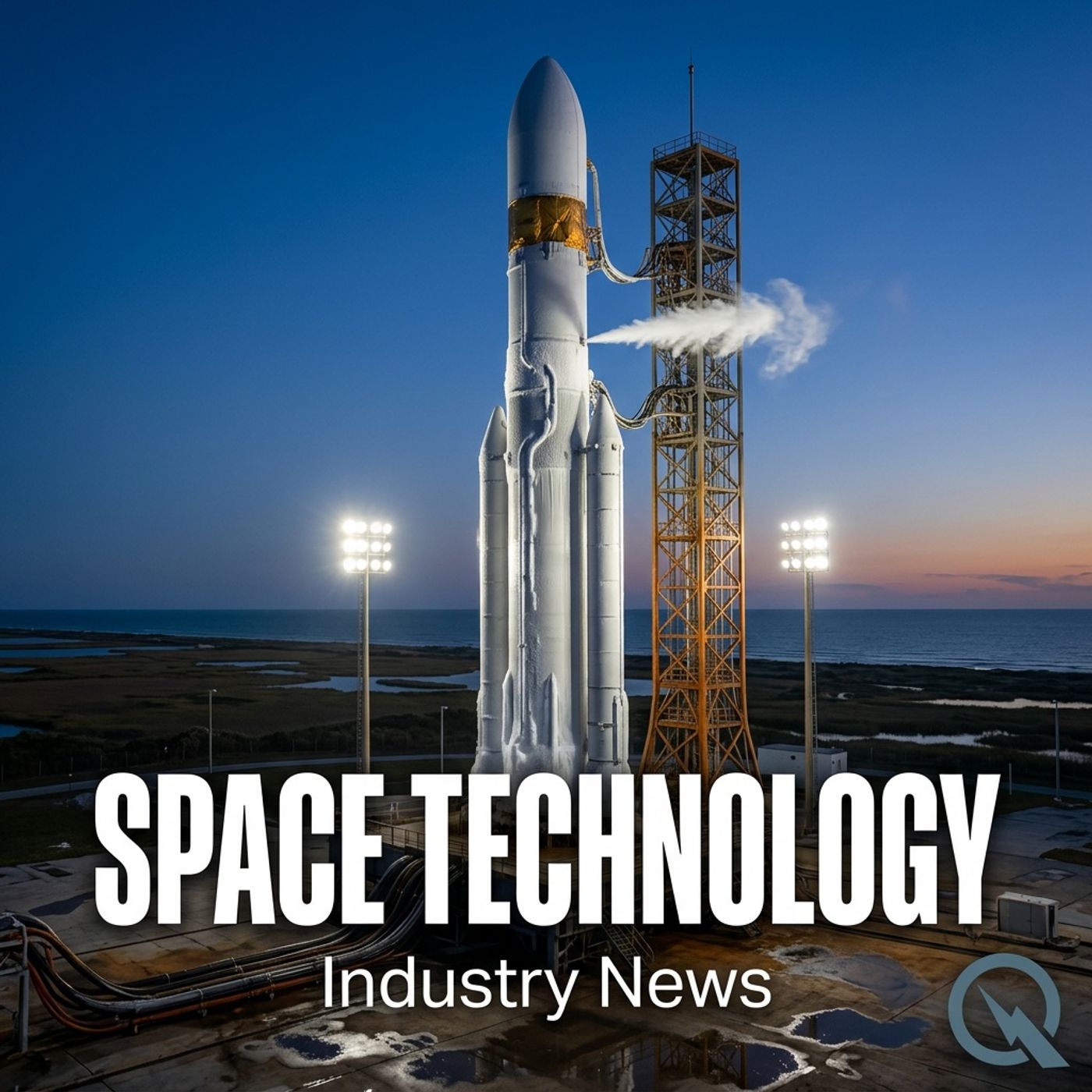
Space Tech Boom: SpaceX Starlink Launch, Defense Satellites, and NVIDIA's Latest Innovations
Published 1 month, 1 week ago
Description
SPACE TECHNOLOGY INDUSTRY ANALYSIS: MARCH 15-17, 2026
The space technology sector experienced significant momentum over the past 48 hours, marked by major mission launches, strategic consolidations, and advancing capabilities across multiple segments.
SpaceX successfully launched its Starlink Group 17-24 mission on March 16, 2026, at 10:16 PM Pacific Time from Vandenberg Space Force Base in California. The Falcon 9 rocket deployed 25 next-generation Starlink v2 Mini satellites to low-Earth orbit, continuing the company's expansion of global high-speed internet coverage. This mission marked the 14th flight for booster B1088, demonstrating improved rocket reusability economics. The successful deployment underscores the ongoing competitive pressure in satellite constellation development and commercial space infrastructure.
In a significant consolidation move, Trident Solutions acquired Ibeos to strengthen its position in space electronics. This strategic combination brings together expertise in space-qualified power management, flight computers, and high-density battery technology with Trident's leadership in on-orbit data processing. The integrated platform addresses growing demand for complex space mission solutions, particularly supporting national security initiatives and proliferated satellite architectures. Trident CEO Lorin Hattrup emphasized the company's enhanced ability to deliver adaptable, scalable solutions for increasingly autonomous space operations.
The defense sector saw notable activity with Redwire Corporation winning a prime contract from Belgian Defence to build MATTEO, Belgium's first national security satellite. This in-country development program signals strengthening European defense industrial capabilities and reflects growing geopolitical awareness regarding space domain independence.
Meanwhile, connectivity partnerships expanded as ALL.SPACE entered a strategic partnership with Viasat, integrating the ALL.SPACE Hydra terminal with Viasat Global Xpress services. This collaboration demonstrates consolidation trends in satellite communications infrastructure.
Technology advancement continued at NVIDIA's GTC 2026 keynote on March 16, where Jensen Huang unveiled next-generation computing platforms including advanced CPU designs optimized for space applications, sixth-generation NVLink systems, and revolutionary co-packaged optics technology developed with TSMC.
Market observers identified Boeing, GE Aerospace, and Rocket Lab as key stocks to watch, reflecting investor interest across the manufacturing, launch, and on-orbit services segments. The industry continues experiencing robust growth driven by satellite constellation proliferation and increasing demand for sophisticated on-board data processing, though investors face exposure to capital-intensive development timelines and geopolitical risks.
For great deals today, check out https://amzn.to/44ci4hQ
This content was created in partnership and with the help of Artificial Intelligence AI
The space technology sector experienced significant momentum over the past 48 hours, marked by major mission launches, strategic consolidations, and advancing capabilities across multiple segments.
SpaceX successfully launched its Starlink Group 17-24 mission on March 16, 2026, at 10:16 PM Pacific Time from Vandenberg Space Force Base in California. The Falcon 9 rocket deployed 25 next-generation Starlink v2 Mini satellites to low-Earth orbit, continuing the company's expansion of global high-speed internet coverage. This mission marked the 14th flight for booster B1088, demonstrating improved rocket reusability economics. The successful deployment underscores the ongoing competitive pressure in satellite constellation development and commercial space infrastructure.
In a significant consolidation move, Trident Solutions acquired Ibeos to strengthen its position in space electronics. This strategic combination brings together expertise in space-qualified power management, flight computers, and high-density battery technology with Trident's leadership in on-orbit data processing. The integrated platform addresses growing demand for complex space mission solutions, particularly supporting national security initiatives and proliferated satellite architectures. Trident CEO Lorin Hattrup emphasized the company's enhanced ability to deliver adaptable, scalable solutions for increasingly autonomous space operations.
The defense sector saw notable activity with Redwire Corporation winning a prime contract from Belgian Defence to build MATTEO, Belgium's first national security satellite. This in-country development program signals strengthening European defense industrial capabilities and reflects growing geopolitical awareness regarding space domain independence.
Meanwhile, connectivity partnerships expanded as ALL.SPACE entered a strategic partnership with Viasat, integrating the ALL.SPACE Hydra terminal with Viasat Global Xpress services. This collaboration demonstrates consolidation trends in satellite communications infrastructure.
Technology advancement continued at NVIDIA's GTC 2026 keynote on March 16, where Jensen Huang unveiled next-generation computing platforms including advanced CPU designs optimized for space applications, sixth-generation NVLink systems, and revolutionary co-packaged optics technology developed with TSMC.
Market observers identified Boeing, GE Aerospace, and Rocket Lab as key stocks to watch, reflecting investor interest across the manufacturing, launch, and on-orbit services segments. The industry continues experiencing robust growth driven by satellite constellation proliferation and increasing demand for sophisticated on-board data processing, though investors face exposure to capital-intensive development timelines and geopolitical risks.
For great deals today, check out https://amzn.to/44ci4hQ
This content was created in partnership and with the help of Artificial Intelligence AI