Episode Details
Back to Episodes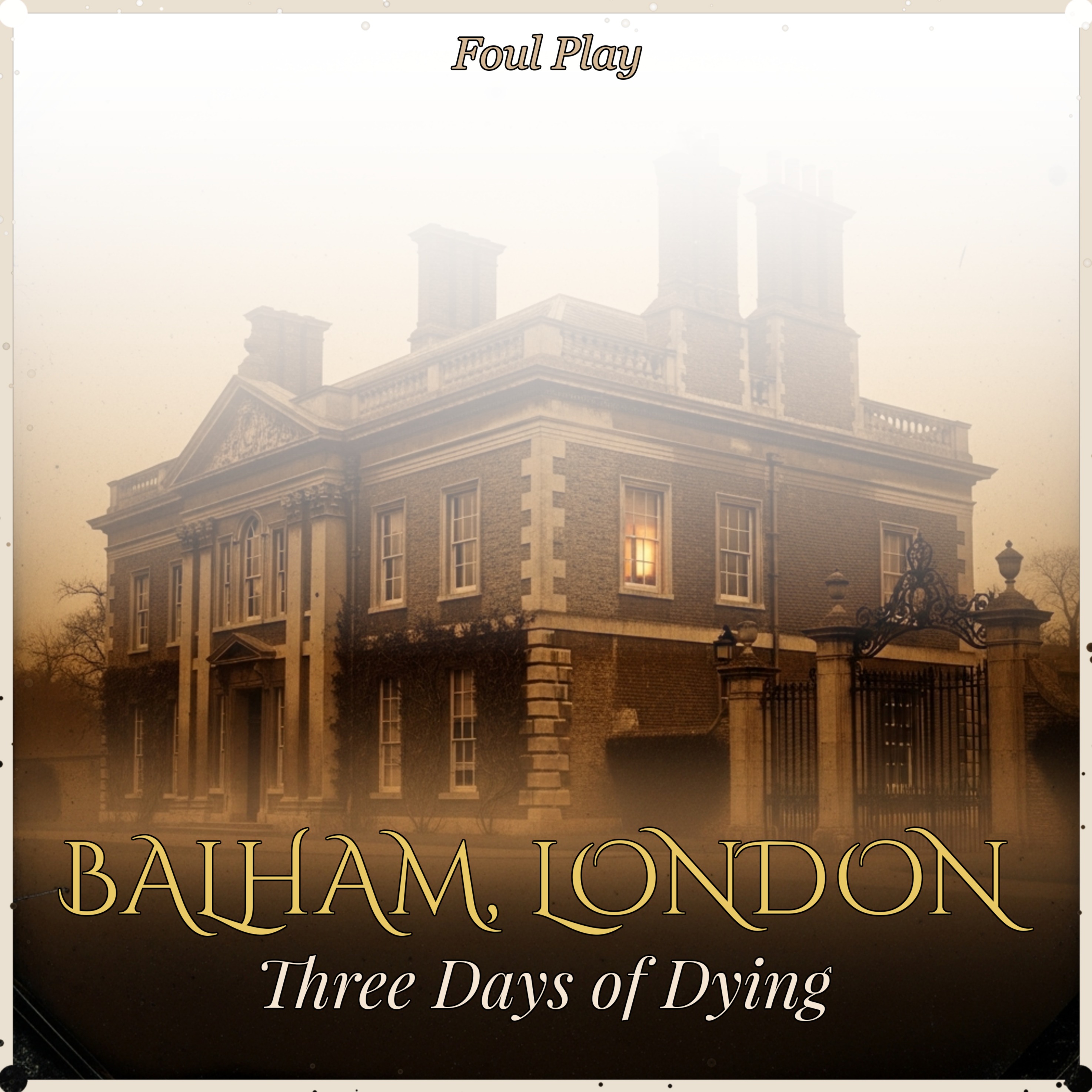
S39E03 - Three Days of Dying
Description
Content Warning
This episode contains detailed descriptions of poisoning and prolonged death. Support resources are listed at the end of these notes.
This Episode
Season 39: The Balham Mystery. For seventy-two hours, Charles Bravo lay dying at The Priory while doctors—including Queen Victoria's own physician—watched helplessly. He suffered. He convulsed. He said almost nothing about who poisoned him.
One woman claims she heard a confession. No one else heard a word. Was it truth, or a convenient lie to make murder look like suicide?
The Victim
Charles Bravo had three days to name his killer—and chose silence.
From April 18th to April 21st, 1876, the thirty-year-old barrister endured unimaginable suffering at The Priory in Balham. The antimony that had entered his system through his bedside water destroyed him methodically—causing relentless vomiting, organ failure, and slow collapse.
Throughout his ordeal, Charles remained lucid for extended periods. He could speak. He could understand questions. Yet when doctors pressed him about what he had taken, he mentioned only rubbing laudanum on his gums for a toothache. When they begged him to name anyone who might have harmed him, he said nothing useful.
The Crime
The parade of physicians began within hours of Charles's collapse. Dr. Joseph Moore arrived first, administering mustard water to induce vomiting—standard treatment for suspected poisoning. By morning, Charles's condition had deteriorated so drastically that Florence summoned reinforcements.
Dr. George Harrison came from London. Dr. Royes Bell, a specialist in internal medicine, examined the patient. None could identify the poison or stop its progress. Charles vomited until nothing remained. His body rejected water, medicine, even champagne.
On April 20th, Sir William Gull arrived—the physician to Queen Victoria herself. His verdict was grim: Charles was beyond saving. Whatever poison he had ingested, the damage was irreversible.
The Investigation
The alleged confession came from Jane Cannon Cox, Florence's companion. According to Mrs. Cox, Charles turned to her in the sickroom and whispered: "I took poison. Don't tell Florence."
Five words that could explain everything—or nothing at all.
But the housemaid Mary Ann Keeber was present in that room for much of the ordeal. She heard no such statement. The doctors who questioned Charles directly received no confession. Only Mrs. Cox, alone and uncorroborated, claimed to hear Charles take responsibility for his own death.
Sir William Gull made his own attempt. "Did you take anything to cause this illness?" he asked. Charles reportedly answered: "I took nothing intentionally."
Nothing intentionally. The words of a man who did not know how poison entered his body? Or a man protecting someone else?
Historical Context
Our Sponsors:
* Check out BetterHelp: https://www.betterhelp.com
* Check out Kensington Publishing: https://www.kensingtonbooks.com
Support this podcast at — https://redcircle.com/foulplay/donations
Advertising Inquiries: https://redcircle.com/brands
Privacy & Opt-Out: https://redcircle.com/privacy