Episode Details
Back to EpisodesTransylvanian Vampires
Description
Transylvania’s vampire lore inspired the setting of Bram Stoker’s Dracula, if not the character of the Count, and encompasses not only undead monsters, but living beings akin to witches. (The show is introduced with an audio snippet from Maria Tănase, premiere interpreter of Romanian folk song.)
Mrs. Karswell begins the show, reading a passage Stoker wrote for Jonathan’s Harker’s Transylvania travel journal kand its source in an 1855 essay by Emily Gerard, “Transylvania Superstitions.” Originally from Scotland, Gerard developing an interest in the local folklore while living abroad and expand her essay in the 1888 book, The Land Beyond the Forest. She seems to have derived a fair amount of her vampire lore from a German scholar, Wilhelm von Schmidt, who in 1865 article contributed an article on the subject to the Austrian Review.
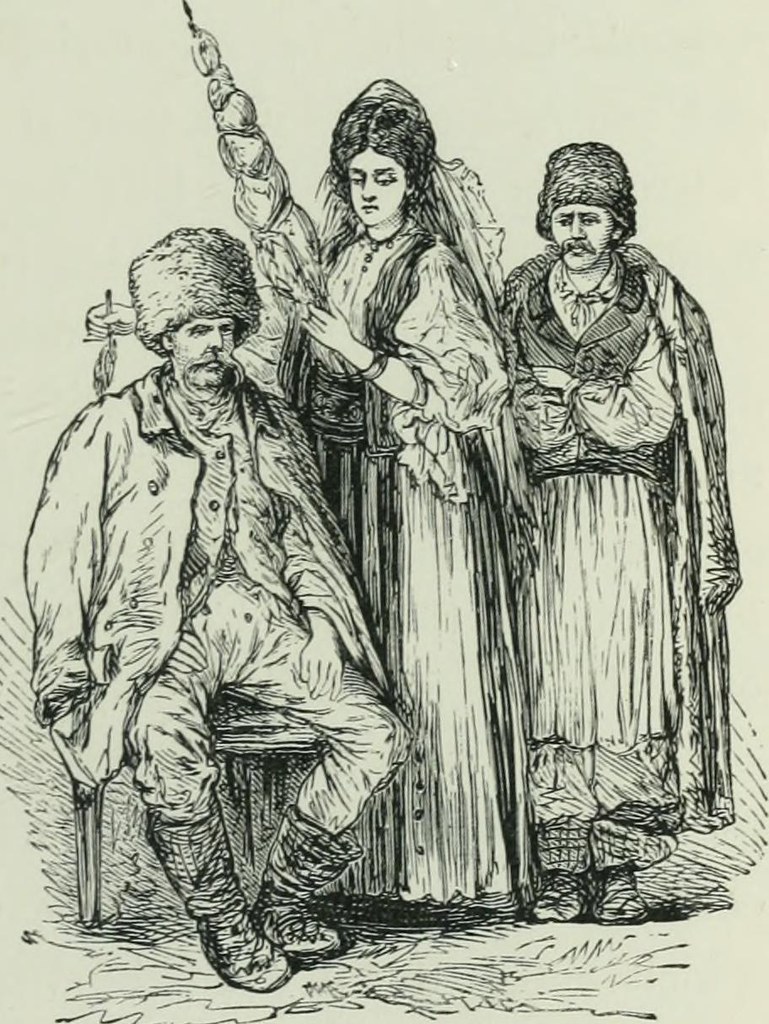
While much of Gerard and von Schmidt’s information seems well sourced, the nomenclature used for vampires is incorrect. The word “nosferatu” put forward by the two folklorists and repeated by Stoker in his novel as the common Transylvanian word for “vampire” is not actually a Romanian word — but we sort out the confusion.
In Romanian, there are two words for vampiric beings, which Gerard subsumed under “nosferatu.” They are moroi and strigoi (male forms, plural moroii, strigoii). Strigoi seems to be a more expansive category and is discussed more in the folklore, but both share many traits including behaviors, preventatives, and modes of destruction. Moroii and strigoii tend to blur together along with two other entities, vârcolaci, and pricolici, which might be closer to our concept of the werewolf (something for a later show).
Before diving into the details on these creatures, I provide a note on two sources used for the episode, chose as they seem better grounded than Gerard’s in Romanian language and culture. The first is by Agnes Murgoci, a British zoologist, whose marriage brought her to Romania and into contact with Tudor Pamfile, a well known native-born folklorist, whose tales of vampires Murgoci translates in the source article: “The Vampire in Roumania,” published in the journal Folklore in 1926. The other source is a Romanian language book from 1907: Folk Medicine, by Gr. Grigoriu-Rigo, in which I found a large and unexpected trove of regional vampire lore.
Listen Now
Love PodBriefly?
If you like Podbriefly.com, please consider donating to support the ongoing development.
Support Us