Episode Details
Back to Episodes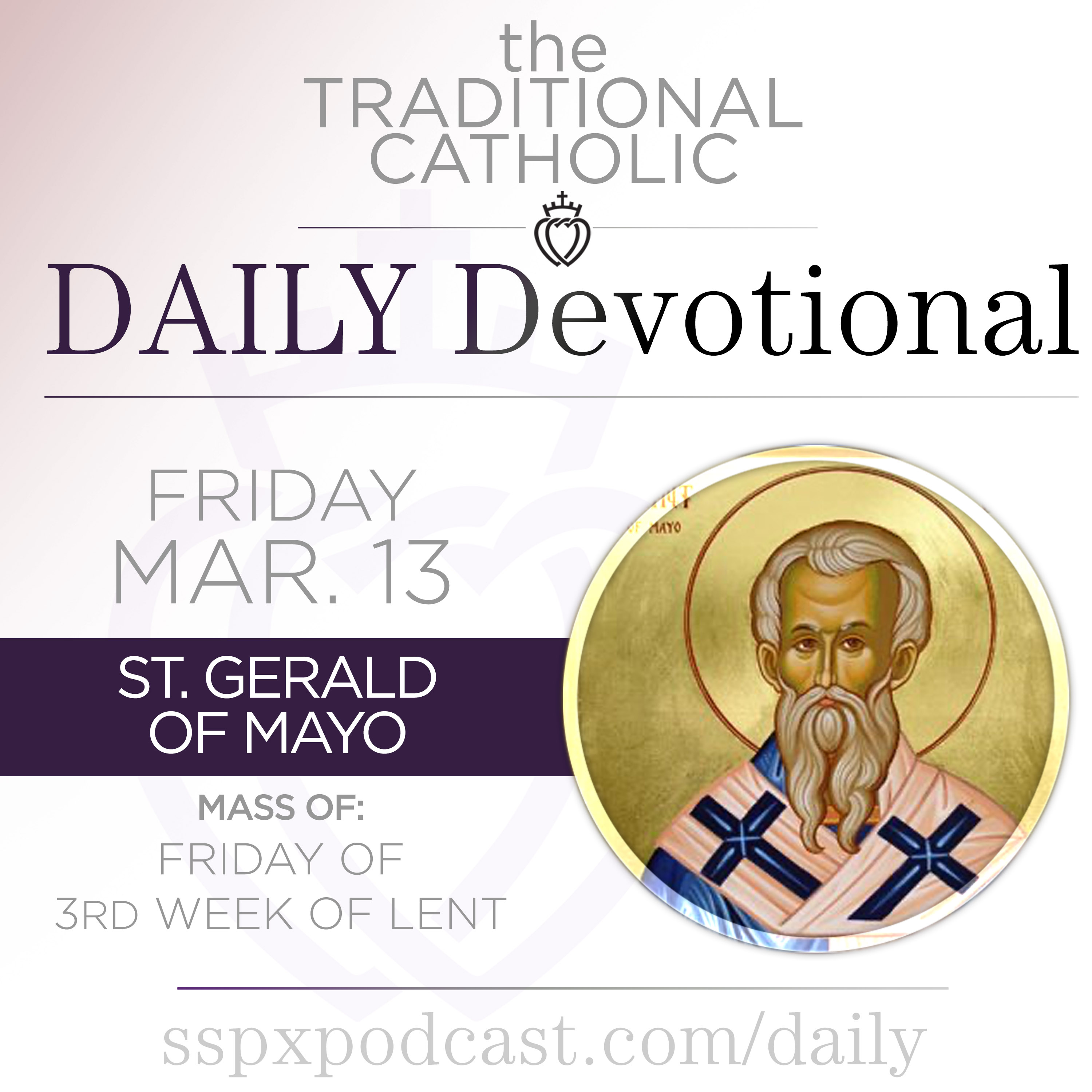
Mar 13 – Fri of 3rd Wk of Lent / S Gerald of Mayo
Description
Sources Used Today:
- "The Apostolate" — Toward Easter
- "The Holy See Denounces the Scale of Christian Persecution" (FSSPX.news)
- The SSPX Podcast: "The Crisis in the Church Affects the Family" (SSPX Podcast)
- View on YouTube
- Listen & Subscribe on SSPXpodcast.com
- The Spiritual Life — Archbishop Marcel Lefebvre (Angelus Press)
Saint Gerald of Mayo was a missionary monk whose life illustrates the quiet cooperation between Irish and Anglo Saxon Christianity during the early centuries of the Church in the British Isles. Born in England in the seventh century, Gerald became a monk under the influence of the great missionary Saint Colman of Lindisfarne. Colman belonged to the tradition of Irish monastic Christianity that had spread throughout northern Britain. When the Synod of Whitby in 664 decided that the English Church would follow Roman rather than Celtic customs, Colman and many of his monks chose to leave Northumbria rather than abandon their traditions.
Gerald was among those who followed Colman across the sea to Ireland. Their journey eventually brought them to the west of the island, where Colman founded a monastery at Mayo. This community became known as Mayo of the Saxons because it was formed primarily by monks from England who had come with him. When Colman later departed for another monastery, Gerald was entrusted with leadership of the community.
As abbot and later bishop, Gerald guided the monastery with steadiness and humility. Mayo grew into an important center of learning and missionary activity. The monks combined the Celtic love of scholarship with a disciplined life of prayer and work. Gerald himself was remembered as a gentle but firm teacher who valued unity within the Church while preserving the spiritual depth of monastic tradition. Under his guidance, the monastery became a place where both Irish and English monks could live and study together peacefully during a time when cultural differences might easily have caused division.
Gerald’s influence extended through the monks he formed and the communities they later established. Though not widely known outside Ireland, his leadership helped strengthen Christian life in the region during a formative period. He died around the year 731, leaving behind a monastery that continued to flourish for centuries.
Devotion to Saint Gerald of Mayo remained centere