Episode Details
Back to Episodes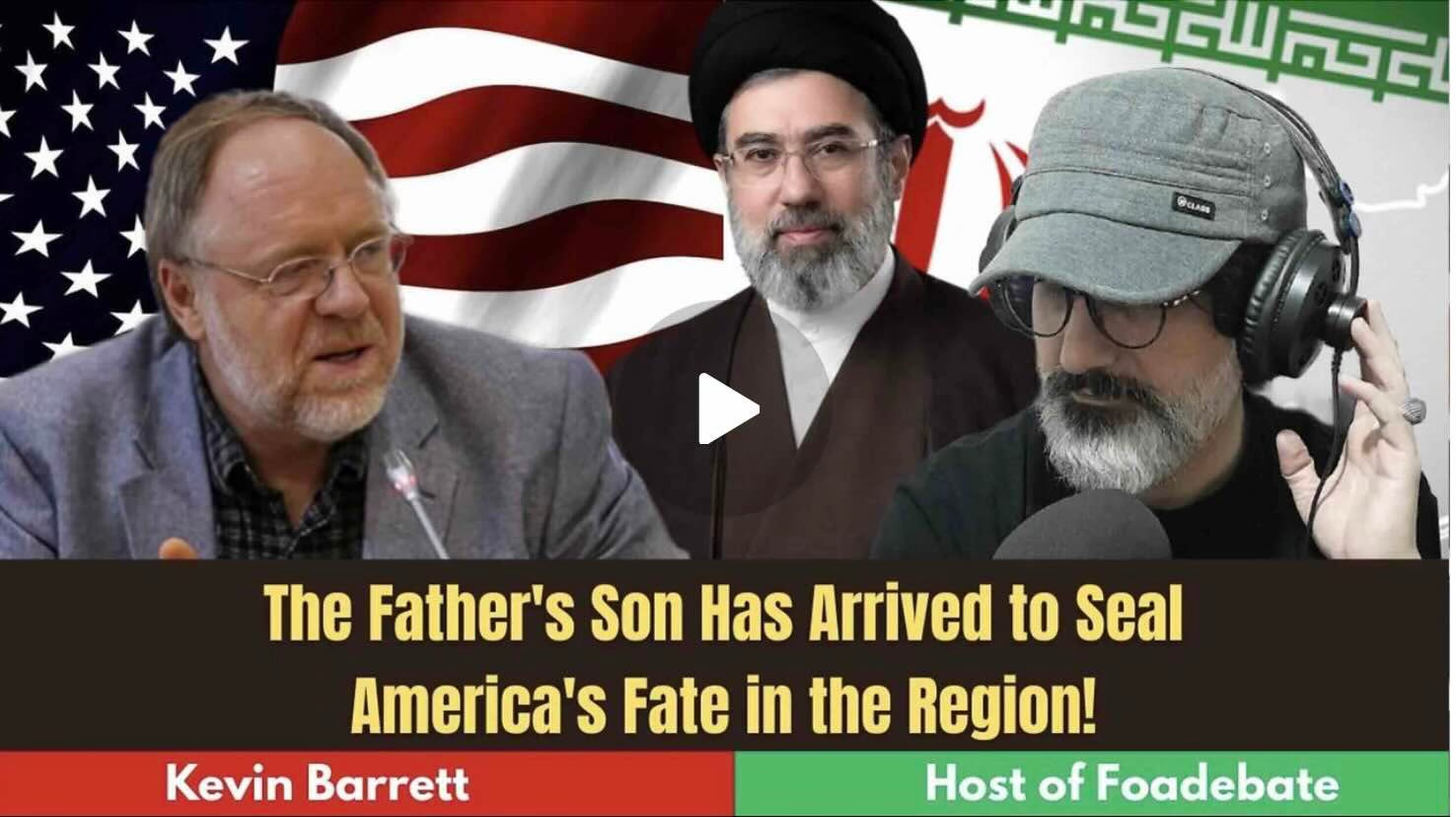
The Father's Son Has Arrived to Seal America's Fate in the Region
Description
Original YouTube link Rumble link Bitchute link
Foad of FoadDebate writes: In my latest conversation with Dr. Kevin Barrett, we unpacked the hidden dimensions and far-reaching implications of Iran's new leadership selection, a development that has not only shaken domestic dynamics but has also sent shockwaves through the calculations of global powers. With his characteristic sharp insight, Barrett describes Western media attempts to delegitimize this choice as textbook war propaganda, completely at odds with the realities on the ground and the public embrace of Iran's revolutionary path. Dismissing Trump's interventionist rhetoric about the new leader being "unacceptable," he frames such statements as a theatrical display of a declining U.S. hegemony. Barrett emphasizes that the selection of Ayatollah Seyed Mojtaba Khamenei, given the impeccable ethical track record and integrity of his family, is not only a strategic necessity amid the current full-scale war but also a powerful promise to continue the steadfast revolutionary line that has stood firm against Western overreach.
Structured Summary of the Interview
Introduction and Topic: Leadership Transition in Iran (00:00:00–00:00:33)
The interview opens with the host welcoming viewers and introducing the topic: the selection of Sayyid Mojtaba Khamenei as Iran’s new Supreme Leader following the death of Ayatollah Ali Khamenei. The host asks Dr. Kevin Barrett to comment on criticisms from opponents of the Islamic Republic who argue that Mojtaba Khamenei’s appointment lacks legitimacy, particularly because he is the son of the previous leader.
Barrett thanks the host and frames the discussion within the broader geopolitical context of the ongoing war involving Iran and its adversaries.
Western Criticism and Allegations of Propaganda (00:00:33–00:03:02)
Barrett argues that criticism of Mojtaba Khamenei’s leadership in Western media is part of a broader propaganda campaign connected to the war. According to him, Western governments and media outlets are attempting to portray events in a way that makes the United States and Israel appear successful while simultaneously undermining Iran’s leadership.
He claims these narratives are intended to weaken Iran politically by questioning the legitimacy of its political system. Barrett argues that such efforts are unlikely to succeed because most Americans know little about Iran and therefore are not deeply influenced by these narratives.
He also argues that within Iran, wartime conditions tend to increase unity around the national leadership rather than weaken it.
Regime Change Narratives and Alternative Leadership (00:03:02–00:04:30)
Barrett discusses what he sees as unrealistic Western attempts to promote regime change in Iran. He claims that the main alternatives often proposed by Western policymakers—the return of the Pahlavi monarchy or the leadership of the Mujahideen-e Khalq (MEK)—lack credibility and popularity within Iran.
According to Barrett, these groups are widely disliked by Iranians, making them ineffective as potential replacements for the Islamic Republic. He therefore interprets regime-change rhetoric as largely symbolic rather than a serious strategy.
He argues that the real goal of the war has been to damage Iran strategically rather than to genuinely replace its government.
Domestic Legitimacy and Reputation of the Khamenei Family (00:04:30–00:05:03)
Barrett emphasizes that the Khamenei famil