Episode Details
Back to Episodes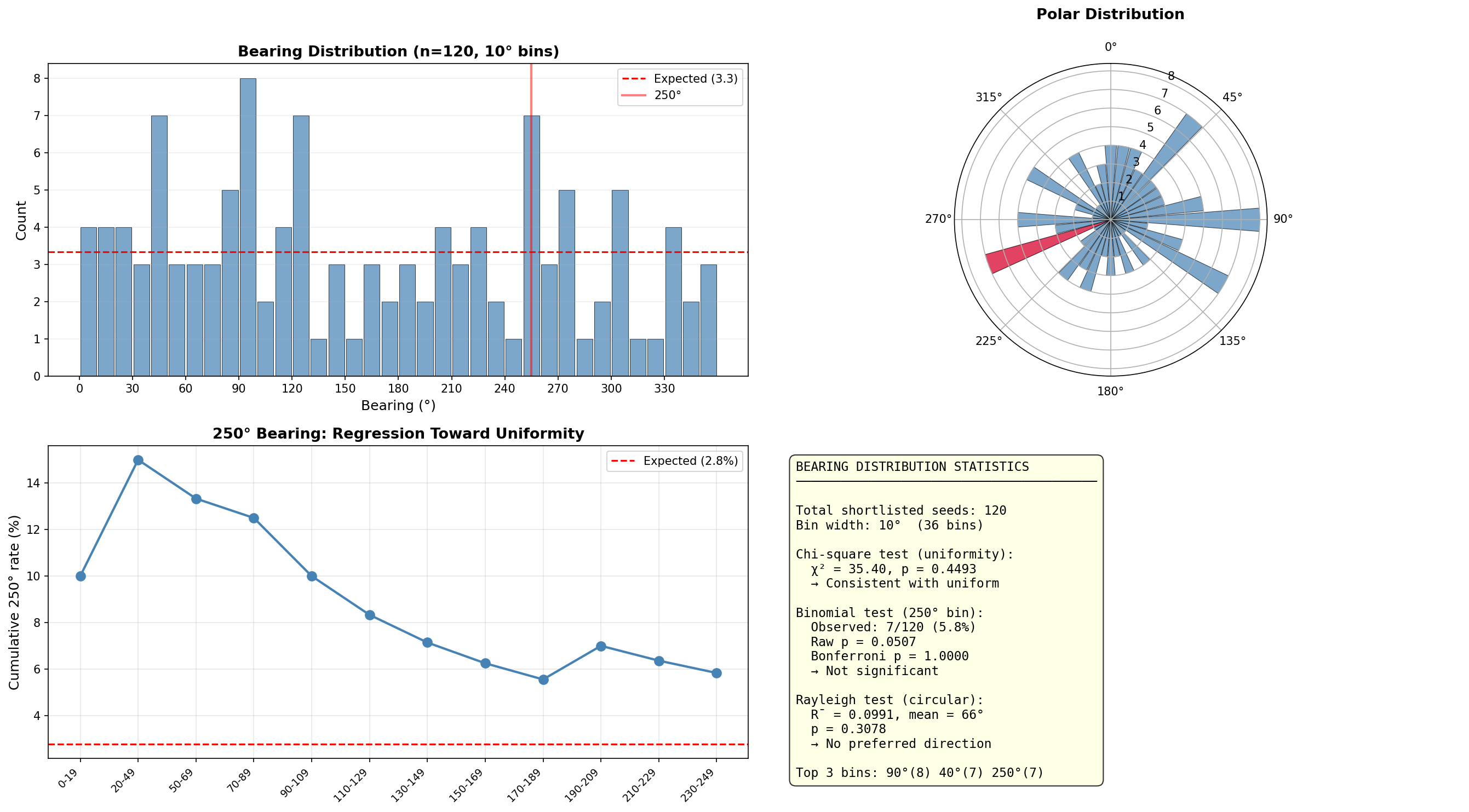
The E8 Earth Grid: Seed 85 — The Antarctic Anchor
Description
Do sacred sites align with higher-dimensional geometry?
For the past several months, I’ve been systematically testing projections of the E8 lattice against 160 sacred sites, letting the statistics guide the way rather than visual bias. Seed 3 gave us breadth. Seed 48 gave us precision. Seed 46 gave us an ultra-tight core with no shared edges. Now Seed 85 arrives, and it breaks the pattern we thought we’d found.
This projection anchors deep in the Antarctic at 75° South, 75° West, yet still captures nearly every sacred site on the planet within 11 kilometres. It’s the highest coverage we’ve seen yet: 97.5%. And it forced us to revisit a claim from the previous video, the bearing question, which the data has now definitively resolved.
What follows are three layers of evidence, from the full network down to the 21 shared edges that form this projection’s ley line architecture. No cherry-picking. No forcing alignments. Just the mathematics, the data, and what emerged when I let them speak for themselves.
Layer 1: Full Network (6,720 edges, sites coloured by proximity)
This is Seed 85, our fourth confirmed E8 projection, and the one that broke the pattern we thought we’d found. Like Seed 3, this is a breadth seed. 156 out of 160 sacred sites (97.5%) fall within 11 kilometres of an E8 edge. That’s actually the highest coverage of any projection we’ve tested. Better than Seed 3’s 96.9%.
But look at where this lattice is centred. Latitude 75° South, longitude 75° West. That’s deep in the Antarctic, near the Ellsworth Mountains. The previous three seeds are all anchored in the Northern Hemisphere or near the equator. Seed 85 anchors at the opposite end of the Earth and still captures nearly every sacred site on the planet within 11 kilometres of its edge network.
The probability of achieving this by chance, after giving the null model full freedom to optimise its orientation, is less than 1 in 100, as confirmed by 1,000 independent trials. The effect size is 2.70 standard deviations. To put it in context: Seed 3’s breadth threshold has a p-value of 0.005. Seed 85’s is 0.009. Both survive Bonferroni correction for the five thresholds we test. Both are robust.
Layer 2: Supported Edges (edges within 0.10° of a site)
Now I’m filtering to just the edges that pass within 11 kilometres of a sacred site. Out of 6,720 edges in the full lattice, these are the ones doing the work — the scaffolding that the sites sit on.
The pattern is familiar if you’ve seen Seed 3. Dense coverage across every continent. The Great Pyramid, Machu Picchu, Angkor Wat, Uluru, and Stonehenge are all within the tolerance. Only four of 160 sites miss the 11-kilometre threshold entirely.
What makes Seed 85 interesting isn’t the individual site placements; at this tolerance, breadth seeds tend to catch almost everything. What makes it interesting is the comparison with Seed 3. Two completely different projections of the same crystal. Different seeds generate different sets of 240 vertices and 6,720 edges. Different anchor points on opposite sides of the planet. Yet both achieve the same result: near-total coverage at the same distance scale.
Compare the four confirmed seeds side by side.
* Seed 3 covers 96.9% of sites within 11 kilometres.
* Seed 85 covers 97.5% of sites within 11 kilometres.
* Seed 48 covers 83.1% of sites within 5.6 kilometres.
* Seed 46 covers 48.1% of sites within 2.2 kilometres.
Three completely different signatures across three different distance bands. Each seed excels where the others don’t. That pattern, complementary signatures rather than overlapping ones, is extremely diffi