Episode Details
Back to Episodes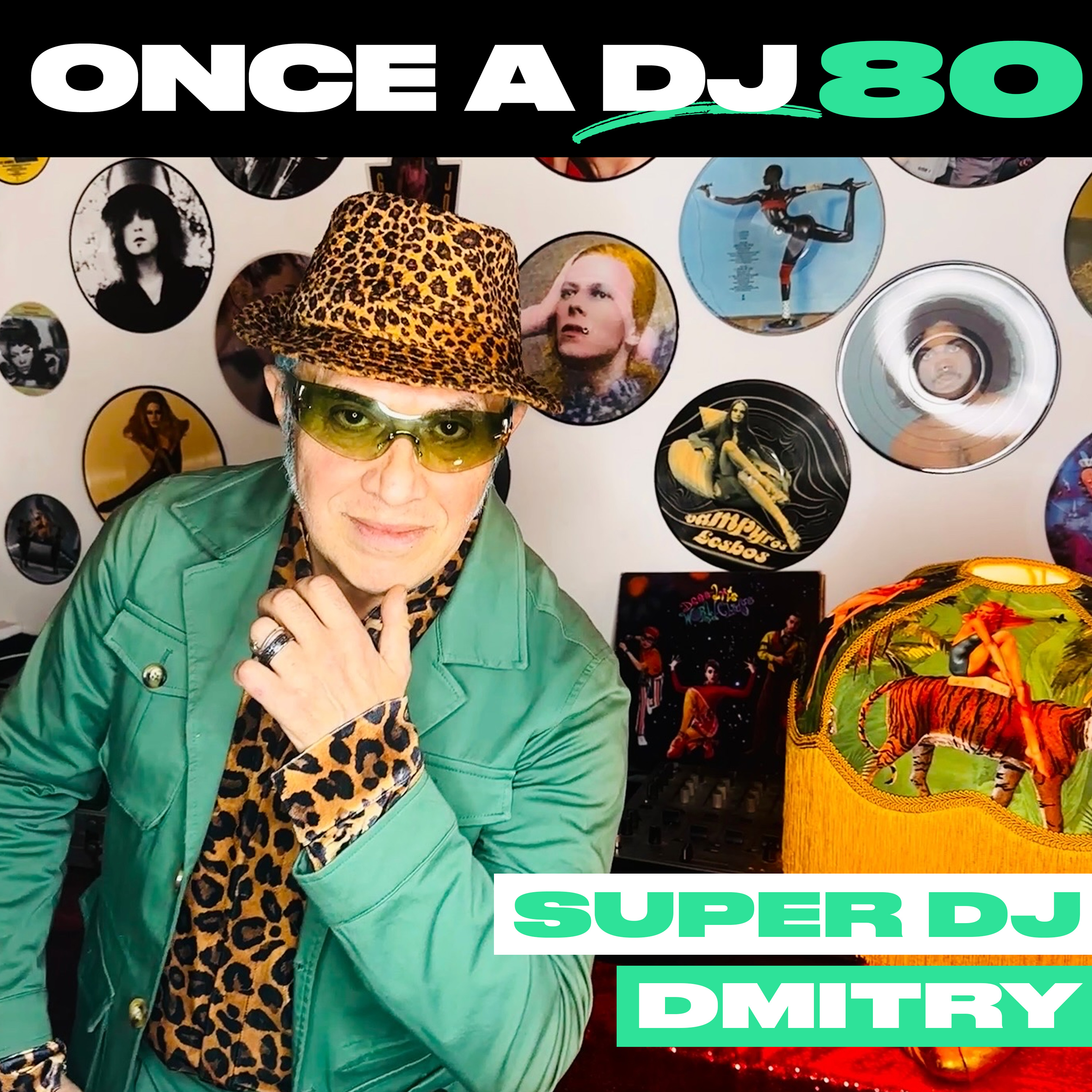
DJ Super Dmitry on Deee-Lite, Nauti Siren & his musical roots "Elektra didn't think it'd go anywhere"
Description
Paths of Rhythm is brought to you with support from vinylunderground.co.uk - take 10% off your next order with the code POR10 and free UK shipping on orders over £100
Paths of Rhythm is a Remote-CTRL production. If you're looking for audio or video production, then check out https://remote-ctrl.co.uk to see how they can help.
Other ways to support the show
- Follow the show on Spotify or Apple Podcasts
- Any feedback or questions? Hit up https://www.instagram.com/pathsofrhythmpodcast/
DJ Super Dmitry | Dee-Lite, Nauti Siren & The Sound of a Life Lived in Music
This week on Once A DJ, Adam is joined by DJ Super Dmitry — one third of Dee-Lite, the group behind one of the most joyful and enduring records in dance music history. But Dmitry's story goes far beyond 'Groove Is in the Heart', and this conversation goes all the way back to the beginning.
Dmitry grew up in Soviet Ukraine as a third-generation musician. His grandmother — unable to afford a piano during the disruptions of the Russian Revolution, Civil War and World War Two — cut piano keys from paper so she could practise by hand. That love of music carried through the family, and Dmitry began lessons at five, was attending a conservatory music school by seven, and was already writing his own compositions in the style of Gershwin and Scott Joplin by eight.
Western music was tightly controlled. Records could only be obtained on the black market — for around $50 each — and were copied onto reel-to-reel before being traded on. A track from Jesus Christ Superstar introduced him to something funky he couldn't yet name, and the search for that sound would shape the rest of his life.
At 14, Dmitry and his family left the Soviet Union — the first in their town to do so, and treated as traitors for it. After periods in Austria and Italy, where he discovered punk (the Pistols, the Damned, X-Ray Spex, Iggy Pop), the family arrived in New York in 1978. On Halloween. In a Black neighbourhood in Brooklyn. Having never seen Black people before.
From a 50-cent bin in a record shop, he picked up 'The Clones of Dr. Funkenstein' by Parliament because the cover looked insane. That was the moment. 'There it is,' he thought. 'That's the sound I've been looking for.' He's been a funkateer ever since.
New York in the late 70s and early 80s was extraordinary — punk, disco, hip hop, and house all converging in the same sweaty rooms. Dmitry became an elevator operator at Danceteria, practising guitar in the lift between floors while Sisters of Mercy and the Sugar Hill Gang did soundchecks below. He ran into the pre-fame Beastie Boys regularly, worked at the Pyramid Club (run by drag queens, and a real education in showmanship), and played for Kool Herc and Grandmaster Flash at block parties in Harlem and the Bronx.
Dee-Lite formed as a direct attempt to bridge the gap between house and funk. They built a following through monthly shows drawing up to 1,500 people, which caught the attention of a Billboard writer and eventually sparked a label bidding war. They signed to Elektra — choosing them because their A&R, Nancy Jeffries, had signed Iggy Pop and Bjork, and that felt like the right kind of open-mindedness.
Elektra didn't believe 'Groove Is in the Heart' had any traction. They let Dee-Lite do the video anyway, and Dmitry remembers the precise moment he knew it had crossed over: standing in a grocery store queue when it came on the radio and the cashier started d