Episode Details
Back to Episodes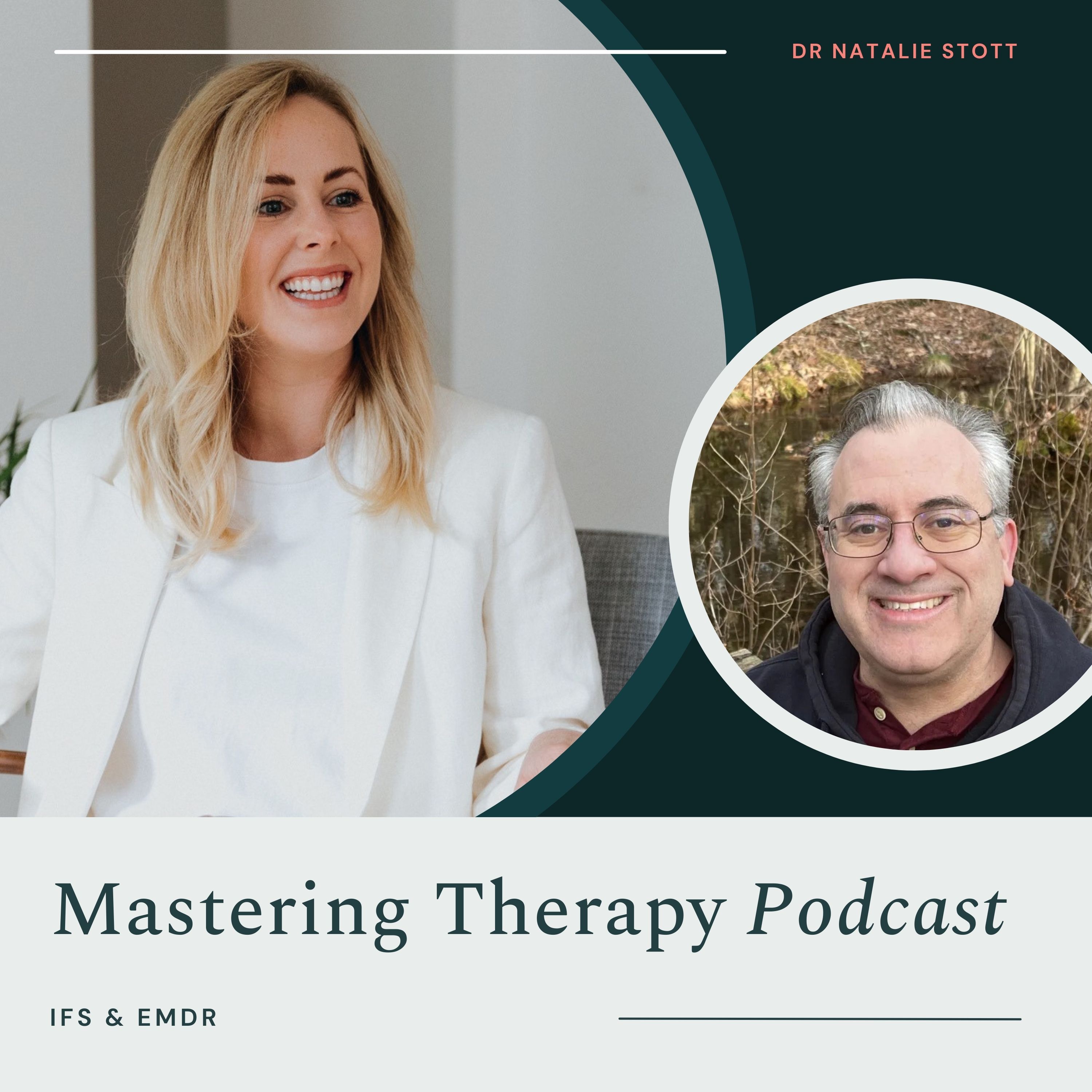
S4E5: Stop processing parts without mapping their purpose first (IFS & EMDR)| Dr David Polidi
Description
What happens when you blend the structured world of EMDR with the nuanced, parts-based approach of IFS?
Dr. Natalie Stott sits down with David Polidi—EMDR therapist and “IFS guru” (his clients’ words, not his)—to get practical about integrating Internal Family Systems and Eye Movement Desensitisation and Reprocessing in complex trauma work. They tackle everything from how to honour protectors (without bulldozing them) to what actually happens in this mysterious “Phase 2.5,” and how to avoid getting tangled in your own parts as a therapist. Plus, the age-old questions: Do you really need bilateral stimulation? And can you use a parts lens without an IFS certificate? No hype, just candour, solid tips, and welcome reassurance for therapists at every stage.
TIMESTAMPS
• 00:00 Introduction and purpose of blending IFS and EMDR
• 02:41 The “Syzygy model” and holding both maps in session
• 06:24 EMDR’s Phase 2.5/Discovery Phase—what is it, why is it useful?
• 14:43 What to do when protectors hijack reprocessing work
• 24:24 When negotiations with parts fail—what next?
• 27:13 Why blend models at all? And do you have to pick sides?
• 33:15 What happens between sessions? Homework for clients (and therapists)
• 36:42 Getting started: books, trainings, and the value of consultation
KEY TAKEAWAYS
• Always check in with every part—genuine consent trumps protocol when reprocessing trauma memories.
• Use “Phase 2.5” (Discovery Phase) with blended protectors—pause, get curious, and only proceed when all parts are on board.
• The “fire drill” is a quick, practical tool: name your own therapist parts at the start of sessions and gently ask them to step aside.
• Don't bulldoze protectors—forced reprocessing often brings backlash and, at best, patchy results.
• EMDR's structure maps well onto IFS’s parts work, but the pace needs to match your client’s system—not your agenda.
• It’s OK to use parts language without formal IFS training, as long as you’re respectful, collaborative, and guided by your client’s experience.
• Encourage clients to build ongoing relationships with their parts between sessions (quick daily check-ins can genuinely help).
RESOURCES
S4E5: Stop processing parts without mapping their purpose first (IFS & EMDR)| Dr David Polidi
Guest Information: David Polidi is a practising EMDR therapist known for integrating IFS into trauma work. He recently edited a collaborative book on IFS-informed EMDR, gathering voices from trainers, teachers, and therapists innovating at the frontier of blended models.
Social media:
Website:
Resources mentioned:
- IFS Training Programs | IFS Institute
- Intro to IFS informed EMDR – EMDR Insight
- IFS Informed EMDR Training Program — Syzygy Institute
- David's Book
** Check out Mastering Therapy’s Youtube Channel for all podcast episodes **
For notification on up coming episodes and for occasional summaries of tools discussed on the podcast sign up here: www.masteringtherapy.com
To recommend a topic you’d like to hear about, or if you’d like to appear on the podcast please get in touch at www.masteringtherapy.com/guest
For private psychology services a