Episode Details
Back to Episodes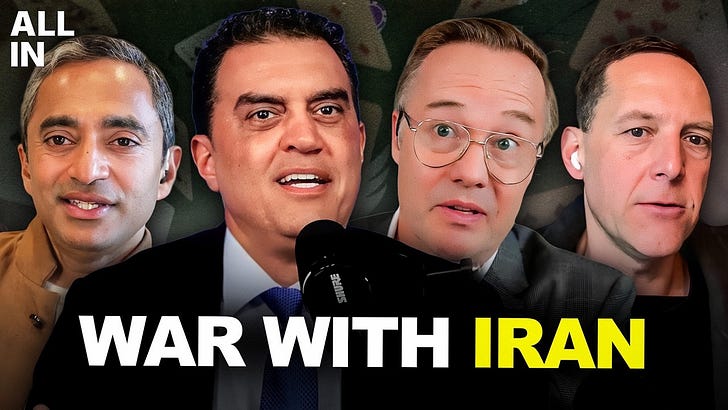
"Keep Fights Fair" Forced on the USA Military By Karens
Description
Join Simone and Malcolm Collins in this eye-opening episode of Based Camp as they dive deep into the shocking realities of US military Rules of Engagement (ROE). From bizarre restrictions like matching enemy firepower to avoiding mosques and residential areas, they reveal how bureaucratic red tape under past administrations—especially Obama’s era—hamstrung American troops in conflicts like Afghanistan and Iraq. Drawing parallels to the American Revolution’s guerrilla tactics against rigid British formations, the Collinses discuss unintended consequences, enemy exploitation, and how new tech and leadership under Trump are bypassing these rules for more effective, targeted operations in Venezuela and Iran. They critique “woke” policies, praise outcome-oriented tech integrations, and share personal insights on morality in war, including Hiroshima and Nagasaki. Plus, fun family anecdotes about their kids at the end!
Episode Notes
In a recent All-In podcast, Emil Michael, the current Under Secretary of War for Research and Engineering (previously the senior vice president of business and chief business officer at Uber, and the chief operating officer of Klout) mentioned that past rules of engagement in places like Afghanistan were “insane,” including requirements such as if an enemy had a small gun, U.S. soldiers also had to respond with a small gun, creating a bizarre expectation of “parity” instead of overwhelming force.
Timestamped link:
He basically claimed that legalistic and restrictive rules meant soldiers constantly had to make complex legal judgments in real time, which left them at risk and prevented them from simply focusing on taking out the enemy and protecting their own people.
Michael says the rules of engagement were subsequently relaxed and are more now along the lines of “use your judgment,” but what were they before???
Pete Hegseth offered a peek at how things were in his 2024 book, The War on Warriors, in which he:
* Recounted a scenario where troops were told not to immediately shoot an identified enemy with an RPG
* Mocked lawyers as “jagoffs” who prosecute troops more than enemies
* Implied the rules of engagement required constant legal consultations in fluid combat situations rather than allowing judgment to “take out” threats and protect allies decisively.
* Complained about rules of engagement in Afghanistan that enforced parity or restraint, like matching small arms with small arms, or putting tight limits on force in populated areas to minimize civilian harm under directives like the 2009 ISAF Tactical Directive
Rules of Engagement 101
* Rules of Engagement dictate how U.S. forces are permitted to initiate and/or continue combat engagement with other forces.
* Rule breaking is punished with anything from formal reprimands to demotions, career stagnation, getting fired, or criminally prosecuted for a war crime and possibly sentenced to prison or even death
* They’re supposed to ensure compliance with national policy, international law (e.g., the Law of Armed Conflict), and mission objectives while allowing for self-defense.
* There are different types:
* Standing: General
* Supplemental: For specific operations or theatres
* While the U.S. emphasizes detailed, standing ROE with inherent self-defense rights, other nations integrate similar principles but often with more centralized control and less public detail. Enforcement
* The important thing to know:
* There are a LOT of rules
* We can’t even know them all
* Many ROE documents are classified, but unclassified portions and summaries are publicly available
* The rules got uniquely difficult for a spell
* Between 2009 and 2017, under Obama, they shifted to be more restrictive through NATO-based directives designed to support counterinsurgency and reduce civilian casualties, support “clear and hold”