Episode Details
Back to EpisodesFord Recalls Over 1.7 Million Crossovers and SUVs Across 26 Products
Description
The first week of March has been full of recalls for Ford, from separating driveshafts causing a recall of over 11,000 Super Duty trucks, to almost 605,000 crossovers and SUVs being recalled for faulty windshield wipers. Now, two new recalls announced by the National Highway Traffic Safety Administration have impacted many of the same crossovers and SUVs mentioned earlier in the week, along with every model year of the current U725 Bronco and several Edge crossovers.
Each recall spans over 800,000 vehicles, with the first affecting 849,310 examples of the 2021-2026 Bronco and the 2021-2024 Edge. The second recall names 889,950 examples of the 2020-2022 Ford Escape and Lincoln Corsair, along with the 2020-2024 Ford Explorer and Lincoln Aviator. If you add up each model year, a grand total of 1,739,260 vehicles over 26 associated products are affected, and although the causes are different, both negatively affect the rearview cameras of these vehicles in unique ways. Let's take a closer look.
Two Ford Recalls, Two Issues, One Result
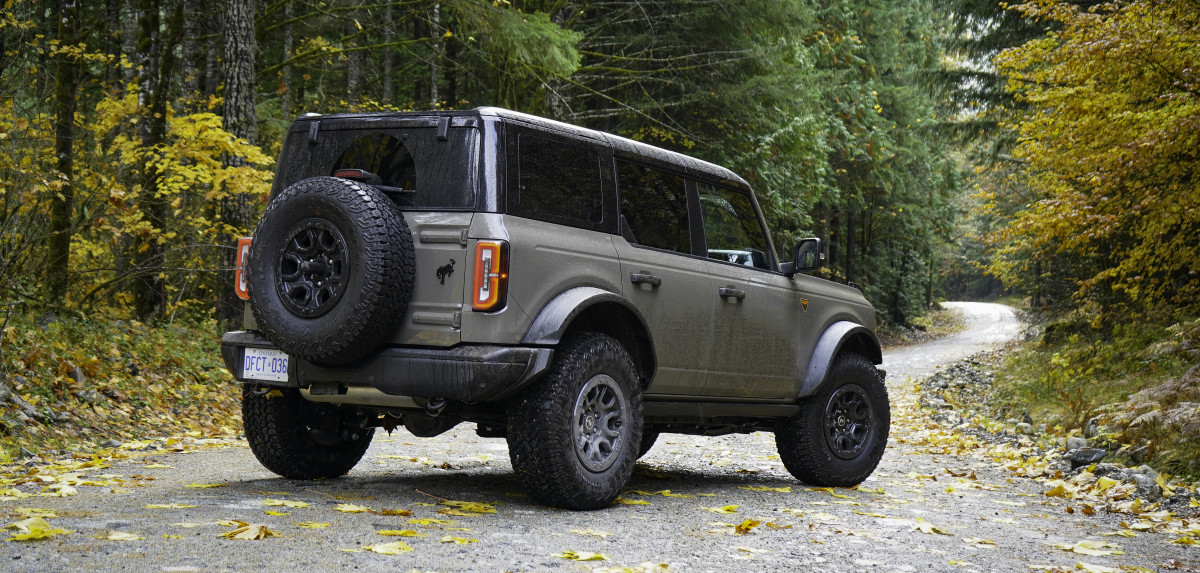
Cole Attisha/Autoblog
The first recall, for the Bronco and Edge, says that the Accessory Protocol Interface Module (APIM) could overheat, reaching temperatures as high as 105° C (221°F) and shut down, causing the rearview camera to stop displaying images as intended. In fact, the entire touchscreen becomes inoperable until the system cools. The second recall for the EscapeExplorer, Corsair, and Aviator states that the image on the center display could flip or invert, which would no doubt be confusing for a driver trying to avoid something on the rear left or rear right of the vehicle. Either way, the problems make affected vehicles noncompliant with Federal Motor Vehicle Safety Standard number 111 for Rear Visibility.
Related: Ford Wants to Fix Your Car the Same Day
The first recall's overheating APIM problem is "the result of a stack-up of certain, specific vehicle and hardware configurations,"