Episode Details
Back to EpisodesThe Corvette ZR1X Is So Fast It Breaks NHRA Street-Car Rules
Description
The National Hot Rod Association has a straightforward rule for street-legal production cars running at sanctioned drag events without roll cages or competition licenses. Go no quicker than 9.0 seconds in the quarter mile and no faster than 150 mph through the traps. It’s a relatively sensible threshold designed to keep ordinary drivers in non-caged cars from getting themselves into too much trouble. The 2026 Chevrolet Corvette ZR1X, which starts at $212,195 and can be bought at a Chevy dealership, does not care about sensible thresholds.

A Machine Built to Break Records, And Rules
The ZR1X combines the ZR1's twin-turbocharged 5.5-liter LT7 V8 with an upgraded front electric motor lifted from the Corvette E-Ray platform. The combustion engine contributes 1,064 horsepower while the front electric motor adds another 186 horsepower, bringing the total to 1,250 horsepower in an all-wheel-drive layout that tips the scales at 4,139 pounds.
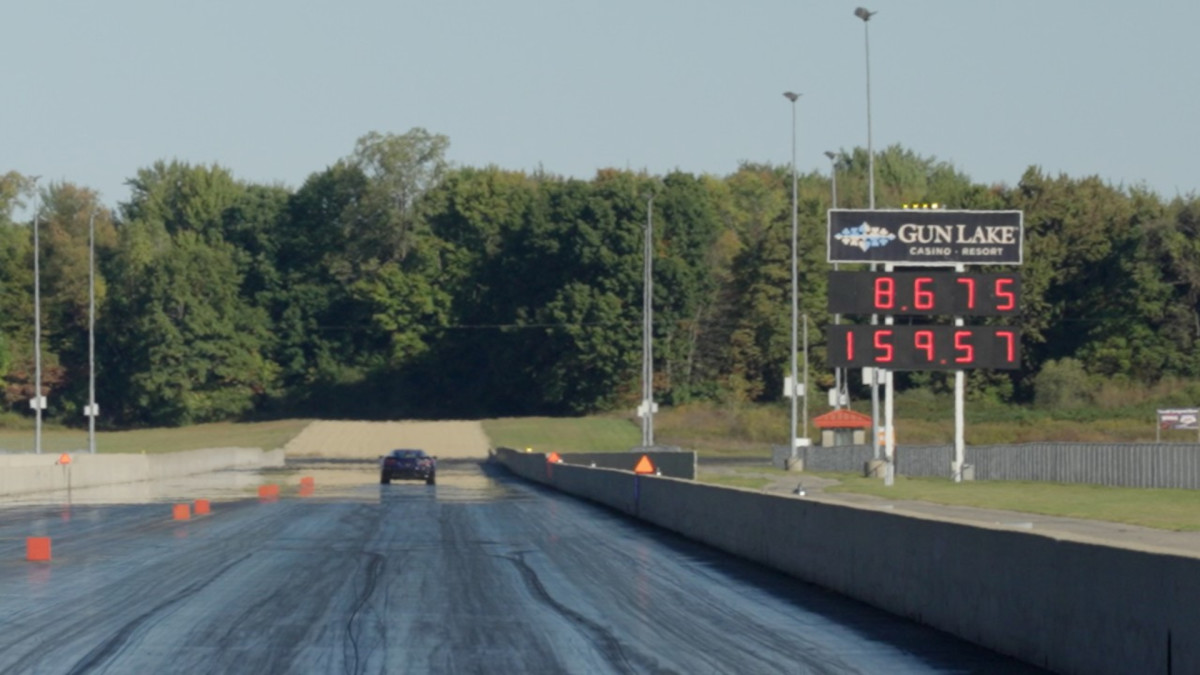
On a prepped surface at US 131 Motorsports Park in Michigan, Chevrolet's own test produced a quarter-mile time of 8.675 seconds at 159.57 mph, with the car reaching 60 mph in just 1.68 seconds while generating a peak of 1.75g of acceleration force. Those are numbers that belong on a purpose-built race car, not something with a factory warranty.
Where the Rulebook Falls Apart
The NHRA's Street Legal program's 9.0-second and 150 mph limits exist for a reason. At those speeds, without a roll cage protecting the occupant, a crash becomes extremely difficult to survive. The rules were never written with a car like the ZR1X in mind, because a car like the ZR1X was not supposed to exist at a dealership. Even on road tires on an unprepared track, Car and Driver recorded 9.2 seconds at 155 mph, a pass that still violates speed thresholds, and raises the point of what a prepped track and competition tires will lead to.
The Paradox of a Street Car That Outgrew the Strip
What makes this situation genuinely strange is that the ZR1X is not a stripped-out track weapon. It runs on pump gas, it has a trunk, and it is 50-state street legal. The engineering team even had to modify the front motor's software cutoff point, raising it from 150 mph to 160 mph, just so the all-wheel-drive system would remain engaged through the entire length of a quarter-mile run.
General Motors did not stumble into this territory accidentally. The ZR1X was design