Episode Details
Back to Episodes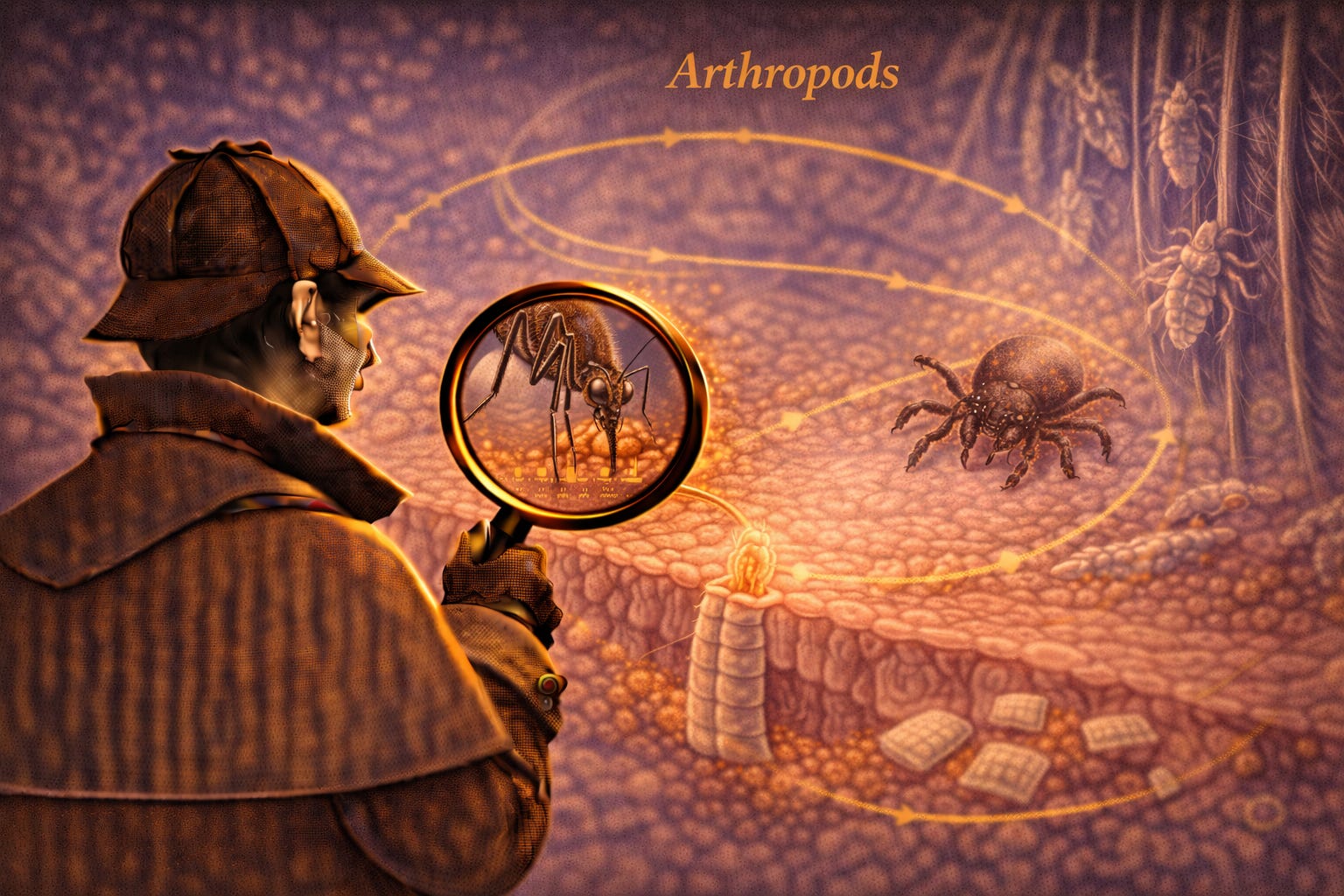
Micro 77: Arthropods
Description
This episode concludes parasitology with arthropods, organisms that either directly parasitise humans or serve as vectors for other pathogens. Drawing from Murray’s Chapter 77, it examines their dual role in disease ecology.
Arthropods include:
* Ectoparasites - lice, fleas, mites, ticks
* Vectors - mosquitoes, sandflies, tsetse flies
Direct infestation may cause:
* Pruritus and dermatitis
* Secondary bacterial infection
* Hypersensitivity reactions
As vectors, arthropods transmit:
* Protozoa (e.g., malaria, leishmaniasis)
* Bacteria (e.g., rickettsiae, Borrelia)
* Viruses (e.g., arboviruses)
Transmission can occur via salivary injection during feeding or contamination with infected faeces.
Conceptually, arthropods represent the interface between environment and host. Clinically, prevention relies heavily on environmental control and protective strategies.
Key Takeaways
* Arthropods may cause direct infestation or transmit pathogens
* Mosquitoes, ticks, and lice are major vectors
* Vector saliva facilitates pathogen transmission
* Disease prevention emphasises environmental control
* Epidemiology is tightly linked to geography and climate
This is a public episode. If you'd like to discuss this with other subscribers or get access to bonus episodes, visit drmanaankarray.substack.com/subscribe