Episode Details
Back to Episodes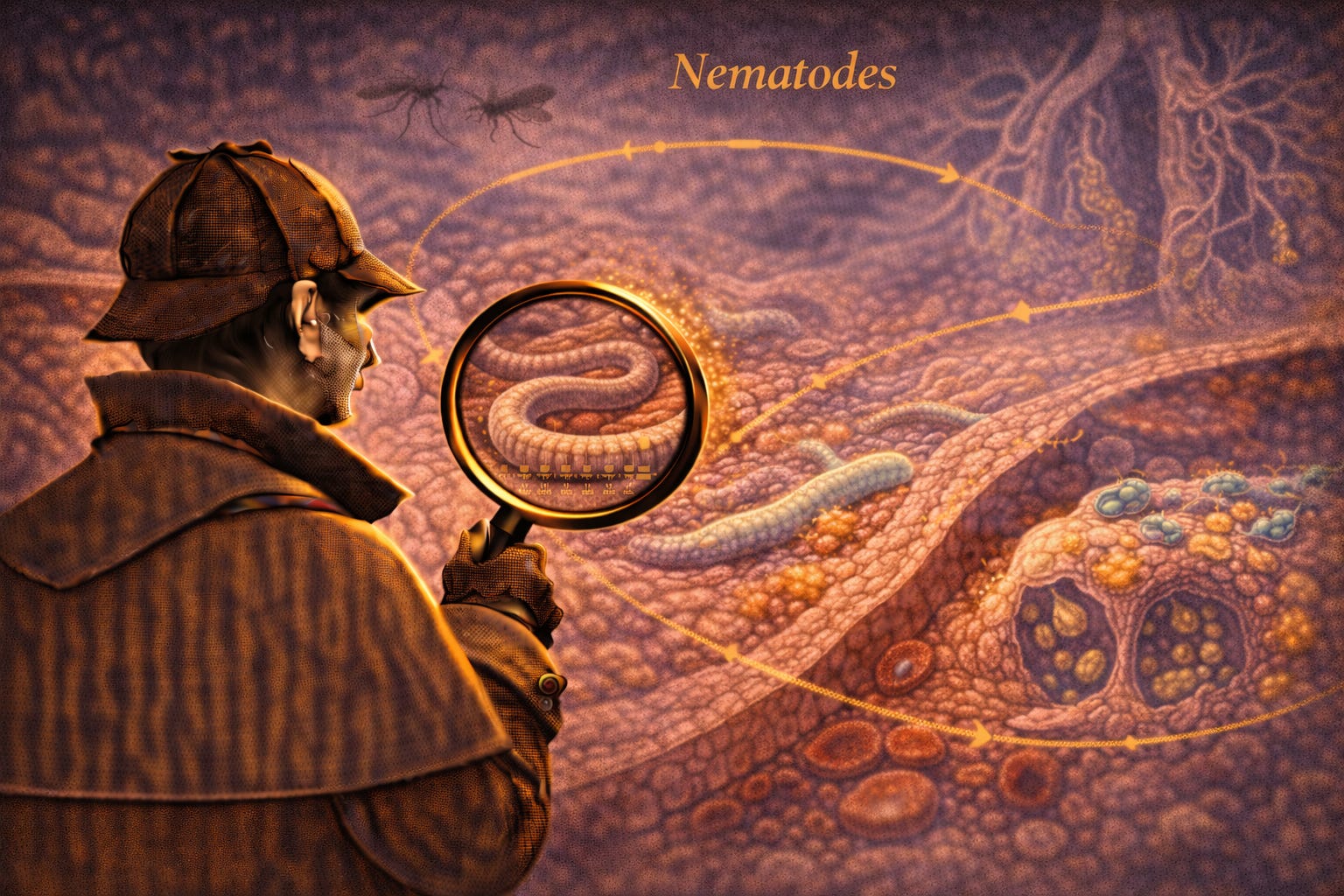
Micro 74: Nematodes
Description
This episode introduces nematodes, or roundworms, the most diverse group of helminths affecting humans. Drawing from Murray’s Chapter 74, it explores their morphology, transmission, and disease patterns.
Nematodes are cylindrical, unsegmented worms with separate sexes. Infection typically occurs through:
* Ingestion of eggs (e.g., Ascaris lumbricoides)
* Skin penetration by larvae (e.g., hookworms, Strongyloides)
* Vector transmission (e.g., filarial worms)
Disease patterns vary by life cycle:
* Intestinal nematodes - abdominal pain, obstruction, nutritional impairment
* Tissue-migrating larvae - pulmonary symptoms during migration
* Filarial infections - lymphatic obstruction and elephantiasis
Eosinophilia is common, especially during tissue migration phases.
Conceptually, nematode disease reflects life cycle movement through the human body. Clinically, timing of symptoms often mirrors migratory stages.
Key Takeaways
* Nematodes are cylindrical, unsegmented worms
* Transmission may involve ingestion, skin penetration, or vectors
* Larval migration can cause pulmonary symptoms
* Filarial worms obstruct lymphatics
* Eosinophilia is a key laboratory clue
This is a public episode. If you'd like to discuss this with other subscribers or get access to bonus episodes, visit drmanaankarray.substack.com/subscribe