Episode Details
Back to Episodes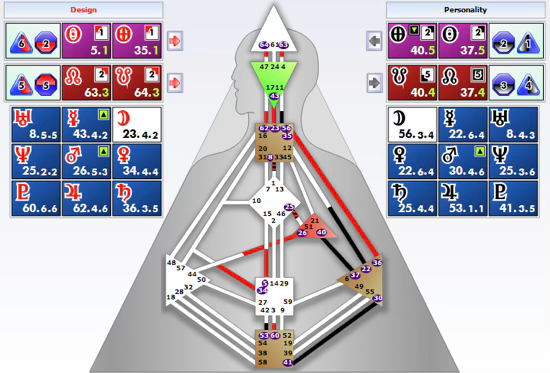
Reflection of the week: Iran war, a manifestation of crisis with unforeseeable consequences.
Description
The war in Iran began on February 28th at 9:45 a.m. in Tehran. Through the lens of Human Design, the moment carries the imprint of an emotional Manifestor, with the Sun in the 40th Gate in detriment. Its energetic coding speaks to “a tendency in revolution to accept a certain amount of necessary deviation on the assumption that it can be successfully purged later — the weakness of the ego, in its loneliness, maintaining rather than rejecting negative relationships.”
Both the Sun/Earth axis and the lunar nodes are positioned around themes of negotiation, agreements, and the possibility of fair outcomes between parties. Yet the chart suggests the potential for “jumping the gun” — quite literally — through an unconscious emotional definition between the Solar Plexus and the Throat center. What manifests is a tone of deconstruction, coded in the 23rd Gate (4th line) as “fatalism, egoism, and damn the consequences.” The Moon in the 56th Gate (3rd line), also in the Throat, carries the theme of “wanting to be the center of expression.”
The overall impact of this Manifestor chart is largely unconscious and therefore highly unpredictable. The only conscious orientation within the chart points toward “hope for a collapse of the established religious patriarchy currently in place” reflected in the consciously imprinted projected element of the energetic definition of the chart (Channels of Recognition and Community).
When negotiations collapse and force is chosen instead, critics often interpret the shift not as strength but as a preference for decisive action over sustained containment. In this view, escalation replaces endurance. The assumption becomes that instability introduced now can later be controlled or purged. But military action carries systemic consequences: regional retaliation, proxy escalation, economic destabilization, oil shocks. What is framed as a corrective move may, in practice, embed deeper instability into the system.
Breaking negotiations can also be seen as protecting reputation, reasserting deterrence, or avoiding the optics of concession. Critics argue that this risks becoming ego-driven positioning rather than strategic patience — signaling strength in a way that paradoxically reveals insecurity. If confrontation reinforces internal unity or political capital, a feedback loop can emerge: tension generates cohesion, cohesion reinforces escalation, and escalation produces more tension. From this perspective, what appears “weak” is not military capacity but the inability to sustain negotiation under pressure — a move from complexity to simplification, from diplomacy to force, and a gamble that escalation can be contained. If it spreads regionally, that gamble begins to look less like strength and more like miscalculation.
These tendencies are echoed in the Earth’s position in the chart, coded as “emotional dependency that can turn love into hatred.” Mars, traditionally associated with war, stands in a position that codifies as “burnout — an unrealistic pace that invites misfortune.”
The breaking of negotiations carries the symbolism of “the captain going down with the ship”, reflected in Gate 5 in the first line of the unconscious Sun. There is much to contemplate in this chart. These reflections are offered so you may consider your own perspective. One thing, however, seems clear: the impact of this moment may linger far longer than expected. It feels less like an isolated event and more like a threshold — a door kicked open — moving us toward systemic collapse (the end of the Cross of Planning) and, ultimately, the emergence of a new era slowly announcing itself as the old consumes its own ashes.
You can ge