Episode Details
Back to Episodes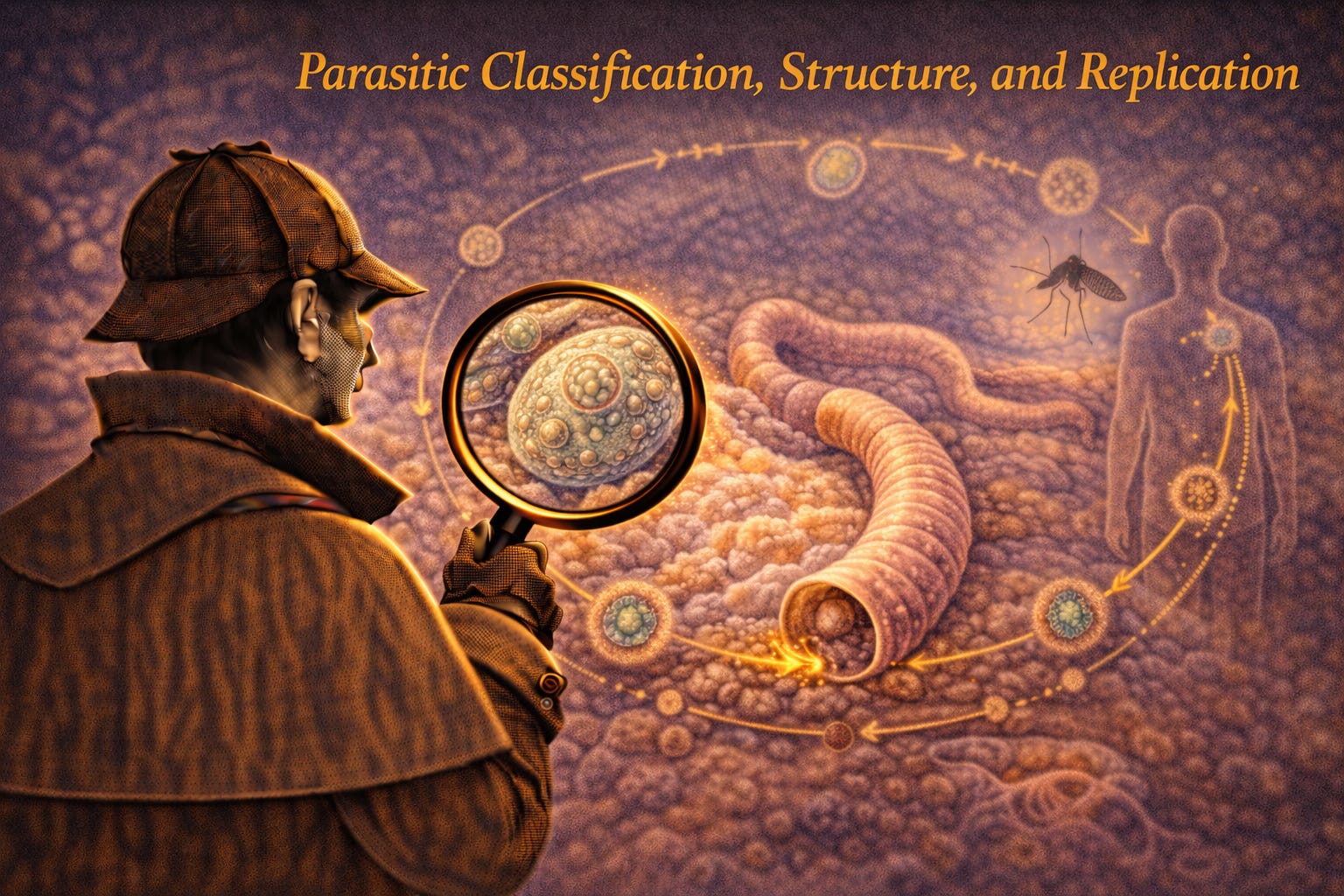
Micro 67: Parasitic Classification, Structure, and Replication
Description
This episode introduces parasitology as the study of multicellular and unicellular eukaryotic organisms that derive sustenance from human hosts. Drawing from Murray’s Chapter 67, it establishes the major taxonomic groupings and life cycle strategies that underpin parasitic disease.
Parasites are broadly divided into:
* Protozoa - unicellular organisms (intestinal, blood, tissue parasites)
* Helminths - multicellular worms (nematodes, trematodes, cestodes)
* Arthropods - ectoparasites and vectors
Replication and life cycles are central. Many parasites undergo complex developmental stages involving multiple hosts or environmental transitions. Sexual and asexual phases may alternate, often within different species.
The episode emphasises:
* Structural diversity
* Life cycle complexity
* Transmission pathways (ingestion, vector bite, skin penetration)
Conceptually, parasitology introduces ecological thinking into microbiology - disease emerges from life cycle intersection with human behaviour.
Key Takeaways
* Parasites are eukaryotic organisms
* Protozoa are unicellular; helminths are multicellular
* Many parasites have complex life cycles
* Transmission often involves vectors or environmental exposure
* Life cycle understanding guides diagnosis and prevention
This is a public episode. If you'd like to discuss this with other subscribers or get access to bonus episodes, visit drmanaankarray.substack.com/subscribe