Episode Details
Back to Episodes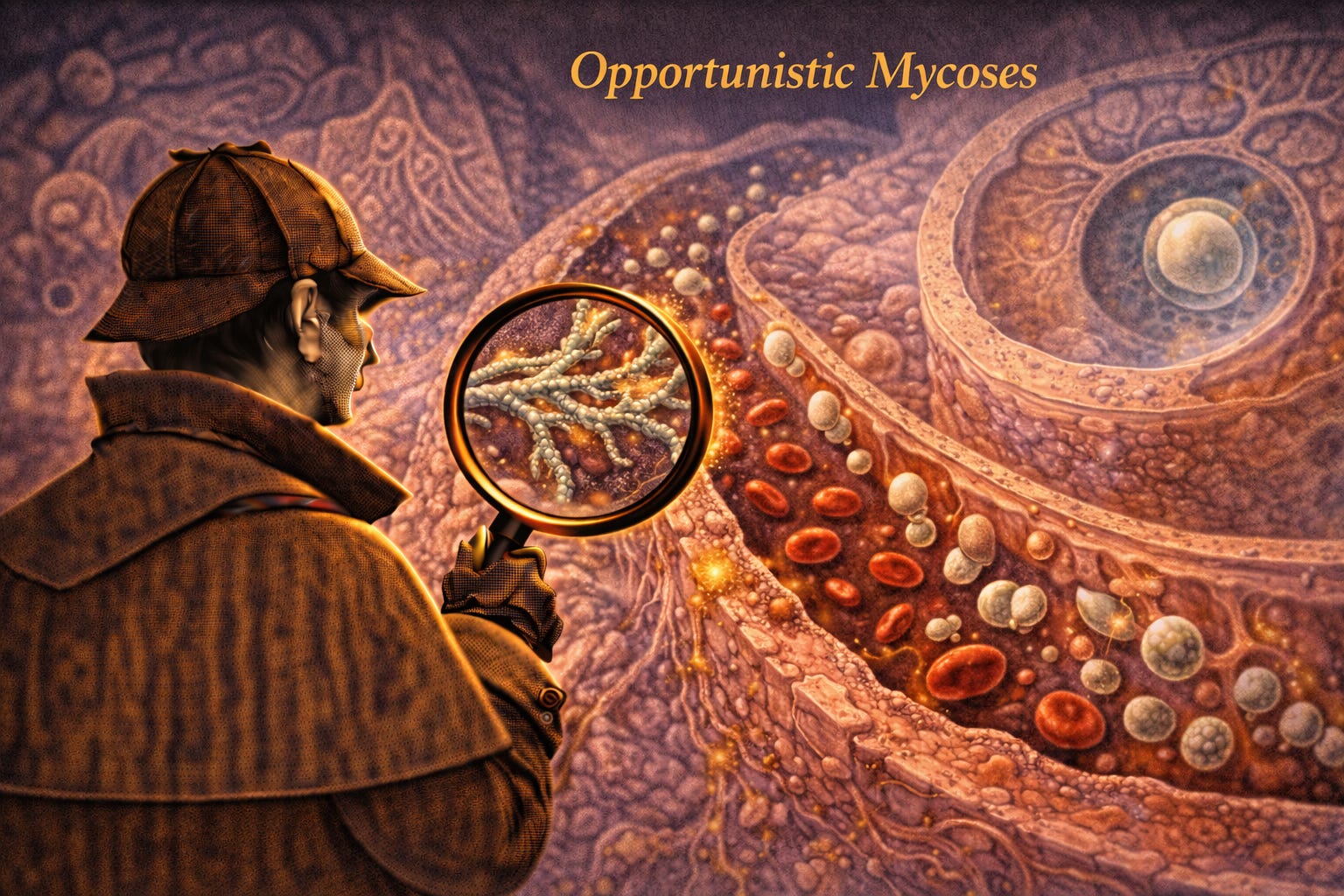
Micro 65: Opportunistic Mycoses
Description
This episode examines fungal infections that emerge primarily in immunocompromised individuals. Drawing from Murray’s Chapter 65, it explores how normally contained environmental or commensal fungi become invasive pathogens when host defences falter.
The principal organisms include:
* Candida species - from mucocutaneous disease to candidemia
* Aspergillus species - inhaled spores causing invasive pulmonary disease
* Cryptococcus neoformans - encapsulated yeast causing meningitis
* Mucorales (zygomycosis) - rapidly invasive moulds in diabetic or neutropenic patients
The defining feature is host vulnerability: neutropenia, transplantation, advanced HIV infection, corticosteroid therapy, or critical illness.
Pathogenesis often involves angioinvasion, tissue necrosis, and systemic dissemination.
Conceptually, opportunistic mycoses represent breakdown of immune containment. Clinically, early recognition and aggressive antifungal therapy are essential.
Key Takeaways
* Opportunistic fungi exploit impaired immunity
* Angioinvasion may lead to tissue necrosis
* Candida and Aspergillus are common invasive pathogens
* Cryptococcus causes meningitis in immunocompromised hosts
* Early diagnosis significantly improves survival
This is a public episode. If you'd like to discuss this with other subscribers or get access to bonus episodes, visit drmanaankarray.substack.com/subscribe