Episode Details
Back to Episodes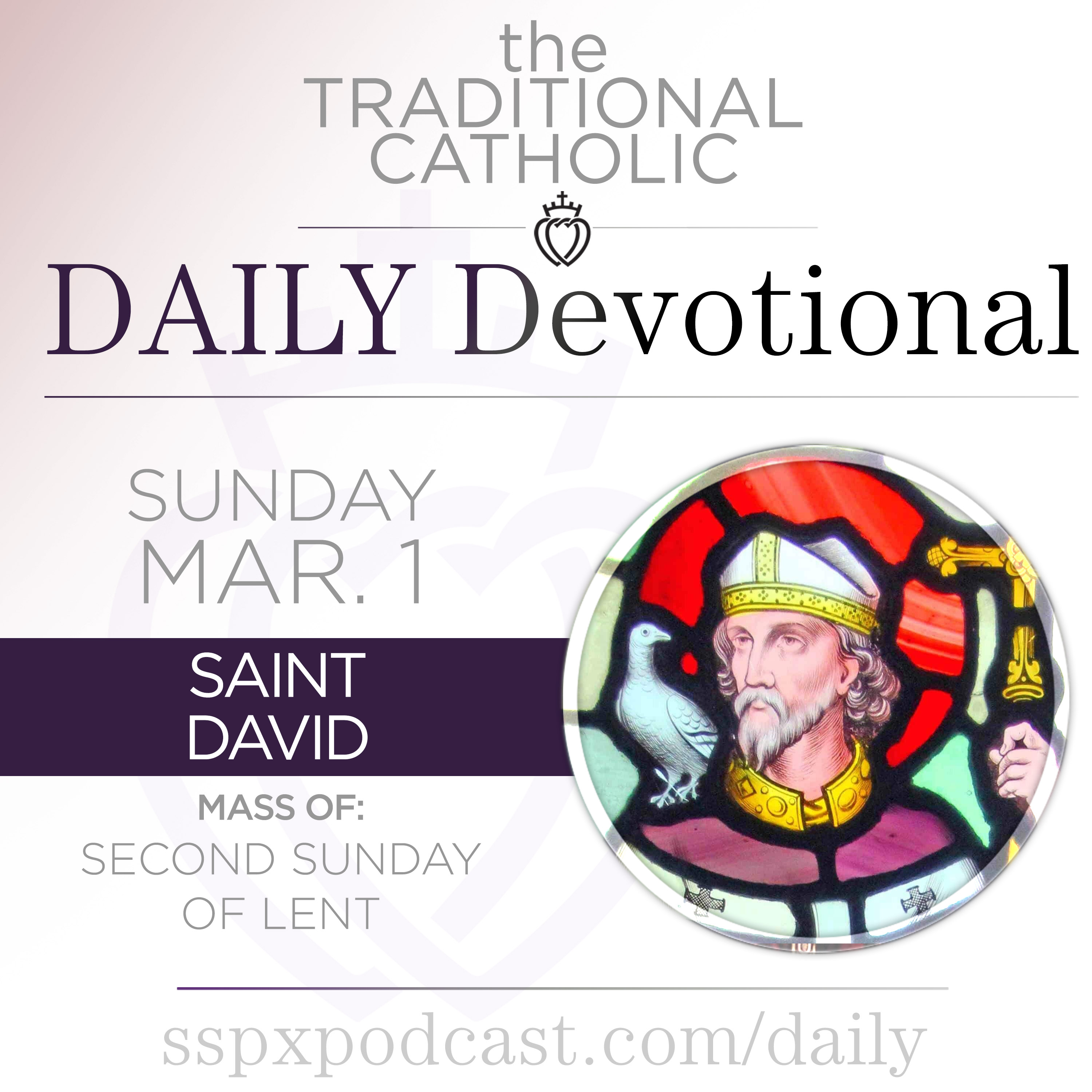
Mar 1 – 2nd Sun of Lent / S David
Description
It’s the Feast of 2nd Sun of Lent, 1st Class, with the color of Violet. In this episode: the meditation: “A Call To Holiness”, today’s news from the Church: “The Holy See Declines Donald Trump’s Invitation to the Peace Council”, and today’s thought from the Archbishop.
Have feedback or questions about the DD or our other shows? podcast@sspx.orgSources Used Today:
- “A Call To Holiness” – Toward Easter
- “The Holy See Declines Donald Trump’s Invitation to the Peace Council” (FSSPX.news)
- The Spiritual Life – Archbishop Lefebvre (Angelus Press)
Saint David of Wales stands as the great patron of his nation, a bishop whose holiness was shaped by austerity, clarity of preaching, and quiet authority. Born in the late fifth century in western Wales, David grew up in a land where Christianity was taking firm root after the Roman withdrawal. Tradition places his birth near the sea at Pembrokeshire, marked even then by signs of providence. What is certain is that David was formed in monastic discipline from a young age. He embraced prayer, fasting, and manual labor as the foundation of his spiritual life.
David founded several monastic communities across Wales, the most famous at Menevia, later known as St Davids. His monasteries were strict. The monks labored in the fields by hand, abstained from meat and alcohol, and lived simply, often drinking only water. David himself set the example, earning the nickname “Dewi the Waterman.” Yet his austerity was never harshness. Those who heard him preach described words filled with light and conviction. One of the most famous moments of his life occurred at a synod where he rose to speak against heresy. According to tradition, the ground beneath him lifted into a small hill so that all could hear him clearly, and a white dove settled on his shoulder as a sign of the Holy Spirit’s favor.
David’s leadership extended beyond his monastery walls. He traveled widely, strengthening Christian communities and opposing false teaching. His approach combined simplicity with firmness. He did not seek conflict, but he did not avoid it when truth required clarity. His counsel to his monks was practical and memorable: “Be joyful, keep the faith, and do the little things.” These words, preserved in Welsh tradition, capture the heart of his spirituality. Sanctity was not reserved for dramatic acts, but cultivated through daily fidelity.
He died around 589,