Episode Details
Back to Episodes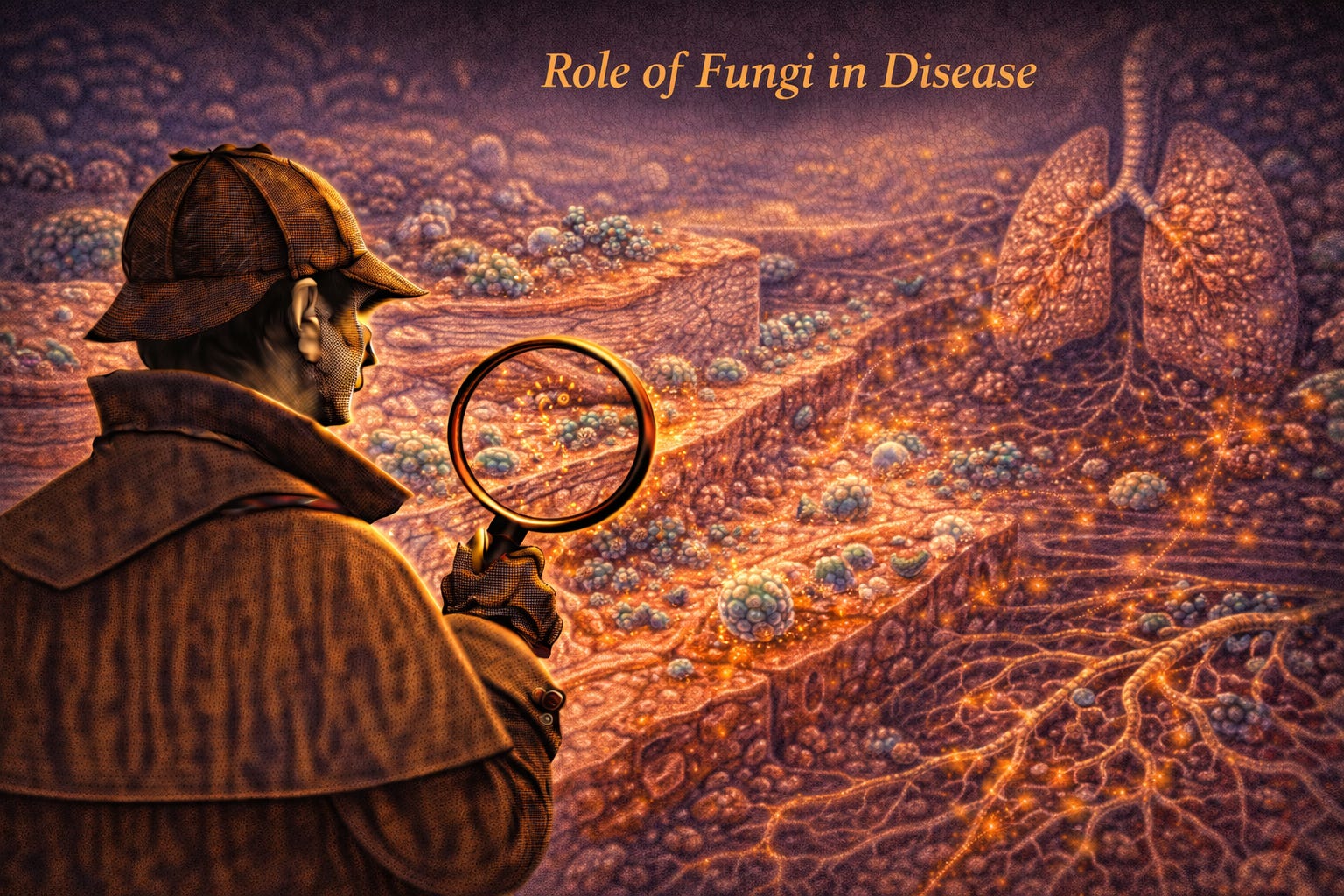
Micro 59: Role of Fungi in Disease
Description
This episode translates fungal mechanisms into clinical syndromes. Drawing from Murray’s Chapter 59, it examines how fungi produce disease across a spectrum - from superficial colonisation to invasive systemic infection.
The narrative is structured by depth of involvement:
* Superficial and cutaneous infections - dermatophytes, Candida, Malassezia
* Subcutaneous infections - following traumatic implantation
* Systemic endemic mycoses - inhaled environmental spores
* Opportunistic invasive infections - in immunocompromised hosts
The respiratory tract often serves as the portal of entry for systemic fungi. In healthy hosts, infection may be contained or asymptomatic. In vulnerable individuals, dissemination to brain, liver, or bloodstream may occur.
The episode emphasises that fungal disease frequently reflects host immune status. While some fungi are primary pathogens, many exploit weakened defences.
Conceptually, mycoses illustrate a gradient of invasion - from surface adherence to deep organ involvement. Clinically, depth determines severity, diagnostic approach, and therapeutic intensity.
Key Takeaways
* Fungal disease ranges from superficial to systemic
* Portal of entry often determines pattern
* Host immunity strongly influences outcome
* Endemic fungi infect via inhalation
* Opportunistic fungi invade during immune compromise
This is a public episode. If you'd like to discuss this with other subscribers or get access to bonus episodes, visit drmanaankarray.substack.com/subscribe