Episode Details
Back to Episodes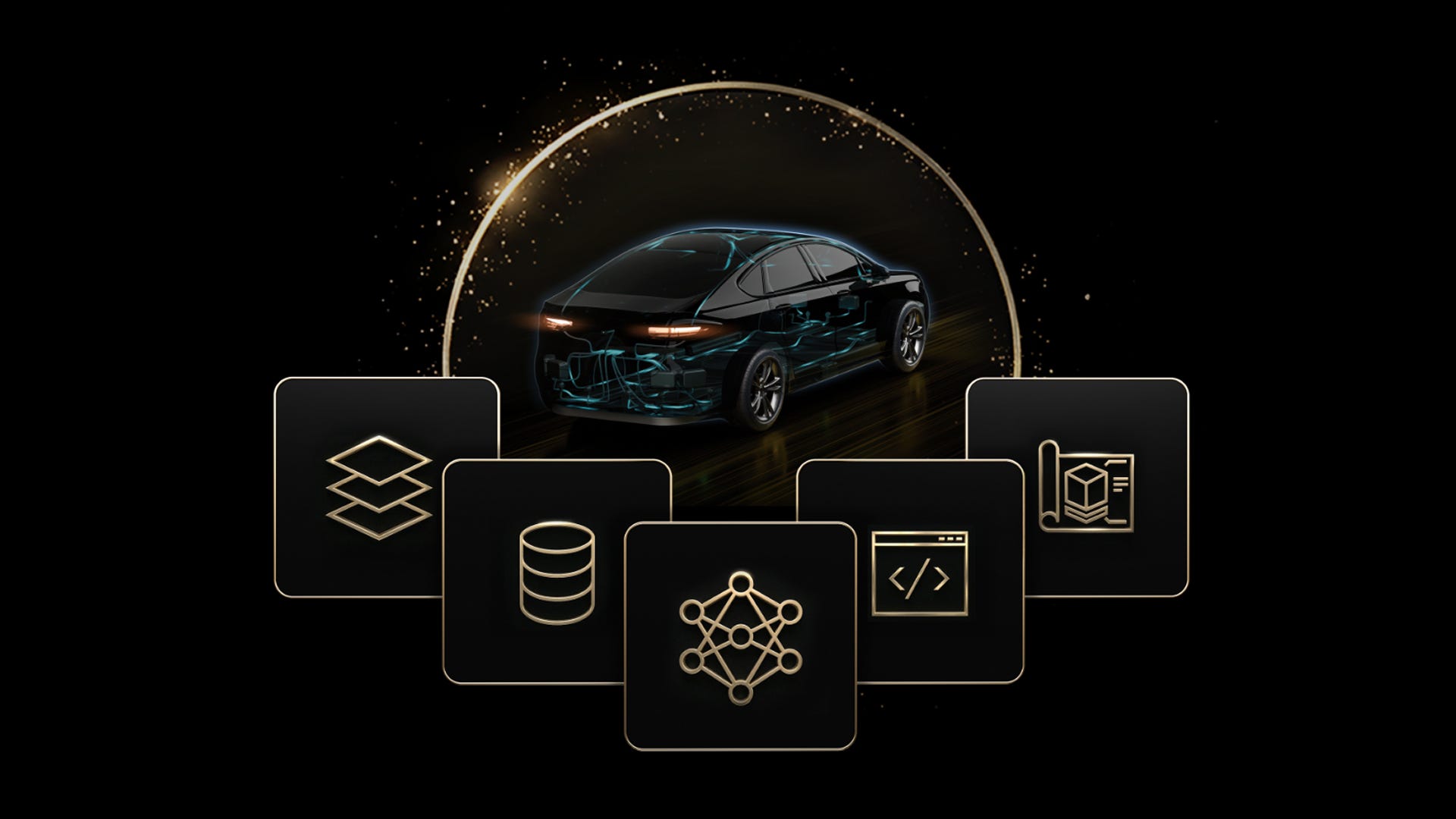
NVIDIA'S Open-Source Car Brain Just Landed in a Mercedes
Description
NVIDIA just lobbed a heat-seeking missile at Tesla’s Full Self-Driving empire. It’s called Alpamayo, and it doesn’t just want to drive your car. It wants to reason through traffic like a real human—with verbal explanations, open-source weights, and a brain that learns from simulation. And it’s not a concept. It ships this year, in the new Mercedes-Benz CLA.
As NVIDIA summed up the problem: AVs must safely operate across an enormous range of driving conditions. Rare, complex scenarios, often called the “long tail,” remain some of the toughest challenges for autonomous systems to safely master. Traditional AV architectures separate perception and planning, which can limit scalability when new or unusual situations arise.
The Alpamayo Stack: Think Before You Steer
Named after a Peruvian peak, Alpamayo is NVIDIA’s new “reasoning AI” platform for cars: a portfolio of ~10-billion-parameter models that take in real-time video and sensor data, break it into decision sub-tasks, and generate a trajectory—all while explaining their reasoning in natural language.
Think ChatGPT, but for merging onto I-405. And then doing it again. And again. Safely. Verbally. Auditable. That’s Alpamayo’s hook: explainability.
It’s not just a model, either. It’s a stack:
* AlpaSim: High-fidelity closed-loop simulation that trains and tests AI agents in virtual cities.
* Halos: A backup “classical” safety stack that monitors the AI’s choices and can yank the wheel if needed.
* Open datasets: Released publicly, hosted on Hugging Face. Yes, the weights are coming too.
Mercedes Is First, But Not Last
The first commercial deployment is the 2026 Mercedes-Benz CLA, built on the MB.OS architecture and NVIDIA’s full DRIVE AV stack. What you get: a Level 2++ system that handles point-to-point driving in urban and highway settings—hands on, eyes up, but AI in the loop the whole way.
Behind the scenes, that stack combines Alpamayo’s neural-policy brain with classic safety logic. It watches, reasons, explains. And if it screws up, the backup stack steps in.
That car will be on U.S. roads in 2026. Europe follows. Asia comes in 2027. No overpromising. Just a slow, deliberate ramp with regulators and human drivers fully in the mix.
“