Episode Details
Back to Episodes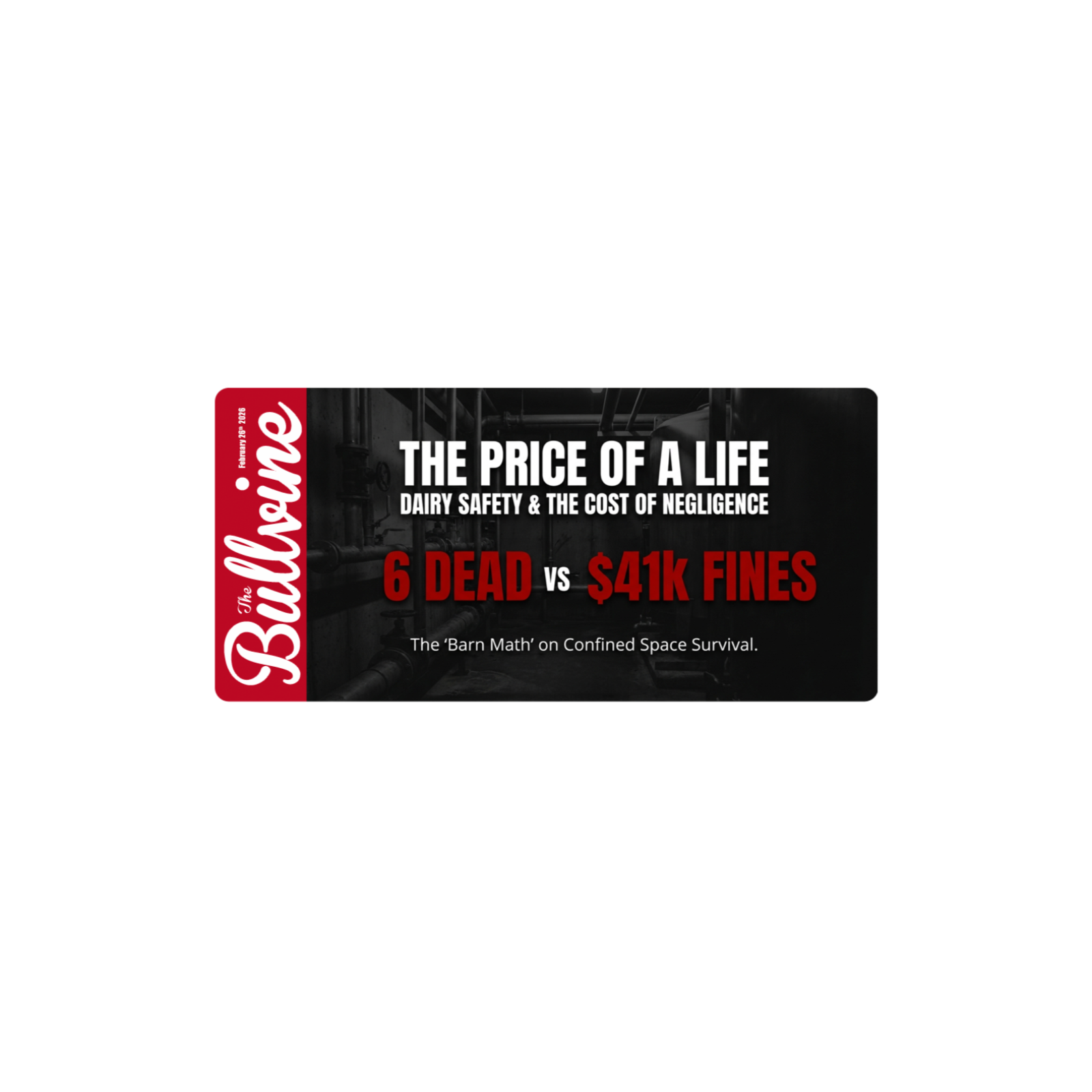
E500 Six Colorado Dairy Workers Dead. OSHA’s Price: $41,101 a Life – and no jail time.
Description
Six dairy workers — including a father, his two sons, and a son-in-law — died from hydrogen sulfide exposure in a single pump room at a Colorado dairy on August 20, 2025. Six months later, OSHA proposed $246,609 in total fines against the dairy and two contractors. That's $41,101 per life lost — less than a bulk tank, far less than a robotic milking unit, and a fraction of what civil courts typically award in confined-space fatalities. This episode breaks down exactly what happened at Prospect Valley Dairy near Keenesburg, who the six men were, why the fines landed where they did, and what every dairy operation with a manure pit, pump room, or below-grade channel needs to do this week.
Key Takeaways:
- Who were the six workers killed, and why were four of them from the same family?
- What specific OSHA violations were cited — and why none were classified as "willful"
- The rescue cascade: why one death became six, and the single training concept that stops it
- Why agriculture has no specific OSHA confined-space standard — and how that limits enforcement
- The barn math: what a full confined-space safety program costs vs. a single OSHA fine vs. a wrongful death settlement
- What DFA and NMPF said after six workers died — and what they didn't do
- Idaho's model: how one state's dairy association built confined-space training after similar deaths
- A concrete 30/90/365-day confined-space checklist for your operation
Deeper Dive — Why Listen:
This isn't another news summary. We ran the numbers nobody else published. A basic confined-space entry program — gas monitor, ventilation blower, annual crew training, rescue tripod, written procedures — runs $3,800 to $6,500 in year one. That's roughly the price of two replacement dairy cows at today's record prices. Meanwhile, Purdue University's Agricultural Confined Space Incident Database shows wrongful death settlements in these cases typically range from $10 to $17 million.
The episode traces the structural gap that made this tragedy predictable: agriculture's partial OSHA exemption, the 1976 congressional appropriations rider that shields small farms from inspection, and the absence of a confined-space standard that applies to dairy operations. We examine why OSHA could only cite "serious" violations — not "willful" — and why that classification means no criminal charges and no jail time, despite six preventable deaths.
Read the full investigation, including the OSHA citation breakdown, barn math tables, and the complete 30/90/365-day confined-space checklist, at https://www.thebullvine.com/management/six-colorado-dairy-workers-dead-oshas-price-41101-a-life-and-no-jail-time/
This is the first episode in our new series, The Price of a Life — examining what dairy worker safety actually costs, and what ignoring it costs more.
If you or someone on your operation is struggling: call or text 988 (Suicide & Crisis Lifeline) or reach Farm Aid at 1-800-FARM-AID.
Subscribe to The Bullvine Podcast so you don't miss the next episode in this series. Share this one with your herd manager, your crew lead, or anyone on your operation who walks past a manure pit this week. Find us on Facebook at The Bullvine — and tell us: when's the last time someone on your dairy did a confined-space check?