Episode Details
Back to Episodes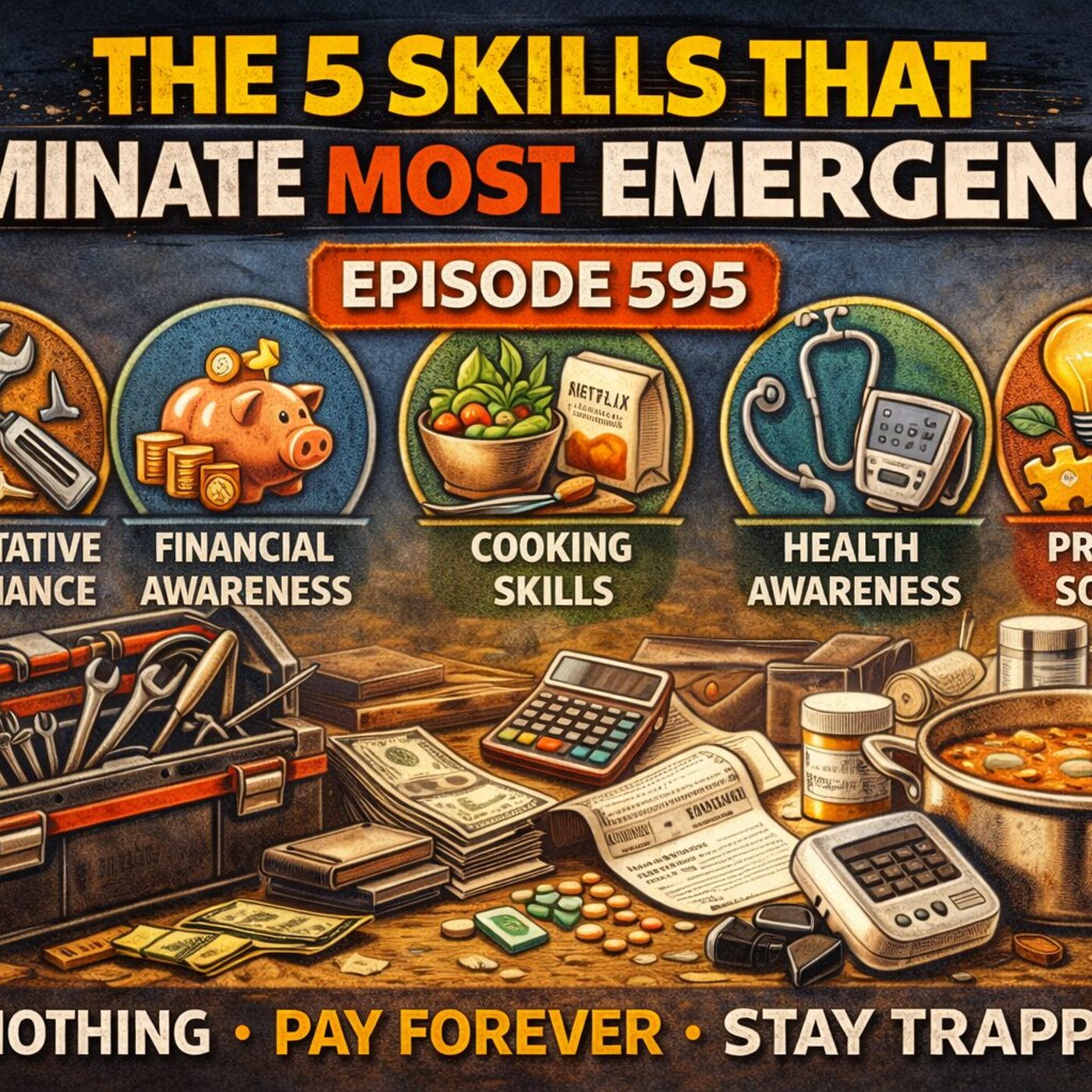
The 5 Skills That Eliminate Most Emergencies | Episode 595
Episode 595
Published 6 hours ago
Description
5 emergencies The 5 Skills That Eliminate Most Emergencies | Episode 595 Good morning. It’s 18 degrees. Tennessee decided to remind us who’s in charge. This is James from SurvivalPunk.com. Today we’re talking about something that doesn’t get enough credit in prepping circles. Not gear. Not bunker fantasies. Skills. Five specific skills that eliminate most emergencies before they ever become emergencies. Let’s get into it. 1. Preventative Maintenance There are two types of people. The proactive maintenance crowd. And the rest of us. I’ll admit — I’m not perfect at it. But I know better. And knowing better already puts you ahead. Basic maintenance prevents most mechanical disasters: • Oil changes
• Cleaning AC units
• Replacing spark plugs
• Checking filters
• Roof inspections
• HVAC servicing I clean our window units every year. Pull them out, dismantle them, clean the coils, clear the sludge. Since I started doing that, they’ve lasted years longer. Most people run things until they fail. Failure is expensive. Maintenance is cheap. Same goes for your car. Same goes for your house. Ignore it long enough and you’re buying a new roof instead of patching a leak. Preventative maintenance turns “emergency repair” into “routine upkeep.” 2. Financial Awareness Most “emergencies” are just financial mismanagement. Overdraft fees.
Late fees.
Impulse spending.
Untracked subscriptions.
Lifestyle creep. You don’t need to make more money.
You need to control the money you already make. When my wife and I started actually tracking spending and living on a budget, we built savings fast. No magic.
No lottery.
No second job. Just awareness. Turn off overdraft protection so transactions decline instead of charging you $35 to be broke. Set alerts. Call and negotiate fees when they happen. Financial awareness eliminates overdraft emergencies, debt spirals, and panic purchases. Most financial disasters are preventable. 3. Cooking From Basic Ingredients If you can cook from scratch, shortages don’t wreck you. Missing celery?
Pivot. No carrots in the store?
Make something else. Eggs gone?
Mayo works in cornbread. If you rely on recipes as rigid law, you panic. If you understand ingredients and substitutions, you adapt. Cooking skill equals flexibility. Flexibility eliminates food stress. You don’t need a fully stocked gourmet kitchen. You need knowledge. And honestly? AI is great for this. “Hey, I have chicken, rice, and canned tomatoes. What can I make?” Boom. Ideas. Over time, you build your own mental database. That eliminates grocery store drama. 4. Basic Health & First Aid Awareness Don’t ignore your health. Monitor blood pressure.
Watch blood sugar.
Get basic labs done.
Exercise.
Eat like an adult. Letting your health degrade until you’re dependent on emergency medicine is the opposite of preparedness. You don’t have to become a biohacker. But you should know your numbers. You should understand symptoms. You should have basic first aid skills. Most long-term “health emergencies” are years in the making. Early action prevents crisis. 5. Calm Problem Solving This one is huge. When something goes wrong: Slow down. Assess. Act deliberately. Panicking compounds problems. Calm thinking:
• Avoids dumb decisions
• Reduces accidents
• Keeps conflict small
• Stops mistakes from stacking Most situations aren’t life-or-death. They feel like it because people escalate emotionally. Calm problem solving turns chaos into steps. And steps are manageable. Final Thoughts Most disasters aren’t hurricanes or EMPs. They’re: • Neglected maintenance
• Financial sloppiness
• Poor health
• Inability to cook
• Cleaning AC units
• Replacing spark plugs
• Checking filters
• Roof inspections
• HVAC servicing I clean our window units every year. Pull them out, dismantle them, clean the coils, clear the sludge. Since I started doing that, they’ve lasted years longer. Most people run things until they fail. Failure is expensive. Maintenance is cheap. Same goes for your car. Same goes for your house. Ignore it long enough and you’re buying a new roof instead of patching a leak. Preventative maintenance turns “emergency repair” into “routine upkeep.” 2. Financial Awareness Most “emergencies” are just financial mismanagement. Overdraft fees.
Late fees.
Impulse spending.
Untracked subscriptions.
Lifestyle creep. You don’t need to make more money.
You need to control the money you already make. When my wife and I started actually tracking spending and living on a budget, we built savings fast. No magic.
No lottery.
No second job. Just awareness. Turn off overdraft protection so transactions decline instead of charging you $35 to be broke. Set alerts. Call and negotiate fees when they happen. Financial awareness eliminates overdraft emergencies, debt spirals, and panic purchases. Most financial disasters are preventable. 3. Cooking From Basic Ingredients If you can cook from scratch, shortages don’t wreck you. Missing celery?
Pivot. No carrots in the store?
Make something else. Eggs gone?
Mayo works in cornbread. If you rely on recipes as rigid law, you panic. If you understand ingredients and substitutions, you adapt. Cooking skill equals flexibility. Flexibility eliminates food stress. You don’t need a fully stocked gourmet kitchen. You need knowledge. And honestly? AI is great for this. “Hey, I have chicken, rice, and canned tomatoes. What can I make?” Boom. Ideas. Over time, you build your own mental database. That eliminates grocery store drama. 4. Basic Health & First Aid Awareness Don’t ignore your health. Monitor blood pressure.
Watch blood sugar.
Get basic labs done.
Exercise.
Eat like an adult. Letting your health degrade until you’re dependent on emergency medicine is the opposite of preparedness. You don’t have to become a biohacker. But you should know your numbers. You should understand symptoms. You should have basic first aid skills. Most long-term “health emergencies” are years in the making. Early action prevents crisis. 5. Calm Problem Solving This one is huge. When something goes wrong: Slow down. Assess. Act deliberately. Panicking compounds problems. Calm thinking:
• Avoids dumb decisions
• Reduces accidents
• Keeps conflict small
• Stops mistakes from stacking Most situations aren’t life-or-death. They feel like it because people escalate emotionally. Calm problem solving turns chaos into steps. And steps are manageable. Final Thoughts Most disasters aren’t hurricanes or EMPs. They’re: • Neglected maintenance
• Financial sloppiness
• Poor health
• Inability to cook