Episode Details
Back to Episodes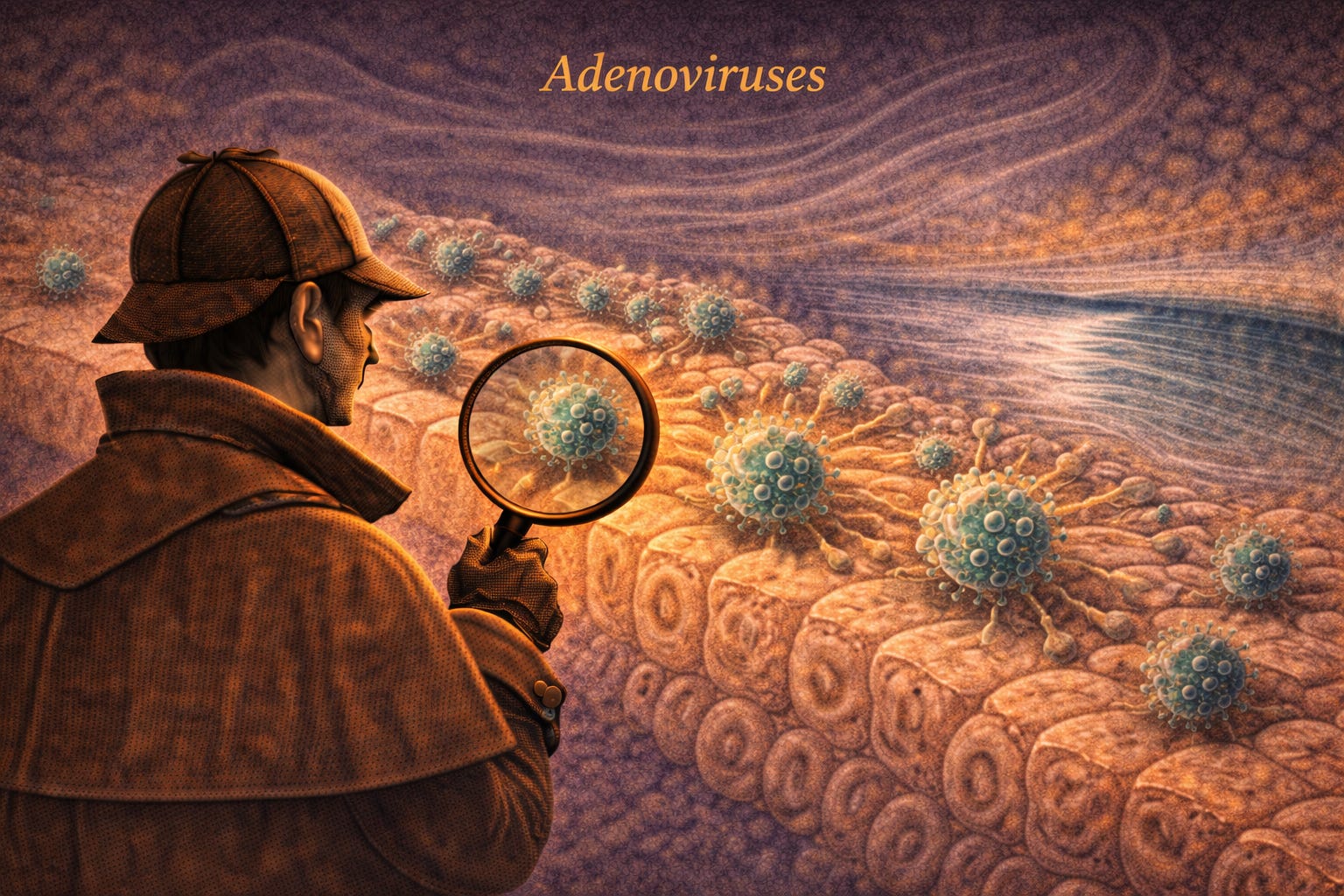
Micro 42: Adenoviruses
Description
This episode explores adenoviruses, medium-sized, non-enveloped double-stranded DNA viruses known for environmental resilience and broad tissue tropism. Drawing from Murray’s Chapter 42, it examines how structural stability supports widespread transmission.
The narrative begins with viral architecture: icosahedral symmetry with distinctive fibre projections that mediate cellular attachment. Their lack of an envelope makes them resistant to drying, detergents, and environmental stress - enabling efficient spread in community settings.
Clinically, adenoviruses are associated with:
* Pharyngitis and respiratory illness
* Conjunctivitis, including epidemic keratoconjunctivitis
* Gastroenteritis, particularly in children
* Haemorrhagic cystitis
* Severe disease in immunocompromised hosts
The episode emphasises inflammatory pathology rather than latency. Unlike herpesviruses, adenoviruses generally cause acute, self-limited infection, though they may persist in lymphoid tissue.
Conceptually, adenoviruses represent structural durability paired with mucosal targeting. Clinically, infection control - especially in institutional settings - becomes central.
Key Takeaways
* Adenoviruses are non-enveloped double-stranded DNA viruses
* Environmental stability enhances transmission
* Commonly cause respiratory and ocular infections
* Severe disease may occur in immunocompromised patients
* Infection control limits outbreaks
This is a public episode. If you'd like to discuss this with other subscribers or get access to bonus episodes, visit drmanaankarray.substack.com/subscribe