Episode Details
Back to Episodes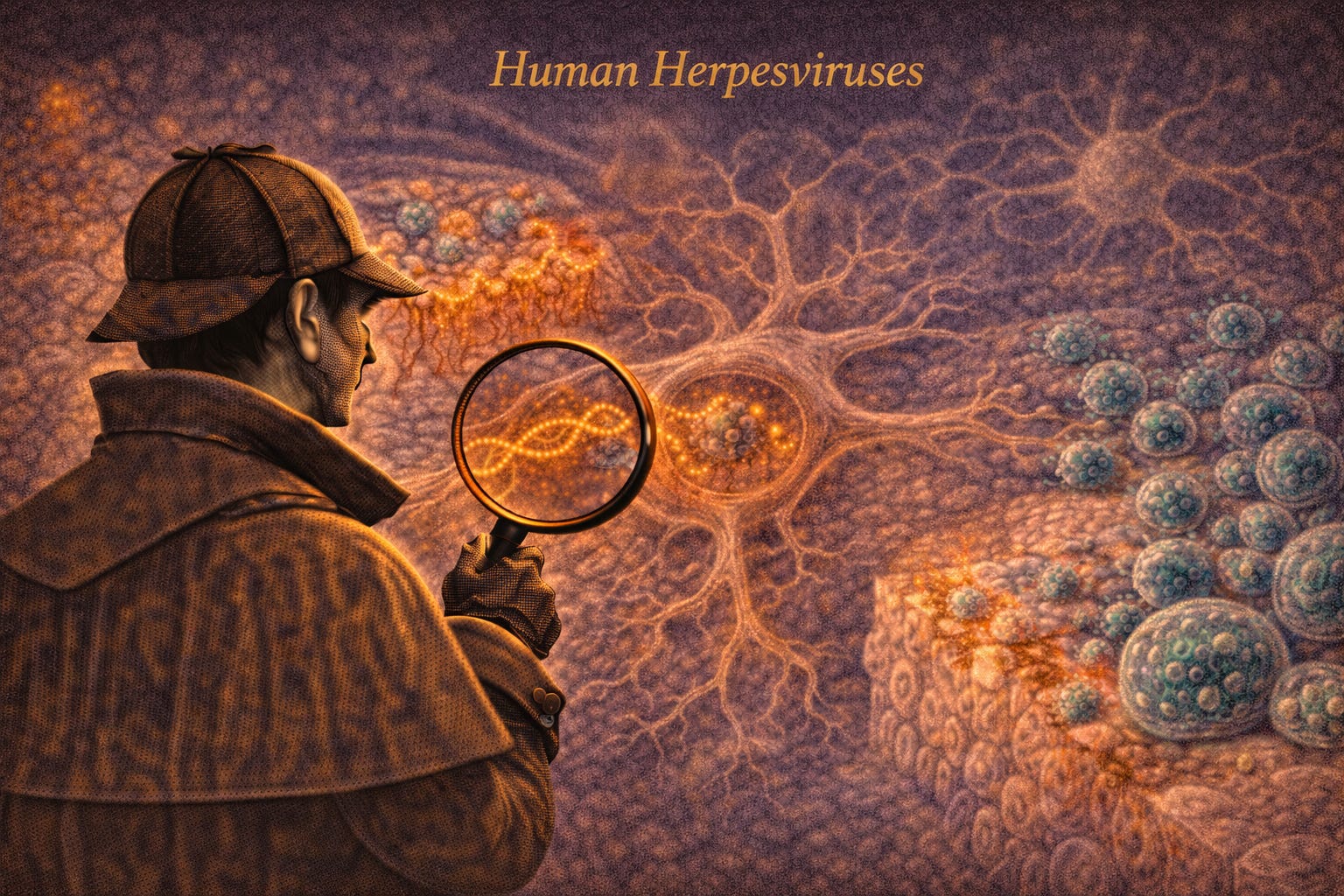
Micro 43: Human Herpesviruses
Description
This episode explores the human herpesvirus family, a group of enveloped double-stranded DNA viruses defined by their ability to establish lifelong latency. Drawing from Murray’s Chapter 43, it examines how acute infection transitions into persistent genomic silence with episodic reactivation.
The narrative is structured around the major human herpesviruses:
* HSV-1 and HSV-2 - mucocutaneous disease with neuronal latency
* Varicella-zoster virus (VZV) - primary varicella followed by dermatomal reactivation as shingles
* Epstein–Barr virus (EBV) - infectious mononucleosis and lymphoproliferative disease
* Cytomegalovirus (CMV) - congenital infection and immunocompromised disease
* HHV-6 and HHV-7 - roseola
* HHV-8 - Kaposi sarcoma
The defining concept is latency: viral genomes persist within specific cell types (neurons, B cells, monocytes), remaining transcriptionally quiet until triggered.
Clinically, herpesviruses illustrate immune containment rather than eradication. Disease emerges when immunity falters or when viral reactivation occurs in vulnerable tissues.
Key Takeaways
* Herpesviruses are enveloped double-stranded DNA viruses
* They establish lifelong latency
* Reactivation produces recurrent disease
* Some members are oncogenic
* Immunocompromised patients are at particular risk
This is a public episode. If you'd like to discuss this with other subscribers or get access to bonus episodes, visit drmanaankarray.substack.com/subscribe