Episode Details
Back to Episodes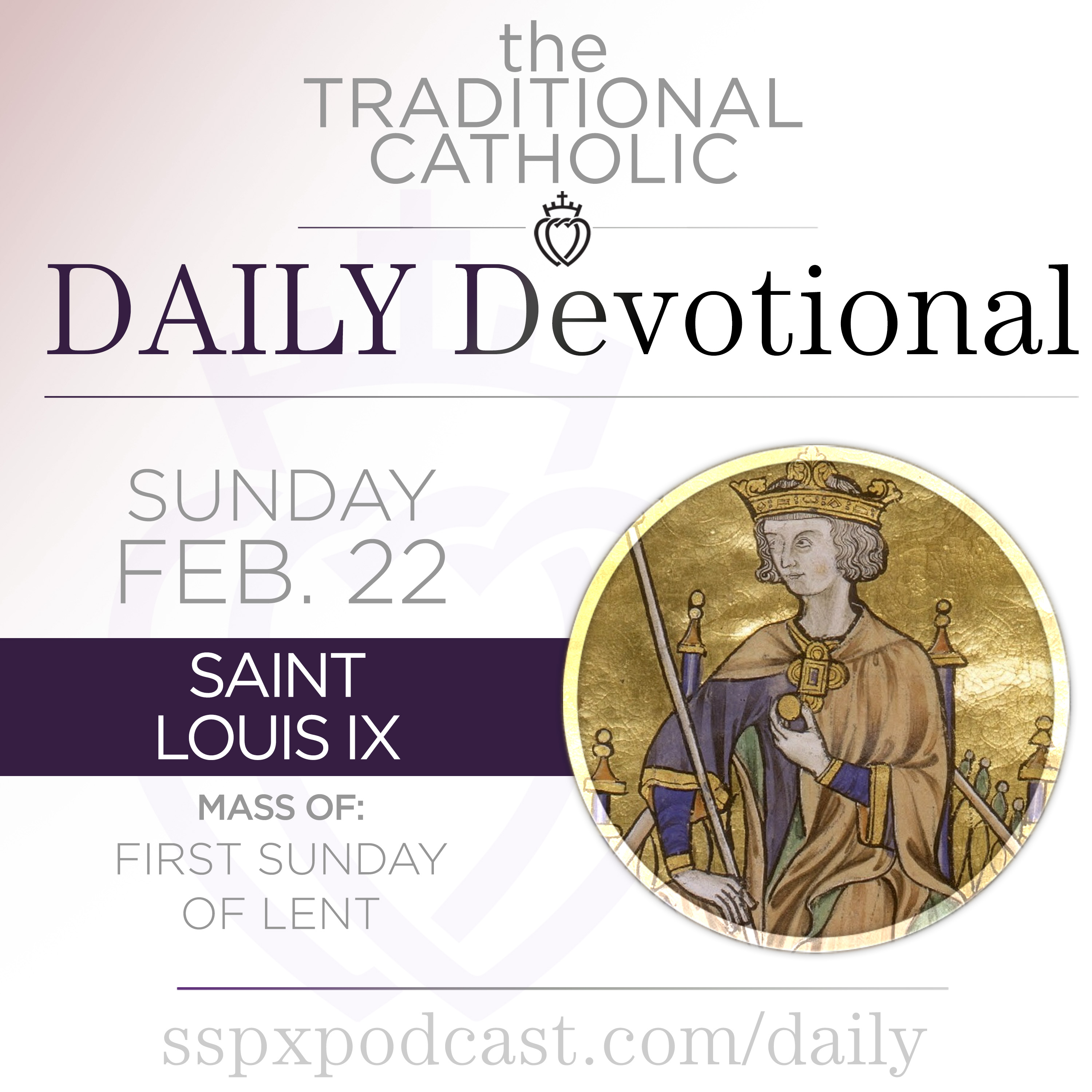
Feb 22 – 1st Sun of Lent / S Louis IX
Description
It’s the First Sunday of Lent, 1st Class, with the color of Violet. In this episode: the meditation: “The Time of Prayer”, today’s news from the Church: “Apostolic Journeys 2026”, and today’s thought from the Archbishop.
Have feedback or questions about the DD or our other shows? podcast@sspx.orgSources Used Today:
- “The Time of Prayer” – Toward Easter
- “Apostolic Journeys 2026” (FSSPX.news)
- The Spiritual Life – Archbishop Lefebvre (Angelus Press)
Saint Louis IX of France stands as one of the rare rulers in history whose political authority was unmistakably shaped by personal holiness. Born in 1214, Louis inherited the French throne at the age of twelve after the death of his father. His mother, Queen Blanche of Castile, governed as regent and formed him deeply in faith, discipline, and reverence for justice. She is said to have told him that she would rather see him dead than guilty of mortal sin. That conviction marked his kingship from the beginning.
As king, Louis combined firmness in governance with genuine humility. He saw his authority not as entitlement but as stewardship. He attended daily Mass, practiced personal penance, and cared carefully for the poor. He founded hospitals, visited the sick, and insisted that justice be administered fairly, even when it required ruling against powerful nobles. Louis reformed legal procedures in France, emphasizing written records and appeals to ensure equity. He was known to sit beneath an oak tree at Vincennes, hearing the petitions of common people directly. His court became a center of learning and piety, and he supported the building of Sainte Chapelle to house relics of the Passion.
Louis also lived in a time when crusading was considered a sacred duty. He led two crusades to the Holy Land, driven not by conquest alone but by devotion and a desire to protect Christian communities. The first crusade ended in captivity in Egypt, where Louis endured imprisonment with composure and negotiated the release of his army through ransom. Rather than return immediately to France, he remained in the East for several years, strengthening fortifications and supporting local Christians. His final crusade to North Africa in 1270 ended in tragedy. Disease struck the camp, and Louis himself died near Tunis, praying the psalms as he prepared to meet God.
What distinguished Louis was not military success but spiritual integrity. He confessed regularly, fasted strictly, and governed with the awareness