Episode Details
Back to Episodes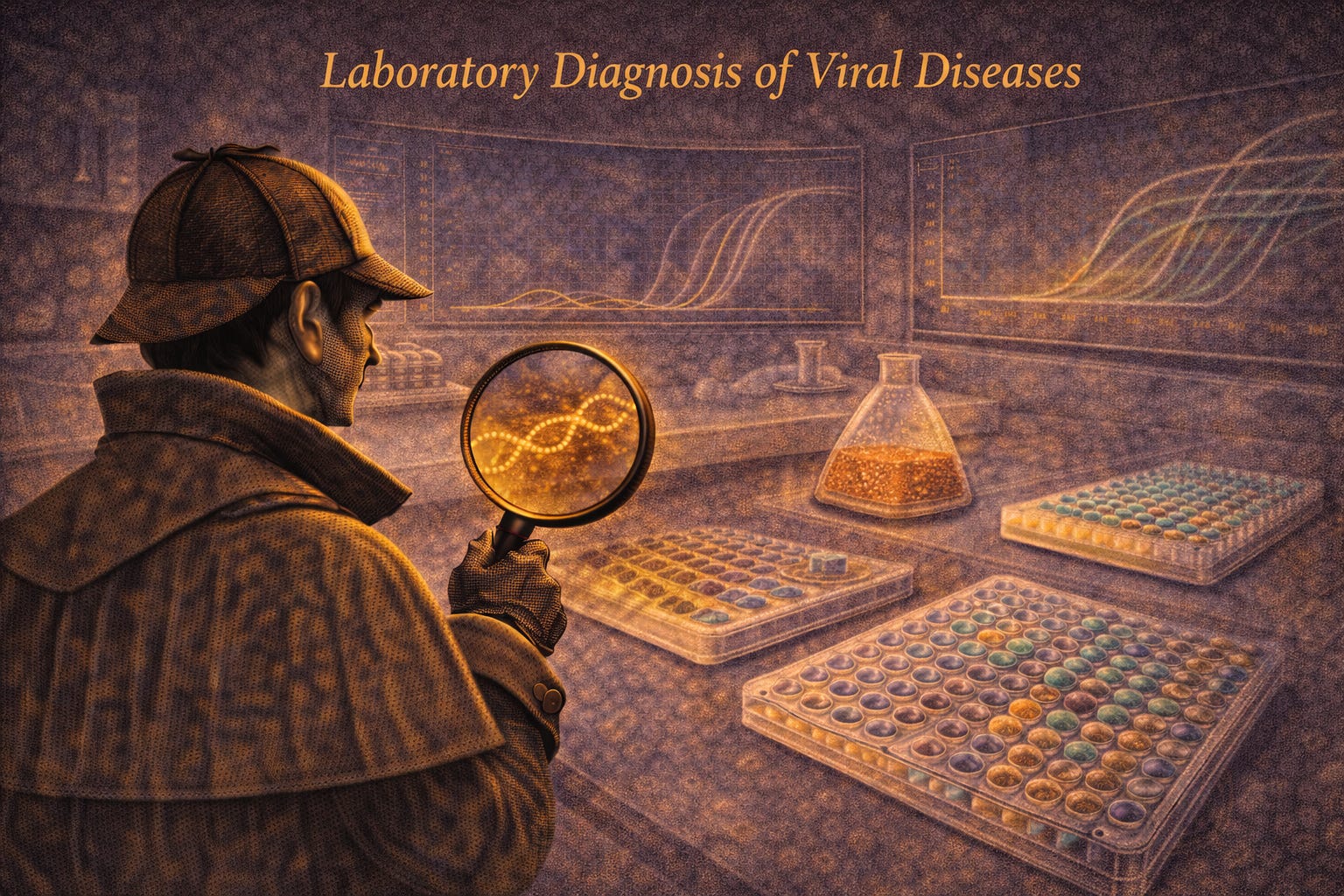
Micro 39: Laboratory Diagnosis of Viral Diseases
Description
This episode brings virology back to the laboratory. Drawing from Murray’s Chapter 39, it explores how viral diagnosis differs fundamentally from bacterial methods - because viruses cannot grow independently in standard culture systems.
The narrative begins with specimen timing and selection, emphasising that viral detection often depends on capturing infection during active replication. It then moves through the major diagnostic strategies:
* Direct detection of viral components - antigen assays and nucleic acid amplification tests
* Serologic testing - acute versus convalescent titres
* Cell culture systems - cytopathic effects in specialised lines
* Quantitative viral load monitoring - especially in chronic infections such as HIV or hepatitis
The episode highlights that sensitivity has increased dramatically with molecular techniques, yet interpretation remains clinically contextual. Detection does not always equal disease; viral shedding may persist after symptom resolution.
Conceptually, viral diagnosis is about recognising replication signatures rather than isolating living organisms. Clinically, early and accurate detection guides infection control, antiviral therapy, and public health response.
Key Takeaways
* Viruses require specialised diagnostic methods
* Molecular techniques provide rapid, sensitive detection
* Serology helps determine timing of infection
* Viral load measurement informs chronic disease management
* Clinical interpretation remains essential
This is a public episode. If you'd like to discuss this with other subscribers or get access to bonus episodes, visit drmanaankarray.substack.com/subscribe