Episode Details
Back to Episodes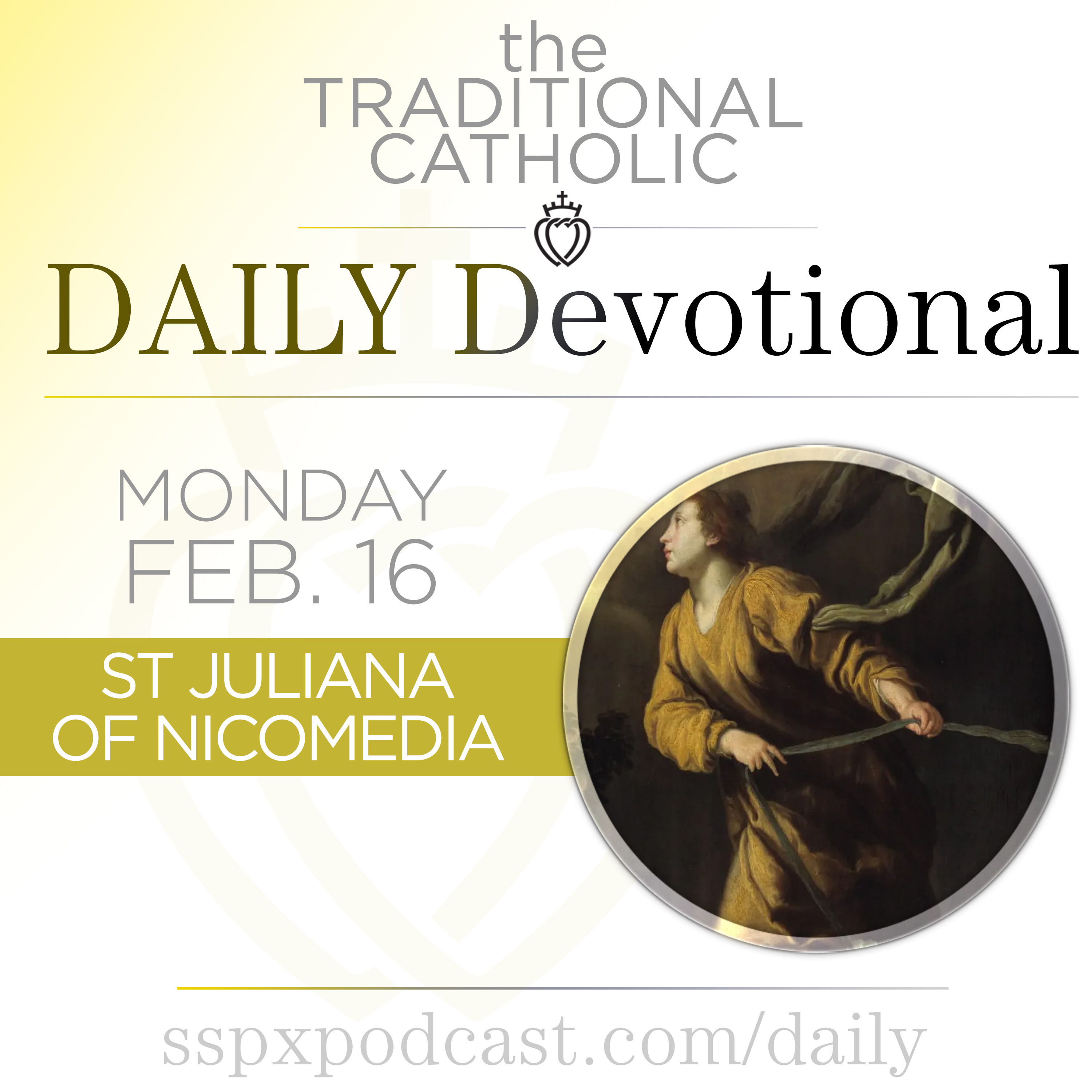
Feb 16 – Feria / S Juliana Nicomedia
Published 1 month, 3 weeks ago
Description
It’s a Feria, 4th class, with the color of violet. In this episode: The meditation: “The Incomprehension of the Apostles,” today’s news from the Church: “Can the SSPX Be Forbidden To Do What Is Permitted to the Chinese Communist Party?,” a preview of the Sermon: “Holy Enthusiasm for Lent,” and today’s thought from the Archbishop.
Have feedback or questions about the DD or our other shows? podcast@sspx.org
Saint Juliana of Nicomedia is one of the early virgin martyrs whose story reflects both fierce persecution and interior spiritual combat. She lived in the late third or early fourth century in Nicomedia, a city in Asia Minor that served as an imperial residence and a center of pagan worship. Juliana was born into a pagan family, and her father arranged a marriage for her to a Roman official named Eleusius. Outwardly, her life seemed destined for comfort and influence. Inwardly, she had already given herself entirely to Christ. When her suitor discovered that she was a Christian, he attempted persuasion before resorting to force. Juliana remained firm, refusing both marriage and sacrifice to the Roman gods. Her fidelity was not defiant but serene. She declared that she would not betray her heavenly Bridegroom for earthly advantage. This refusal angered both her father and Eleusius, who saw in her constancy not devotion but rebellion. She was arrested and brought before authorities during a period of intensified persecution under Emperor Maximian. The accounts of her martyrdom, preserved in early Christian tradition, emphasize the spiritual dimension of her trial. Juliana endured imprisonment, beatings, and torture, yet remained composed. One striking element of her story involves a confrontation with the devil himself, who, disguised as an angel, attempted to persuade her to compromise for survival. Juliana recognized the deception and rebuked the tempter, symbolizing the deeper battle underlying her physical suffering. Whether understood literally or as a spiritual allegory, this episode underscores the Church’s conviction that martyrdom is not merely bodily endurance but spiritual victory. After prolonged torture failed to break her, Juliana was executed by beheading. Her death likely occurred around the year 304. Her witness spread quickly through the Christian world, especially in the East. Churches were dedicated in her honor, and her name entered liturgical memory as a symbol of purity joined with courage. Her martyrdom demonstrated that even young and socially vulnerable believers could withstand imperial pressure through grace. Devotion to Saint Juliana of Nicomedia s
Sources Used Today:
- “The Incomprehension of the Apostles”
- “Can the SSPX Be Forbidden To Do What Is Permitted to the Chinese Communist Party?” (FSSPX.news)
- “Holy Enthusiasm for Lent” (SSPX Sermons)
- The Spiritual Life- Archbishop Lefebvre (Angelus Press)
Saint Juliana of Nicomedia is one of the early virgin martyrs whose story reflects both fierce persecution and interior spiritual combat. She lived in the late third or early fourth century in Nicomedia, a city in Asia Minor that served as an imperial residence and a center of pagan worship. Juliana was born into a pagan family, and her father arranged a marriage for her to a Roman official named Eleusius. Outwardly, her life seemed destined for comfort and influence. Inwardly, she had already given herself entirely to Christ. When her suitor discovered that she was a Christian, he attempted persuasion before resorting to force. Juliana remained firm, refusing both marriage and sacrifice to the Roman gods. Her fidelity was not defiant but serene. She declared that she would not betray her heavenly Bridegroom for earthly advantage. This refusal angered both her father and Eleusius, who saw in her constancy not devotion but rebellion. She was arrested and brought before authorities during a period of intensified persecution under Emperor Maximian. The accounts of her martyrdom, preserved in early Christian tradition, emphasize the spiritual dimension of her trial. Juliana endured imprisonment, beatings, and torture, yet remained composed. One striking element of her story involves a confrontation with the devil himself, who, disguised as an angel, attempted to persuade her to compromise for survival. Juliana recognized the deception and rebuked the tempter, symbolizing the deeper battle underlying her physical suffering. Whether understood literally or as a spiritual allegory, this episode underscores the Church’s conviction that martyrdom is not merely bodily endurance but spiritual victory. After prolonged torture failed to break her, Juliana was executed by beheading. Her death likely occurred around the year 304. Her witness spread quickly through the Christian world, especially in the East. Churches were dedicated in her honor, and her name entered liturgical memory as a symbol of purity joined with courage. Her martyrdom demonstrated that even young and socially vulnerable believers could withstand imperial pressure through grace. Devotion to Saint Juliana of Nicomedia s