Episode Details
Back to Episodes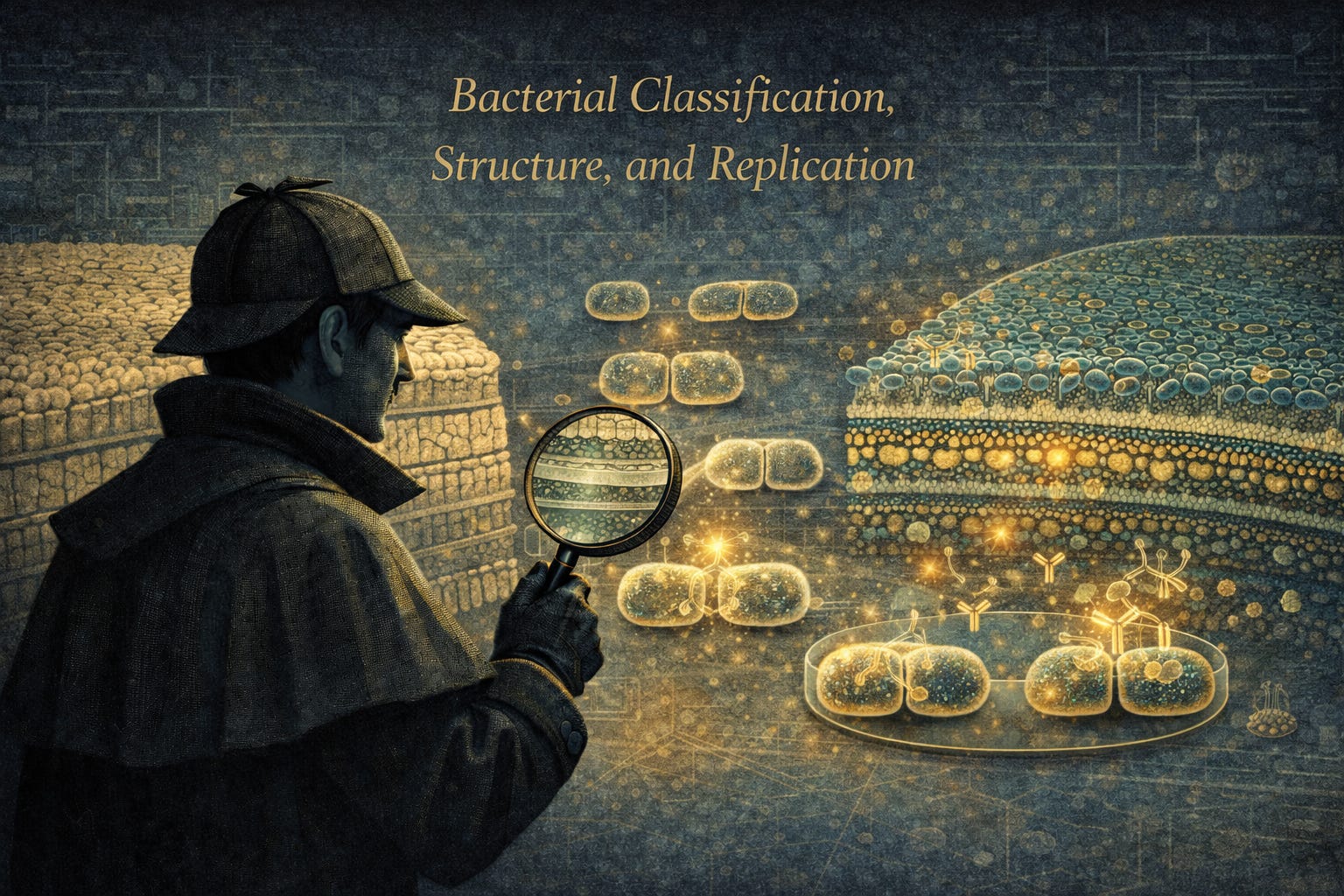
Micro 12: Bacterial Classification, Structure, and Replication
Description
This episode marks the formal beginning of bacteriology. Drawing from Murray’s chapter, it introduces bacteria not as clinical labels, but as structured biological systems defined by their morphology, cell wall composition, genetic organisation, and modes of replication.
The episode explores Gram-positive and Gram-negative architecture, cell membranes, peptidoglycan layers, outer membranes, endotoxin, flagella, pili, and capsules. Classification is framed as a reflection of structure and behaviour rather than mere naming convention. Binary fission, growth kinetics, and environmental adaptability reveal bacteria as highly efficient replicators capable of rapid expansion under favourable conditions.
Clinically, understanding structure explains antibiotic targets, virulence mechanisms, staining characteristics, and patterns of disease. Conceptually, this chapter provides the structural vocabulary required for every bacterial pathogen discussed later in the series.
Key Takeaways
* Bacterial classification reflects structural and genetic features
* Gram-positive and Gram-negative cell walls differ fundamentally
* Structural components influence virulence and immune recognition
* Binary fission enables rapid population expansion
* Structure determines vulnerability to antibiotics
This is a public episode. If you'd like to discuss this with other subscribers or get access to bonus episodes, visit drmanaankarray.substack.com/subscribe