Episode Details
Back to Episodes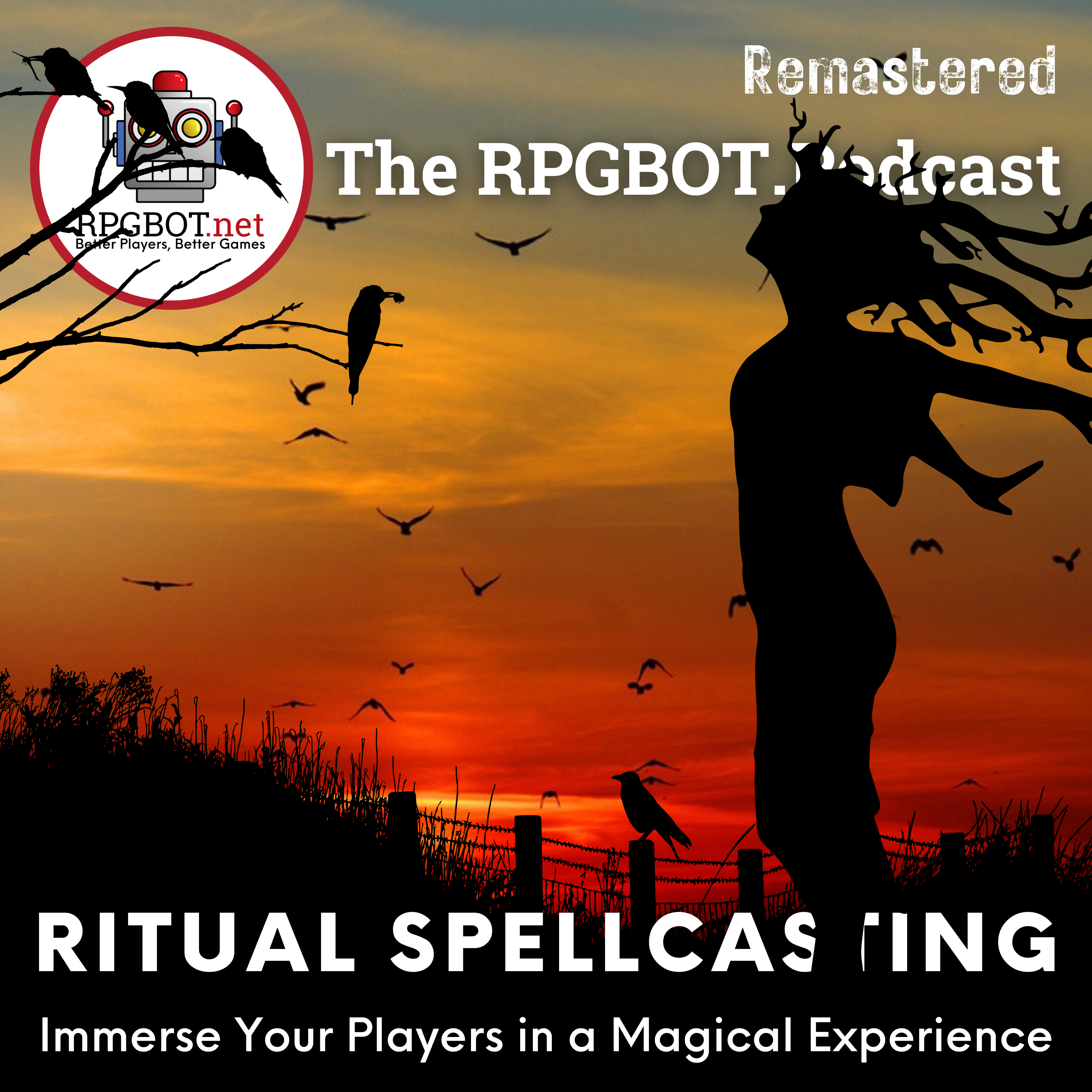
RITUAL SPELLCASTING (Remastered): Immerse your players in a magical experience!
Description
Ritual spellcasting is the part of tabletop roleplaying games where wizards stop blowing things up for ten minutes and instead argue about chalk circles, incense pricing, and whether chanting counts as a somatic component if you're holding snacks. In this episode of the RPGBOT.Podcast, we dive deep into D&D ritual casting mechanics, explore how Pathfinder and 5e ritual spells change encounter pacing, and discuss how to turn out-of-combat magic systems into storytelling tools instead of bookkeeping exercises. Because sometimes the real magic isn't Fireball — it's spending eleven minutes summoning a familiar while your party rogue steals your candles.
Show NotesRitual magic sits in a fascinating design space across modern tabletop RPG systems, particularly in Dungeons & Dragons 5e ritual spellcasting rules, where casting without expending spell slots reshapes resource management and exploration play. In this episode, the hosts explore how ritual casting in tabletop RPGs functions both as a mechanical subsystem and as a narrative lever for immersion. Rather than treating ritual spells like background noise, we discuss ways GMs and players can frame non-combat spellcasting mechanics as collaborative storytelling moments that reinforce tone, pacing, and worldbuilding.
The conversation begins with a mechanical breakdown of how ritual casting works in D&D, including class access, preparation requirements, and opportunity cost. We compare approaches to ritual magic systems in Pathfinder and other TTRPGs, highlighting how design differences affect party planning and gameplay tension. Along the way, we touch on optimization considerations for players researching best ritual spells for utility and exploration, and how ritual access can shape character identity outside of combat encounters.
From there, the discussion pivots toward table culture and presentation. Ritual casting is an opportunity to create sensory texture — chanting, environmental interaction, symbolic components — and we outline practical techniques for GMs seeking to immerse players through magical storytelling. This includes pacing strategies, spotlight balance, and methods for integrating ritual outcomes into ongoing campaign arcs rather than treating them as isolated mechanics.
Finally, we address common pitfalls. Overuse can trivialize challenges, while underuse wastes design space. By framing rituals as collaborative scenes instead of background automation, tables can unlock deeper engagement with fantasy roleplaying immersion techniques and reinforce the feeling that magic is mysterious, costly, and meaningful.
Whether you're optimizing your spellbook or building cinematic magical moments, this episode provides both system mastery and creative inspiration for getting more out of ritual spellcasting at your table.
Key Takeaways- Ritual spellcasting in D&D 5e allows slot-free utility casting but requires time investment and preparation planning
- Understanding how ritual casting works in tabletop RPG systems helps players optimize exploration and resource management
- Many best ritual spells for roleplaying immersion shine outside combat and define character identity
- GMs can elevate non-combat magic storytelling by emphasizing sensory description and table participation
- Ritual scenes are opportunities to reinforce pacing, spotlight sharing, and narrative tone
- Comparing ritual mechanics across Pathfinder and 5e highlights how system design affects tension and preparation
- Avoid trivializing obstacles — meaningful cost or risk keeps ritual magic engaging
- Treat rituals as collaborative scenes rather than background mechanics to enhance immersion
-
Listen Now
Love PodBriefly?
If you like Podbriefly.com, please consider donating to support the ongoing development.
Support Us