Episode Details
Back to Episodes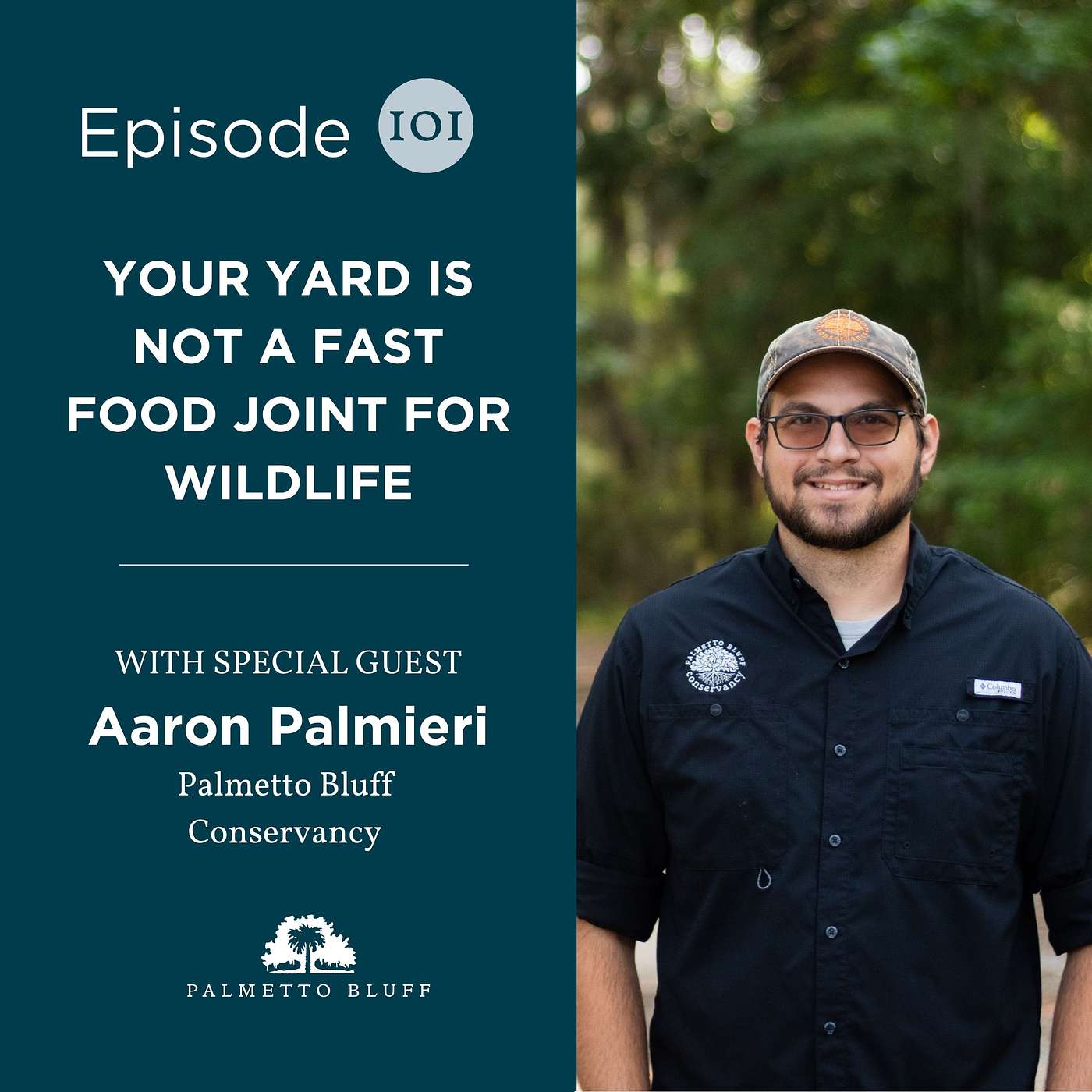
Your Yard Is Not A Fast Food Joint For Wildlife | Aaron Palmieri
Description
Step outside the front door and into a living network where every plant choice matters. We sit down with Aaron Palmeri from the Palmetto Bluff Conservancy to demystify what “native” really means for the Lowcountry and why local species outperform popular imports when it comes to feeding birds, sustaining pollinators, and keeping ecosystems resilient. If you’ve ever wondered whether a pretty shrub helps or hurts, this conversation gives you the clarity to choose well.
We break down ecoregions in plain terms and share how herbarium records and range maps verify what truly belongs from Wilmington to Jacksonville. From there, we trace the chain of co‑evolution: how caterpillars rely on specific host plants, why 96% of songbirds depend on those caterpillars, and how nectar, fruit, and structure fit together across the seasons. You’ll hear stark examples like nandina’s cyanide-laced berries harming cedar waxwings, and how Chinese tallow spreads to crowd out high‑value natives—proving that what’s “low maintenance” on paper can be costly for wildlife.
The practical guidance is simple and doable. Start with one bed. Ask your landscaper for natives. Choose heavy hitters: oaks, willows, and Prunus for trees; blueberries, blackberries, and native roses for shrubs; goldenrod, native sunflowers, and boneset for wildflowers. Prefer evergreen structure? Yaupon holly and wax myrtle shape beautifully and stay green year‑round. We also share how to find vetted lists, local plant sales, and trusted nurseries so you can swap invasive look‑alikes for native workhorses without sacrificing curb appeal.
We close with a wellness reflection that ties it all together: seasonal eating and being a reliable base for each other—steady, present, and consistent. Ready to turn your yard into habitat that looks great and does good? Listen now, subscribe for more nature‑forward wellness, and share the first plant you’ll swap this season.