Episode Details
Back to Episodes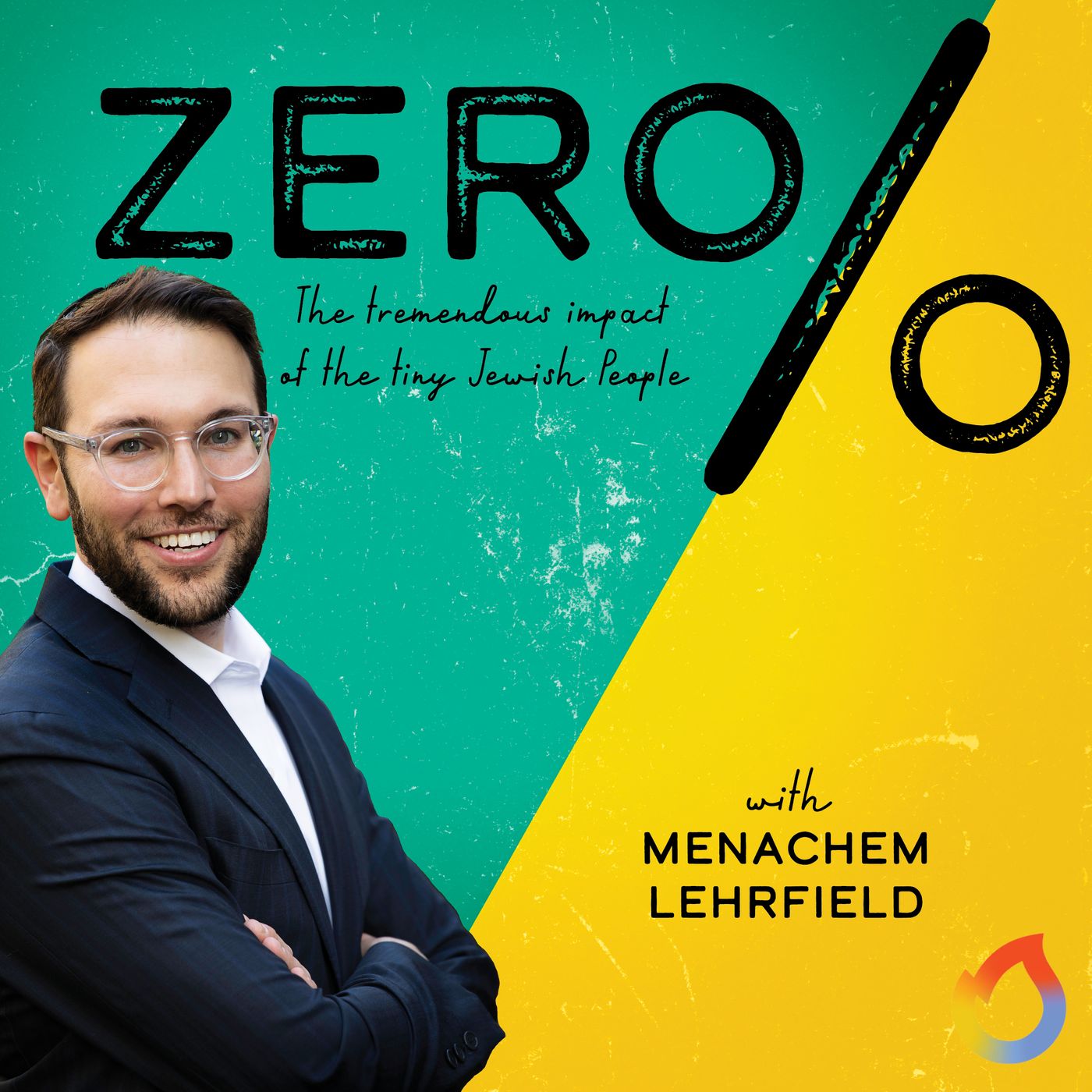
4 - Praise
Season 1
Episode 4
Published 4 years, 7 months ago
Description
In this episode, we continue our exploration of Dr. Carol Dweck's Growth and fixed Mindsets and learn about the profound impact of praise on building a growth mindset.
Check out Menachem Lehrfield's Dear Rabbi Podcast at https://podcasts.apple.com/us/podcast/dear-rabbi/id1565016262
You can hear more from Dr. Dweck here: https://www.google.com/url?sa=t&rct=j&q=&esrc=s&source=web&cd=&cad=rja&uact=8&ved=2ahUKEwipi-3RjLbzAhWYvp4KHaBkCEEQwqsBegQIBRAB&url=https%3A%2F%2Fwww.youtube.com%2Fwatch%3Fv%3DhiiEeMN7vbQ&usg=AOvVaw0ZqEGfXWawIoLla_rt0vmU
You can get a copy of Mindset: The New Psychology of Success by Dr. Carol Dweck here:
https://www.amazon.com/Mindset-Psychology-Carol-S-Dweck/dp/0345472322
Episode Transcript:
Hey everybody. I'm Menachem Lehrfield welcome to Zero Percent, where we explore world-changing ideas introduced by Judaism. Ancient wisdom for modern living. We've been discussed the book Mindset by Carol Dweck. And before we continue exploring some of Dr. Dweck's research, it's important to get a little bit of context. Professor Dweck wanted to understand why some people reached their potential while others do not. And she discovered that a person's success has less to do with our abilities and everything to do with our belief about our abilities. She introduced this research at the height of the self-esteem movement. We believed, and I think we still do, that self-esteem is perhaps the most important thing, especially when it comes to our children's performance. If we want our children to perform. If we, as individuals and human beings want to perform at our optimum best, we need to have a healthy self image. Self-esteem is crucial.
And for decades, parents and psychologists and teachers were operating under the assumption that if we want to increase a child's self-esteem, the best way to do it is through praise and reward. And that created an entire generation that gave participation trophies. I remember when I graduated high school, every single kid in the class got an award. It was a small class. We only had 20 kids or something. But I remember I got an award which I thought I really... I didn't do very much academic work, but I did do a lot of service work and I was the president of student body. And I got this award at the end, and I felt very proud of that accomplishment until I realized literally every single kid in the class was getting an award. When we all win, nobody wins. We got into a situation where we couldn't tell our children when they were doing anything wrong, because their self-esteem, their way of looking at themselves was so fragile that if we did anything, we were going to crush it. And then came the prizes and the reward, and most importantly, the praise.
What Carol Dweck recognized is that praise alone does not equal self-esteem. Praise alone does not produce self-esteem. What's crucial is not whether or not we praise, but how we praise. When I praise somebody for who they are, I say you are so... fill in the blank. You are so pretty. You are so smart. You are so athletic. What I am telling that person is, "You are fixed. That's the way you are." I'm labeling them. And what that does is it puts them into a fixed mindset. So not only does that praise not build their self-esteem, in fact, it crushes it. When a child receives praise for something they know they didn't deserve, something they know they didn't earn, their brain actually translates it as criticism, which is amazing.
Think about it. I'm giving the child a piece of praise, because I want to help their self-esteem. The way the child translate that is I know I didn't do a good job. Right? All this negative self talk. I know I didn't do a good job. If you're telling me I did a good job, I must have done on so poorly that you felt the need and the necessity to tell me, I did a good job. Think about how backwards that is, but that's the way we interpret it. So it's no
Check out Menachem Lehrfield's Dear Rabbi Podcast at https://podcasts.apple.com/us/podcast/dear-rabbi/id1565016262
You can hear more from Dr. Dweck here: https://www.google.com/url?sa=t&rct=j&q=&esrc=s&source=web&cd=&cad=rja&uact=8&ved=2ahUKEwipi-3RjLbzAhWYvp4KHaBkCEEQwqsBegQIBRAB&url=https%3A%2F%2Fwww.youtube.com%2Fwatch%3Fv%3DhiiEeMN7vbQ&usg=AOvVaw0ZqEGfXWawIoLla_rt0vmU
You can get a copy of Mindset: The New Psychology of Success by Dr. Carol Dweck here:
https://www.amazon.com/Mindset-Psychology-Carol-S-Dweck/dp/0345472322
Episode Transcript:
Hey everybody. I'm Menachem Lehrfield welcome to Zero Percent, where we explore world-changing ideas introduced by Judaism. Ancient wisdom for modern living. We've been discussed the book Mindset by Carol Dweck. And before we continue exploring some of Dr. Dweck's research, it's important to get a little bit of context. Professor Dweck wanted to understand why some people reached their potential while others do not. And she discovered that a person's success has less to do with our abilities and everything to do with our belief about our abilities. She introduced this research at the height of the self-esteem movement. We believed, and I think we still do, that self-esteem is perhaps the most important thing, especially when it comes to our children's performance. If we want our children to perform. If we, as individuals and human beings want to perform at our optimum best, we need to have a healthy self image. Self-esteem is crucial.
And for decades, parents and psychologists and teachers were operating under the assumption that if we want to increase a child's self-esteem, the best way to do it is through praise and reward. And that created an entire generation that gave participation trophies. I remember when I graduated high school, every single kid in the class got an award. It was a small class. We only had 20 kids or something. But I remember I got an award which I thought I really... I didn't do very much academic work, but I did do a lot of service work and I was the president of student body. And I got this award at the end, and I felt very proud of that accomplishment until I realized literally every single kid in the class was getting an award. When we all win, nobody wins. We got into a situation where we couldn't tell our children when they were doing anything wrong, because their self-esteem, their way of looking at themselves was so fragile that if we did anything, we were going to crush it. And then came the prizes and the reward, and most importantly, the praise.
What Carol Dweck recognized is that praise alone does not equal self-esteem. Praise alone does not produce self-esteem. What's crucial is not whether or not we praise, but how we praise. When I praise somebody for who they are, I say you are so... fill in the blank. You are so pretty. You are so smart. You are so athletic. What I am telling that person is, "You are fixed. That's the way you are." I'm labeling them. And what that does is it puts them into a fixed mindset. So not only does that praise not build their self-esteem, in fact, it crushes it. When a child receives praise for something they know they didn't deserve, something they know they didn't earn, their brain actually translates it as criticism, which is amazing.
Think about it. I'm giving the child a piece of praise, because I want to help their self-esteem. The way the child translate that is I know I didn't do a good job. Right? All this negative self talk. I know I didn't do a good job. If you're telling me I did a good job, I must have done on so poorly that you felt the need and the necessity to tell me, I did a good job. Think about how backwards that is, but that's the way we interpret it. So it's no