Episode Details
Back to Episodes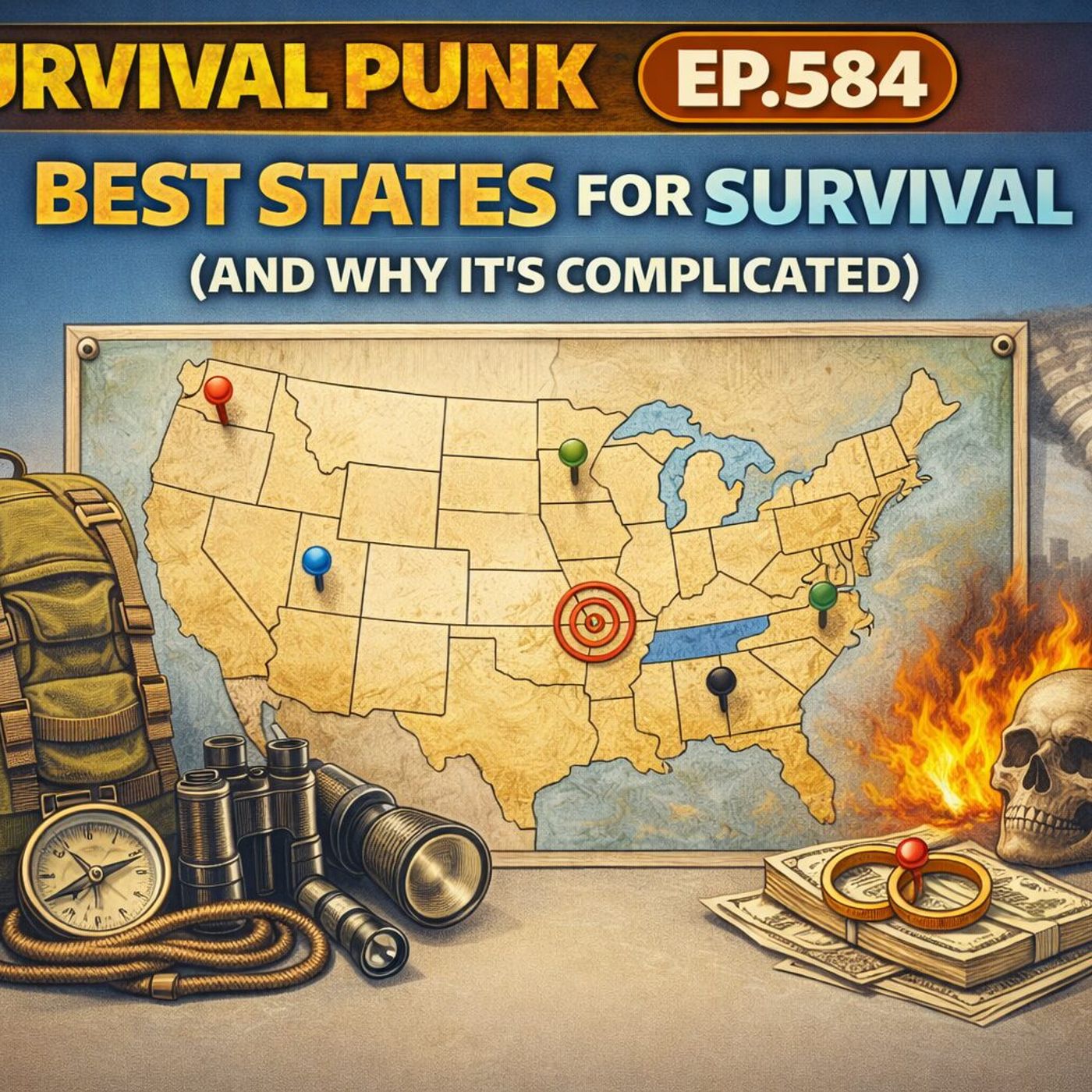
Best States for Survival (And Why It’s Complicated) | Episode 584
Episode 584
Published 2 weeks, 3 days ago
Description
Best States for Survival Best States for Survival (And Why It’s Complicated) | Episode 584 Every few months, someone puts out a list claiming they’ve found the “best states for survival.” Perfect land. Perfect climate. Perfect collapse conditions. This episode starts with one of those videos and then does what those lists never do — slow down and actually think through the tradeoffs. Because there is no perfect state. There are only compromises you can live with. The Problem With “Top 9” Survival State Lists I watched a video recently that ranked nine states that would supposedly do best in a collapse scenario. The creator put in serious work — hundreds of hours of research — and a lot of it made sense. Tennessee was on the list, and I was pretty happy with where it landed. But every time I watch lists like this, I catch myself doing what most people do: looking to see if my state made the cut. That alone tells you something important. These lists hit emotionally, not practically. Even the states that rank high still have real drawbacks. And the ones that rank low often have strengths that don’t show up on paper. Population Density Is a Double-Edged Sword Population density matters — a lot — but not in the simple way people think. Low population density sounds great until you realize it also means fewer services, fewer jobs, and fewer amenities. If you move somewhere extremely remote, you’re trading convenience and infrastructure for isolation. On the flip side, dense cities are terrible for survival. Too many people, too much dependence, and too much competition for resources. Cities are where things unravel first when systems fail. The sweet spot is balance. Enough people to support infrastructure and community, but not so many that you’re surrounded by desperation. Isolation Is Romantic — Until It Isn’t A lot of people fantasize about total isolation. Alaska wilderness. Middle of nowhere. No neighbors. That sounds cool until you’re honest with yourself. Most humans are not built to be true isolationists. If you were, you wouldn’t be listening to this podcast — you’d already be off-grid somewhere, alone, doing your thing. Almost nobody actually wants zero people. Add a family into the equation and it matters even more. You don’t get to unilaterally decide to drag everyone into extreme isolation because you’re bored or having a midlife crisis. Survival planning has to account for the people you’re responsible for, not just your personal fantasy. Climate: Middle Ground Wins Climate is another area where extremes hurt you. Super cold areas bring long winters, heavy snow, and logistics problems. Super hot areas make you dependent on water and cooling. Living without air conditioning in extreme heat is brutal, especially in modern homes that weren’t designed for passive cooling. A temperate, middle-of-the-road climate tends to be easier to manage. Mild winters. Warm but not oppressive summers. Less strain on heating and cooling systems. This is one of the reasons Tennessee sits in a comfortable middle. We get winter, but not months of it. We get summer, but not desert-level heat. That balance matters. Tradition and Community Matter More Than Rankings One of the most overlooked factors is local culture and tradition. Areas with a history of self-reliance — gardening, canning, fixing things, helping neighbors — have a massive advantage when systems fail. But here’s the catch: if you move into those areas as an outsider, you may never fully belong. Some communities take generations to accept newcomers. That doesn’t make them bad — it just means you need to be realistic. If you already live in a place like that, you’re ahead. If you’re planning to move, understand that community can’t be bought or rushed. Natural Disasters and Real Risk Assessment You also need to honestly assess natural dis