Episode Details
Back to Episodes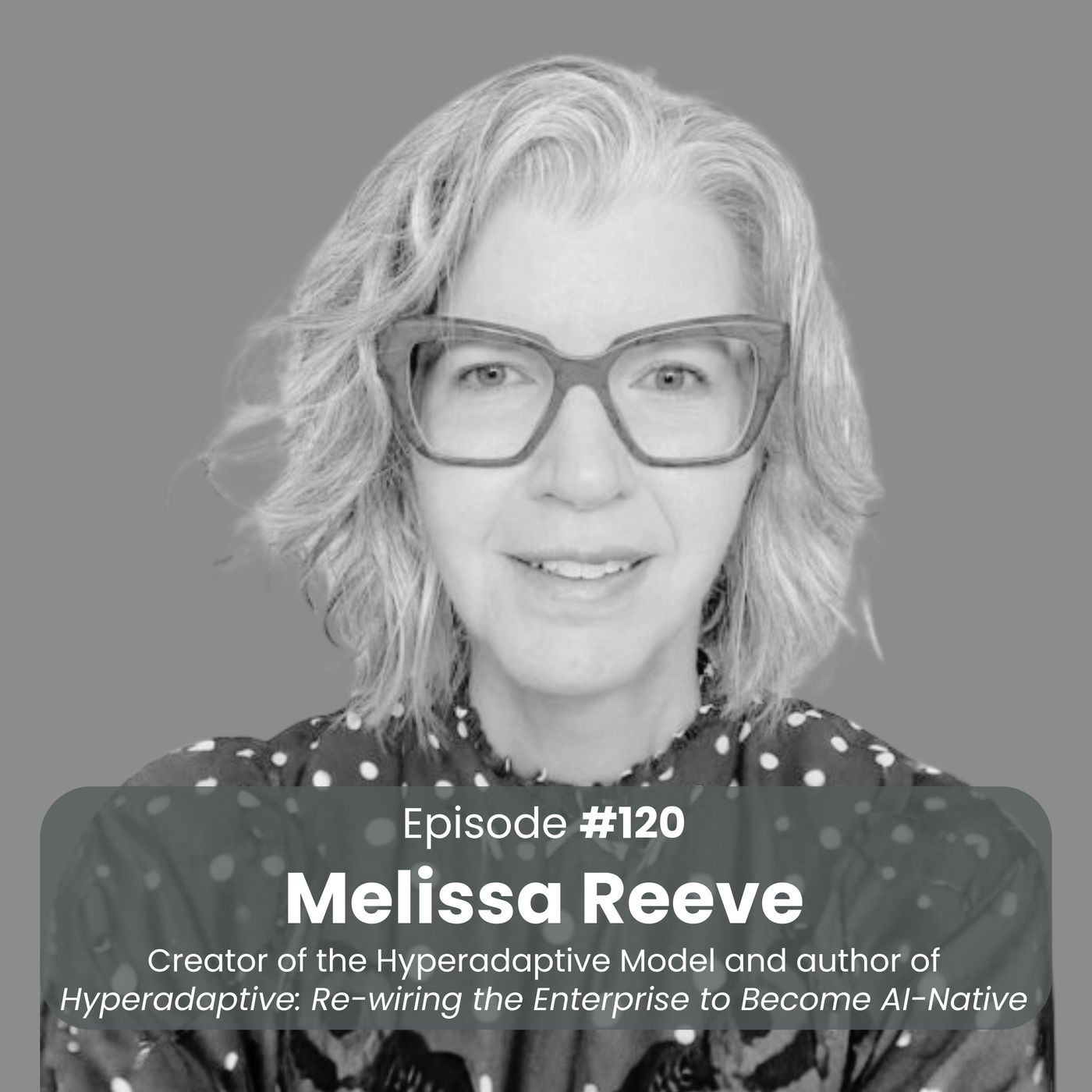
Five Levels of Becoming AI Native: Melissa Reeve
Episode 120
Published 7 months, 1 week ago
Description
The way organizations think about artificial intelligence (AI) in the workplace has shifted dramatically over the past few years. While early conversations centered on isolated experiments and technological hype, organizations now face the much harder task of integrating AI into the fabric of how work gets done. We welcome Melissa Reeve, author of “Hyper Adaptive: Rewiring the Enterprise to Become AI Native,” to discuss what AI adoption really means for people, processes, and culture.
Melissa tackles some tough questions about organizational complexity, shifting operating models, and the critical role of culture and systems thinking in successful AI integration. Listeners will get candid advice on starting small, experimenting with purpose, and preparing for the rewiring ahead. You will want to hear this episode if you are interested in...
Navigating the AI Revolution at Work
Melissa Reeve’s journey began on the factory floors of Toyota, learning firsthand how small process shifts can drive system-wide change. Building on years of research and influence from Lean, Agile, and DevOps practitioners, Reeve authored a five-stage maturity model she calls hyperadaptive, designed to guide organizations through the incremental steps needed to become truly AI-native.
The five stages of Melissa's model:
Melissa splits these into two main categories: Basecamp (the first three stages, where most companies currently operate) and the Emerging Frontier (rewiring and hyper adaptivity).
Why Organizations Struggle with AI Integration
According to Melissa, most organizations are stuck because they underestimate the support structures required for successful AI adoption. It’s not just about updating technology, in fact, 70-80% of AI success depends on people, culture, and processes, not algorithms. Companies often rush to deploy AI agents or experiment without a clear North Star, leading to pilot fatigue and an 80% failure rate. Many organizations haven’t even finished laying the foundational groundwork, such as establishing unified governance or mapping work processes.
Another common pitfall is the tendency to try everything at once. Pressure for fast results drives teams to bite off too much, resulting in burnout and costly errors.
Moving from Experimentation to Purposeful Transformation
Playing with AI is not a strategy. While experimentation is necessary, organizations must put bounds on these efforts, know why they're experimenting, what hypothesis they're testing, and what success will look like.
One necessary precursor is getting to grips with how your organization actually works. Many leaders lack visibility into workflows, decisions, and skillsets, making process optimization dif
Melissa tackles some tough questions about organizational complexity, shifting operating models, and the critical role of culture and systems thinking in successful AI integration. Listeners will get candid advice on starting small, experimenting with purpose, and preparing for the rewiring ahead. You will want to hear this episode if you are interested in...
- 03:38 Integrating AI into organizations
- 12:47 AI Native enterprise structure
- 15:51 Dynamic AI governance framework
- 18:58 AI implementation foundations
- 23:56 Process mapping for AI integration
- 29:44 Balancing efficiency and leadership focus
- 37:02 Start small with value streams
- 40:59 Innovative organizational funding models
- 42:14 Starting a skills-focused organization
- 47:03 Digital Twins in Product Testing
Navigating the AI Revolution at Work
Melissa Reeve’s journey began on the factory floors of Toyota, learning firsthand how small process shifts can drive system-wide change. Building on years of research and influence from Lean, Agile, and DevOps practitioners, Reeve authored a five-stage maturity model she calls hyperadaptive, designed to guide organizations through the incremental steps needed to become truly AI-native.
The five stages of Melissa's model:
- Foundation – Build organizational understanding of AI; create dynamic governance structures and clarify guardrails.
- Optimization – Identify and optimize business processes for AI interactions; move beyond basic experimentation.
- Agents & Automation – Develop and manage AI agents that execute tasks and processes autonomously.
- Rewiring – Shift organizational architecture from rigid hierarchies to flexible, value-stream teams funded and incentivized differently.
- Hyperadaptive – Fully sense-and-respond organizations capable of real-time adaptation.
Melissa splits these into two main categories: Basecamp (the first three stages, where most companies currently operate) and the Emerging Frontier (rewiring and hyper adaptivity).
Why Organizations Struggle with AI Integration
According to Melissa, most organizations are stuck because they underestimate the support structures required for successful AI adoption. It’s not just about updating technology, in fact, 70-80% of AI success depends on people, culture, and processes, not algorithms. Companies often rush to deploy AI agents or experiment without a clear North Star, leading to pilot fatigue and an 80% failure rate. Many organizations haven’t even finished laying the foundational groundwork, such as establishing unified governance or mapping work processes.
Another common pitfall is the tendency to try everything at once. Pressure for fast results drives teams to bite off too much, resulting in burnout and costly errors.
Moving from Experimentation to Purposeful Transformation
Playing with AI is not a strategy. While experimentation is necessary, organizations must put bounds on these efforts, know why they're experimenting, what hypothesis they're testing, and what success will look like.
One necessary precursor is getting to grips with how your organization actually works. Many leaders lack visibility into workflows, decisions, and skillsets, making process optimization dif