Episode Details
Back to EpisodesGetting It Right With Scleral Lenses: A PKP Case Using Anterion OCT
Description
Scleral lenses have become a cornerstone of modern optometric care, particularly for patients with complex anterior segment disease. Conditions that once resulted in limited visual potential—such as keratoconus and post–corneal transplant irregularity can now be managed with greater precision, comfort, and long-term stability.

In Partnership with Heidelberg Engineering
In Grand Rounds LIVE: Getting It Right With Scleral Lenses, hosted by Dr. Chris Lievens, clinicians explored how advances in scleral lens design and anterior segment imaging are changing clinical decision-making. Expert insights were provided by Dr. Brooke Messer, along with a real-world case presentation by optometry student Sarah Sumida. Central to the discussion was the role of advanced imaging—specifically the Heidelberg Engineering Anterion in elevating scleral lens evaluation beyond visual acuity alone.
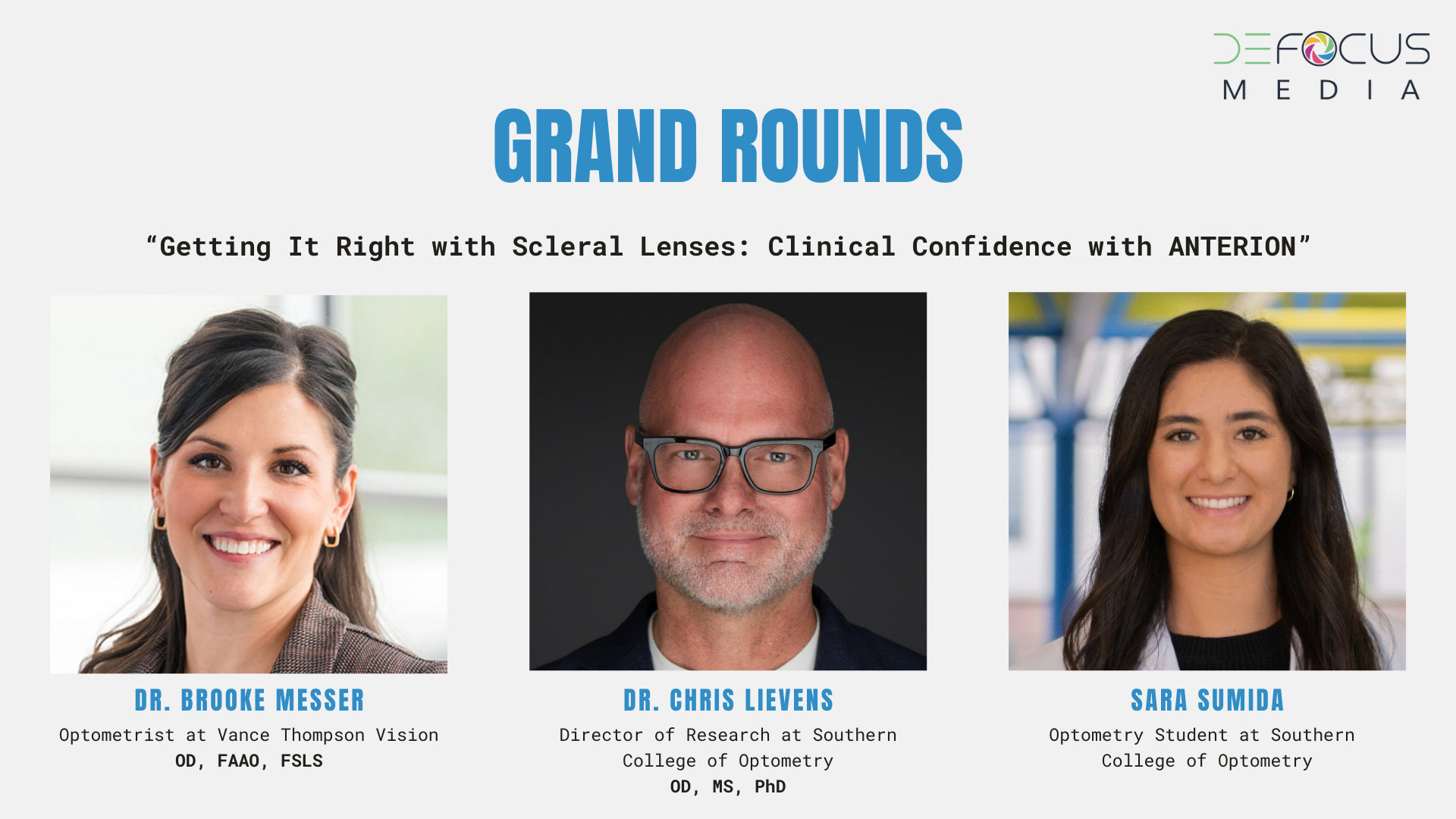
Table of Contents
Why Scleral Lens Evaluation Has Evolved
Historically, scleral lens success was largely defined by best-corrected visual acuity and central vault. While these factors remain important, they no longer tell the full story—particularly in post-surgical or irregular corneas.
Modern scleral lens evaluation requires clinicians to assess:
- Mid-peripheral clearance over graft-host junctions
- Limbal and scleral landing alignment
- Subclinical corneal edema beneath lenses
- Long-term corneal tolerance rather than short-term visual performance
These factors are often invisible without wide-field anterior segment imaging, underscoring why technology