Episode Details
Back to Episodes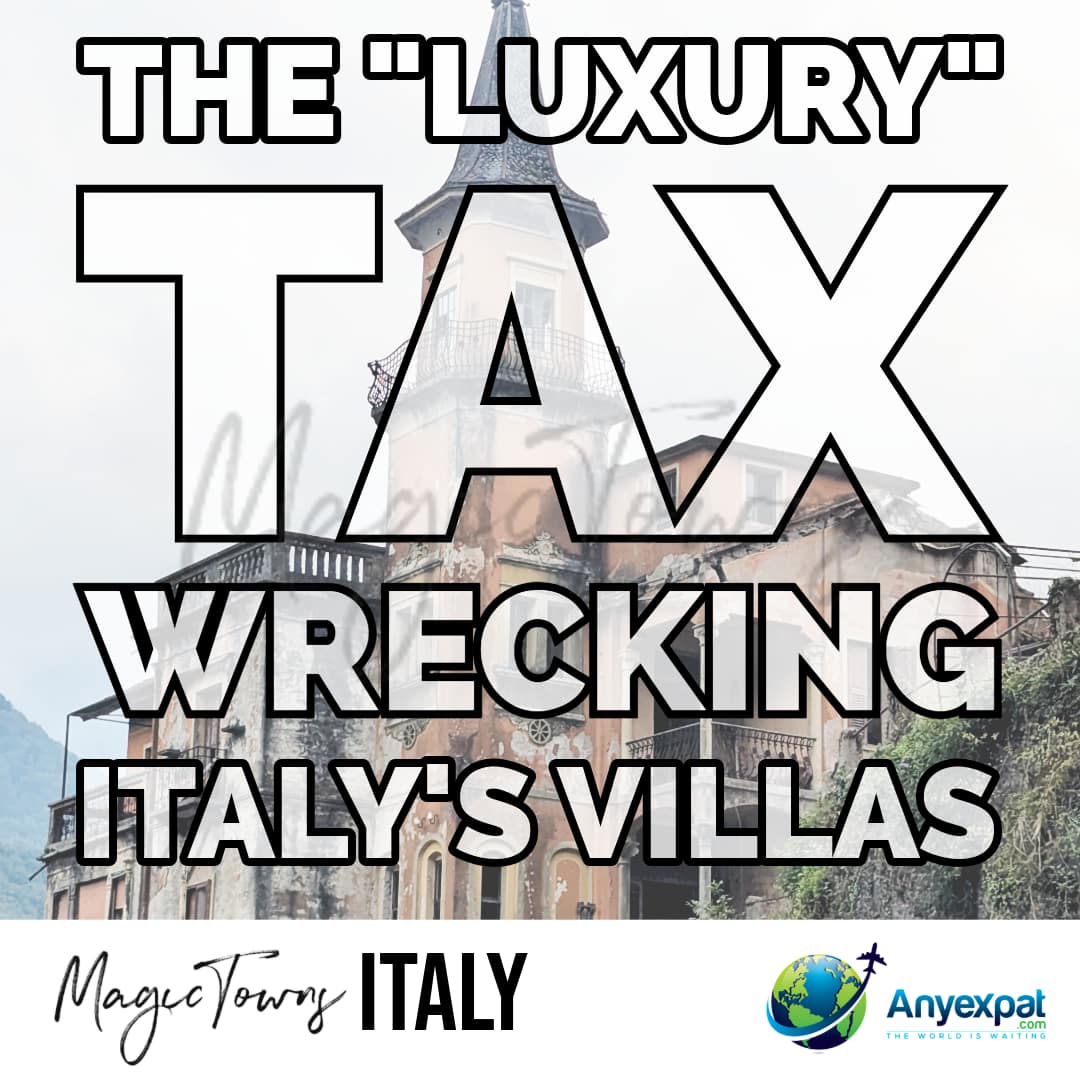
Why Are Italy’s Villas Crumbling?
Description
Luca: Happy Saturday everyone, and welcome back to Magic Towns Italy. I’m Luca here with Anna. Good morning, Anna.
Anna: Hi everyone. Hi Luca.
Luca: This week we are talking about a question we get often, which is why are so many wonderful, gorgeous looking Italian villages and castles abandoned, or for sale for what looks like pocket change? I, myself have renovated several properties and I’m always looking for properties.
It’s, uh, as people know, it’s a bit of an addiction for everyone that has it. The area around Venice alone is home to more than 5,000 historical villas. Hundreds of these are in disrepair and sell or sometimes are auctioned for prices as low as 100 or 200,000 euro. And when foreigners see this, they think, oh, Italy’s property market must be broken.
How can it be [00:01:00] so cheap?
Anna: Yeah, exactly. I mean, it sounds too good to be true and usually it is. So today we want to correct that view. The low price is often an illusion and it’s caused by real costs like taxes, you know, renovation works.
So people and especially foreigners are often unaware of.
Luca: That’s right. These properties are not cheap because Italians don’t think the castles or villas aren’t beautiful. They’re cheap because the system makes them very costly to buy and restore. And in the next minutes, we’re going to talk about, uh, Italy’s tax code, the property register system, and the heritage laws that structurally punish historical buildings.
In other words, which part of the bureaucracy makes it so hard to use and maintain these villas?
Anna: Yeah. By the end of this episode, you will understand the reason why these villas and castles languish unsold so we’ll break down the tax traps, the luxury [00:02:00] labels, the heritage protections.
So all the unsexy realities.
Luca: Unsexy realities. Let’s start with tax.
Anna: Yeah.
Luca: 30 second primer on the cadastral category. Please don’t tune out. This is important and most people don’t know what it is. In Italy, there is something called the cadastral category, and it is a code that, indicates what kind of property each property is. Castles, villas are in three of the A categories, A1, A8, or A9. It basically means that, anything that has that label given by the tax man is deemed to be a luxury property from fancy apartments to villas to castles or palazzi.
Anna: But luxury sounds like a good thing. Like why do you say it’s a problem?
Luca: Because in Italy, luxury is basically a tax warning label.
Anna: A warning label,
Luca: yes. There’s a whole set of tax benefits that disappear and more taxes kick in.
Anna: Even [00:03:00] if the place is falling apart.
Luca: Yeah, it doesn’t matter. There can be mushrooms growing through the floorboards, but if the property is tagged as A8 or A9, the tax system treats it like it’s a billionaire’s villa.
Anna: What actually changes?
Luca: The first thing is that you don’t get any first home tax breaks. Normally when you buy a property, you pay 2% purchase tax if you’re gonna go and live in it. In this case, you’re gonna pay 9% whether you live in it or not.
Anna: That’s a big difference.
Luca: Huge. Luxury homes are excluded from the benefit. So for the same house price, you could be looking at paying 70,000 euro tax instead of 15,000.
Anna: Ah, okay.
Luca: Second thing, renovations, uh, normal homes, when you re