Episode Details
Back to Episodes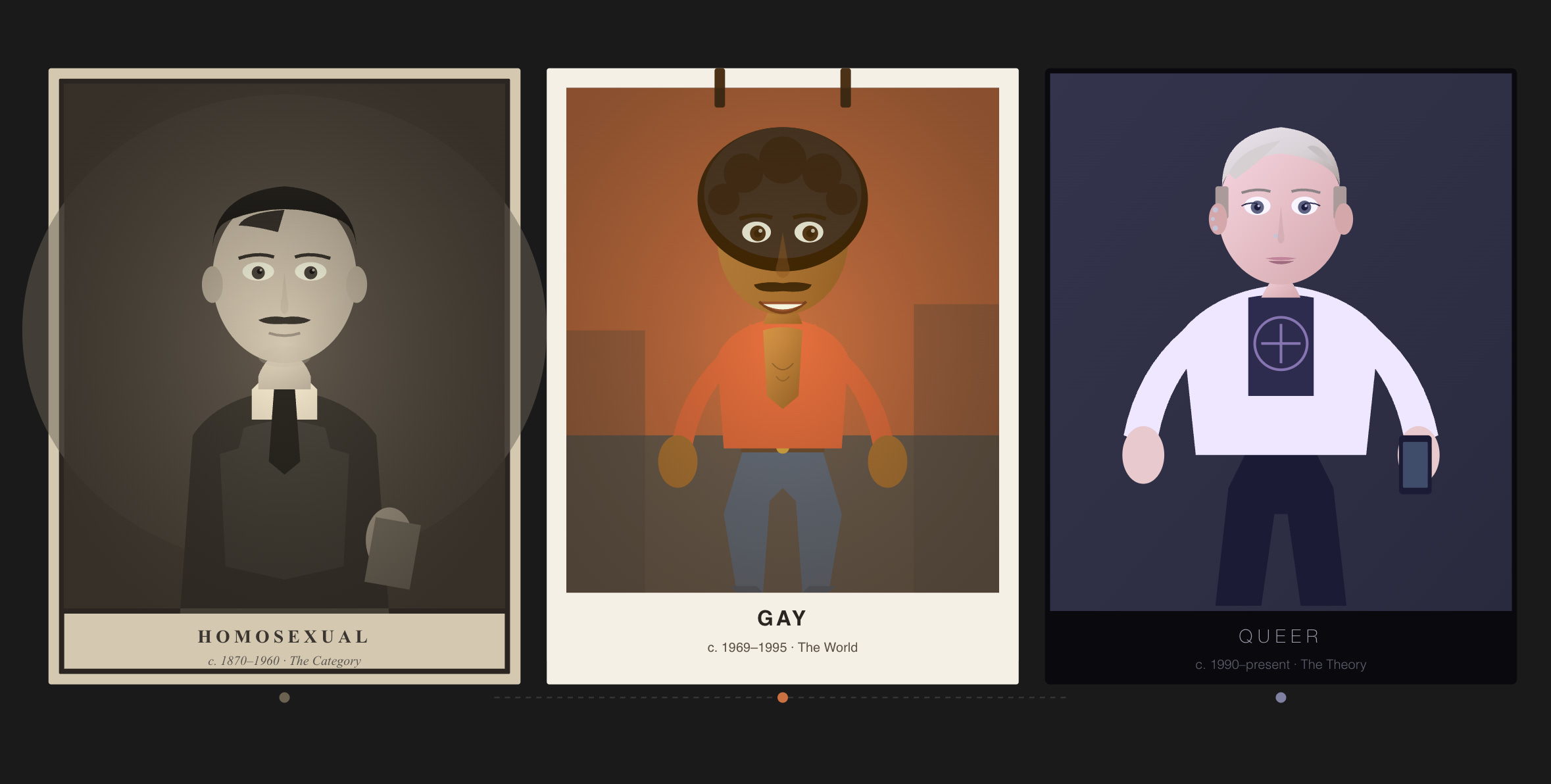
Homosexual, Gay, Queer (and a soupçon of porn)
Description
My frequent conversation partner Blake Smith is back on the pod today to talk about his book-in-progress on the pioneering gay editor Michael Denneny as well as a related essay, “For the Love of the Gay World,” just published in a new anthology.
In both endeavors, I think, he’s doing some version of the same thing, which is to make his case, that gay men briefly had, then lost, but could have again a coherent, self-reflective cultural and intellectual world by and for themselves. As he writes:
Part of what the playwright Larry Kramer called, two decades ago, the tragedy of today’s gays is that in order to begin a potentially generative, or productively divisive, conversation about the state of male homosexuality (its culture and politics, its problems and affordances) we must undergo an ordeal of conceptual and historical clarification. Without doing so, we are likely to miss the real objects of our agreement and disagreement, wasting time with opinions expressed in each interlocutor’s jumble of inherited, half-comprehended categories.
It is hard for gays to talk sensibly to each other about where we are and how we got here; the ideas by which we understand that ‘we’ and its emergence in time are so contested and confused. This makes gay thinking peculiarly dizzied, harried and disoriented. It is often in doubt whether there is any gay ‘we’ (or any gay thinking) —or whether ‘we’ do in fact wish for our talk to reach out to such a ‘we’ rather than merely confirm ourselves individually in what we already take ourselves to think and know.
In the following I will try to do two things at the same time. I will try to clarify the routes through history by which certain concepts have come down to us, and to trace their relationships and contradictions. Disentangling homosexual, gay, and queer, and the movements by which these terms were conceived and contested, may allow us to talk more with more clarity about the objects of our dis/agreement. At the same time, as I lay out—in a sketchy, rapid, and admittedly contestable fashion—this history, I will show how there came to be, at a few different times and places, a self-conscious articulation of the interest and pleasure that we take in talking to each other about ourselves, and of the desire to perpetuate ourselves individually and collectively that is adumbrated in this talk.
Our talking together both reflects and forms what Hannah Arendt (whose relevance to gays will become clearer over the course of this essay) called a world. Which is not a physical place. A world, in this sense, is what is communicable to a group of people, what they can hold together in their talk. It is also the set of practices by which that communicability is maintained (the fact, for instance, of our having a shared vocabulary and grammar, but also of our having reasonably similar psychologies and common objects of perception). Worlds can expand and contract, and also collapse. Whether we want to speak to someone about an apparently external object or an apparently internal thought, the possibility of our doing so successfully depends there being already a world that contains us, our intended interlocutor, and the topic we want to address.
His framework involves a periodization of three distinct eras: the “homosexual” phase of the late 19th and early 20th century, when doctors, psychologists, and the men they studied were constructing new categories of identity; the “gay” era that emerged in the mid-20th century and flourished after Stonewall; and the “queer” phase that began in the 1980s and now dominates how we talk about sexual minorities.
His argument, stripped down, is that the gay era represented something genuinely new