Episode Details
Back to Episodes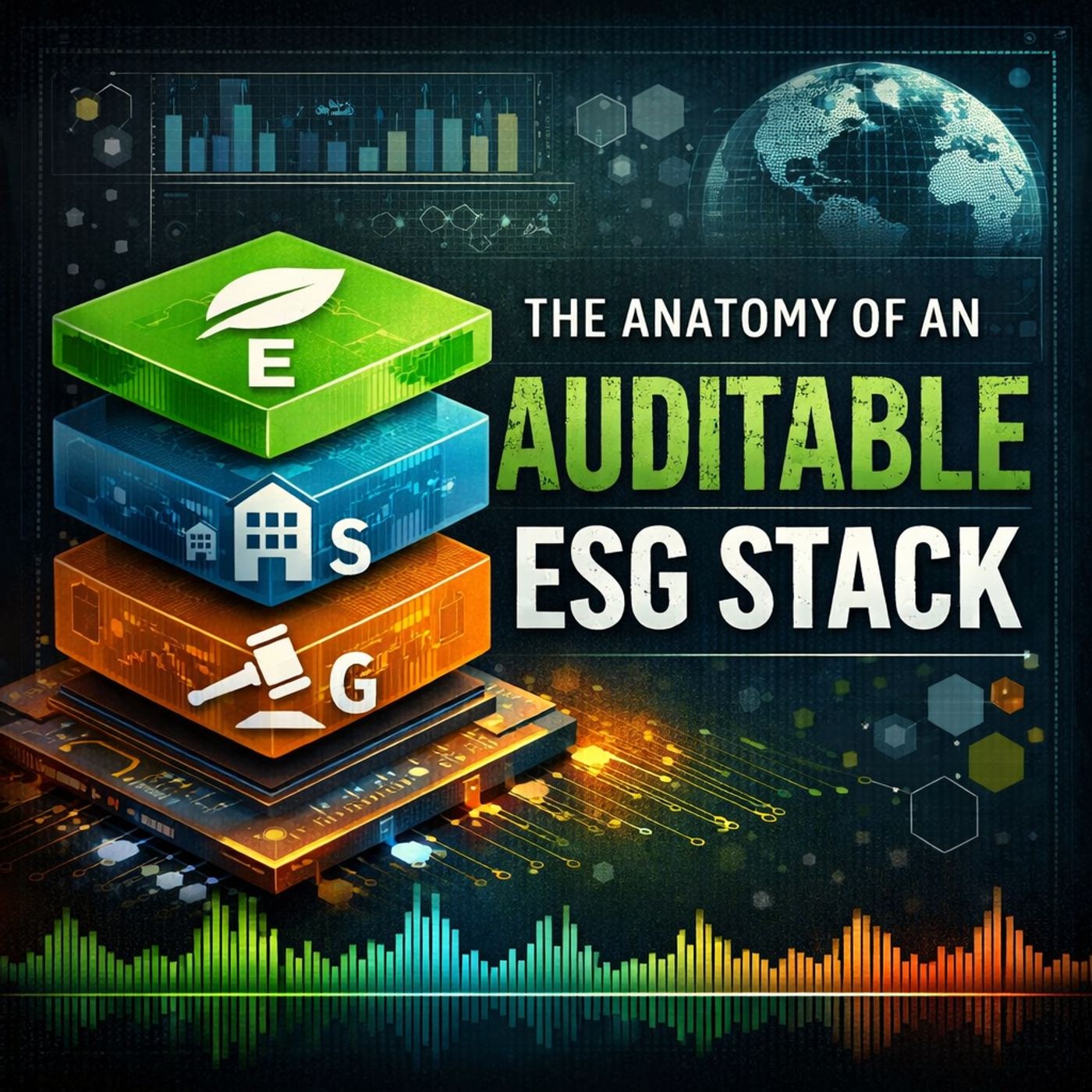
Microsoft 365 & ESG Compliance: How to Build an Auditable ESG Stack on Microsoft Cloud
Season 1
Published 6 months, 1 week ago
Description
Most ESG programs are built to communicate. The reports are polished, the dashboards are well-designed, and the narrative is compelling. But when regulators, auditors, or institutional investors look past the presentation and ask for the underlying data — the lineage, the controls, the evidence — most organizations discover that their ESG program was built to tell a story, not to withstand scrutiny. In a world where ESG reporting is rapidly becoming a legal obligation under frameworks like CSRD, SEC climate disclosure rules, and ISSB standards, the difference between a communications exercise and an auditable system is the difference between compliance and liability.
In this episode of M365.FM, Mirko Peters examines what it actually means to build an auditable ESG stack on the Microsoft Cloud — and why Microsoft 365, Microsoft Fabric, Azure, and Purview provide the infrastructure for genuine ESG governance if they are architected correctly. From data lineage and evidence trails to access controls, audit logs, and automated reporting workflows, Mirko maps the anatomy of an ESG architecture that can survive regulatory scrutiny — not just investor relations season.
This episode is essential for sustainability teams, compliance architects, and IT leaders who are responsible for ensuring that ESG data collected across the Microsoft ecosystem is accurate, traceable, and defensible under audit conditions.
WHAT YOU WILL LEARN
In the Microsoft ecosystem, this architecture is achievable — but it requires deliberate design. Microsoft Purview provides data governance and lineage capabilities that can anchor ESG data quality controls. Microsoft Fabric and OneLake provide the unified data layer that eliminates the siloed spreadsheet systems that make ESG audits fail. Power Automate provides the workflow automation that removes manual data handling — the single largest source of ESG data errors. And Microsoft 365's native audit logging provides the evidence layer that regulators and auditors require. The organizations that will navigate the next decade of ESG regulation successfully are those that are building this architecture now.
WHY ESG STACKS FAIL AUDIT CONDITIONS
In this episode of M365.FM, Mirko Peters examines what it actually means to build an auditable ESG stack on the Microsoft Cloud — and why Microsoft 365, Microsoft Fabric, Azure, and Purview provide the infrastructure for genuine ESG governance if they are architected correctly. From data lineage and evidence trails to access controls, audit logs, and automated reporting workflows, Mirko maps the anatomy of an ESG architecture that can survive regulatory scrutiny — not just investor relations season.
This episode is essential for sustainability teams, compliance architects, and IT leaders who are responsible for ensuring that ESG data collected across the Microsoft ecosystem is accurate, traceable, and defensible under audit conditions.
WHAT YOU WILL LEARN
- Why most ESG programs fail audit scrutiny even when the data looks correct
- What "audit-grade ESG" means in technical and governance terms within the Microsoft ecosystem
- How Microsoft Purview enables data lineage, classification, and evidence management for ESG reporting
- How Microsoft Fabric and OneLake can serve as the foundation for a unified ESG data architecture
- What access controls, audit logs, and change tracking look like in a compliant Microsoft 365 ESG stack
- How Power Automate and Power BI can automate ESG data collection and reporting workflows
- What the key regulatory frameworks — CSRD, ISSB, SEC climate rules — require from your data architecture
In the Microsoft ecosystem, this architecture is achievable — but it requires deliberate design. Microsoft Purview provides data governance and lineage capabilities that can anchor ESG data quality controls. Microsoft Fabric and OneLake provide the unified data layer that eliminates the siloed spreadsheet systems that make ESG audits fail. Power Automate provides the workflow automation that removes manual data handling — the single largest source of ESG data errors. And Microsoft 365's native audit logging provides the evidence layer that regulators and auditors require. The organizations that will navigate the next decade of ESG regulation successfully are those that are building this architecture now.
WHY ESG STACKS FAIL AUDIT CONDITIONS
- ESG data is collected in spreadsheets and email threads with no version control or access audit trail
- There is no data lineage connecting reported figures back to primary source systems
- Manual data aggregation processes introduce errors that cannot be traced or corrected under audit
- Microsoft 365 tools are used for ESG reporting but not configured for governance or audit readiness
- ESG frameworks are treated as communications frameworks rather than compliance architectures
- There is no single source of truth for ESG data — different teams report different numbers from different systems
- Audit logs exi