Episode Details
Back to Episodes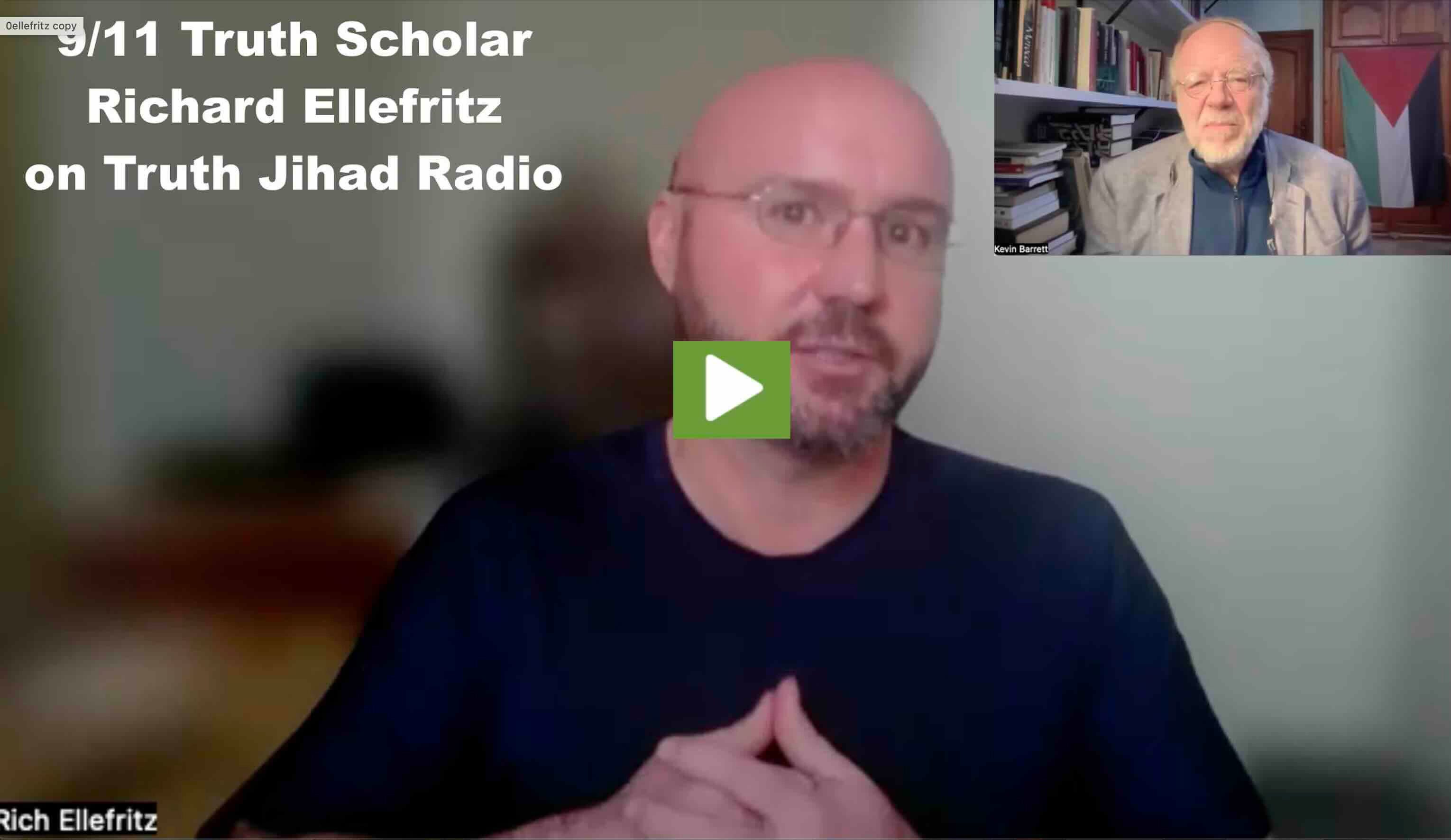
Dr. Richard Ellefritz on the Fallacies of Anti-Conspiracy Discourse
Description
Rumble link Bitchute link TruthJihadRadio link
Who’s irrational, the “conspiracy theorists” or the academicians who are paid to attack them with ad hominems, circular arguments, and other fallacies? I’ve opined on this before. Now let’s find out what a genuine expert—sociologist and expert on conspiracy movements Richard Ellefritz—thinks. He’s an assistant professor of sociology at the University of the Bahamas, and the author of numerous articles on this and related topics.
Kevin Barrett: Welcome to Truth Jihad Audiovisual. I’m Kevin Barrett and I’ve been doing this since when Fox News made me too toxic to employ in the academy. So I’ve been pushing back against the dubious portraits of what’s really going on in the world in the mainstream media and academy ever since from outside the academy. But today I’m happy to go back to somebody inside the academy who’s thinking about some of the same things that I think about. That’s Richard Elfritz. He’s a sociologist working at University of the Bahamas who has done participant observation ethnography involving the 9/11 truth movement, which means he hung out with 9/11 truthers and kind of did what they did and observed it just like any other ethnographer would do with a group they were interested in studying. And it’s actually kind of a fascinating topic or confluence of the discipline of ethnography and the 9/11 truth movement. So anyway, I’m really looking forward to this interview. Welcome, Richard Elfritz. How are you doing?
Richard Ellefritz: I’m all right. I’m here in sunshiny Bahamas. It’s been cloudy for the last week. You know, apologies to the tourists, but I’ve been working at the University of the Bahamas since fall as a full-time assistant professor of sociology. Prior to that, I worked three years full-time at Oklahoma State University after I earned my PhD there. So they thought I was doing a good enough job. You know, I love what I do teaching sociology, which is, in my opinion, kind of a natural inroad to investigating what are called conspiracy theories. And yeah, that’s that primarily is how I really got interested in studying the 9/11 truth movement, because one of my primary questions is, why are these people called conspiracy theorists?
Right. And of course, there are various theories about that, including the infamous CIA memo after the JFK assassination, ordering their media assets to smear people questioning the official story by calling them conspiracy theorists. Is that a conspiracy theory?
Well, there’s a there’s a book called The Stigmatization of Conspiracy Theories Since the 1950s: “A Plot to Make us Look Foolish” (by Katharina Thalmann)…the author doesn’t go far enough. Because as I showed in a series of essays published at PropagandaInFocus.com, the CIA did not coin the term conspiracy theory or conspiracy theorist. And the reason