Episode Details
Back to Episodes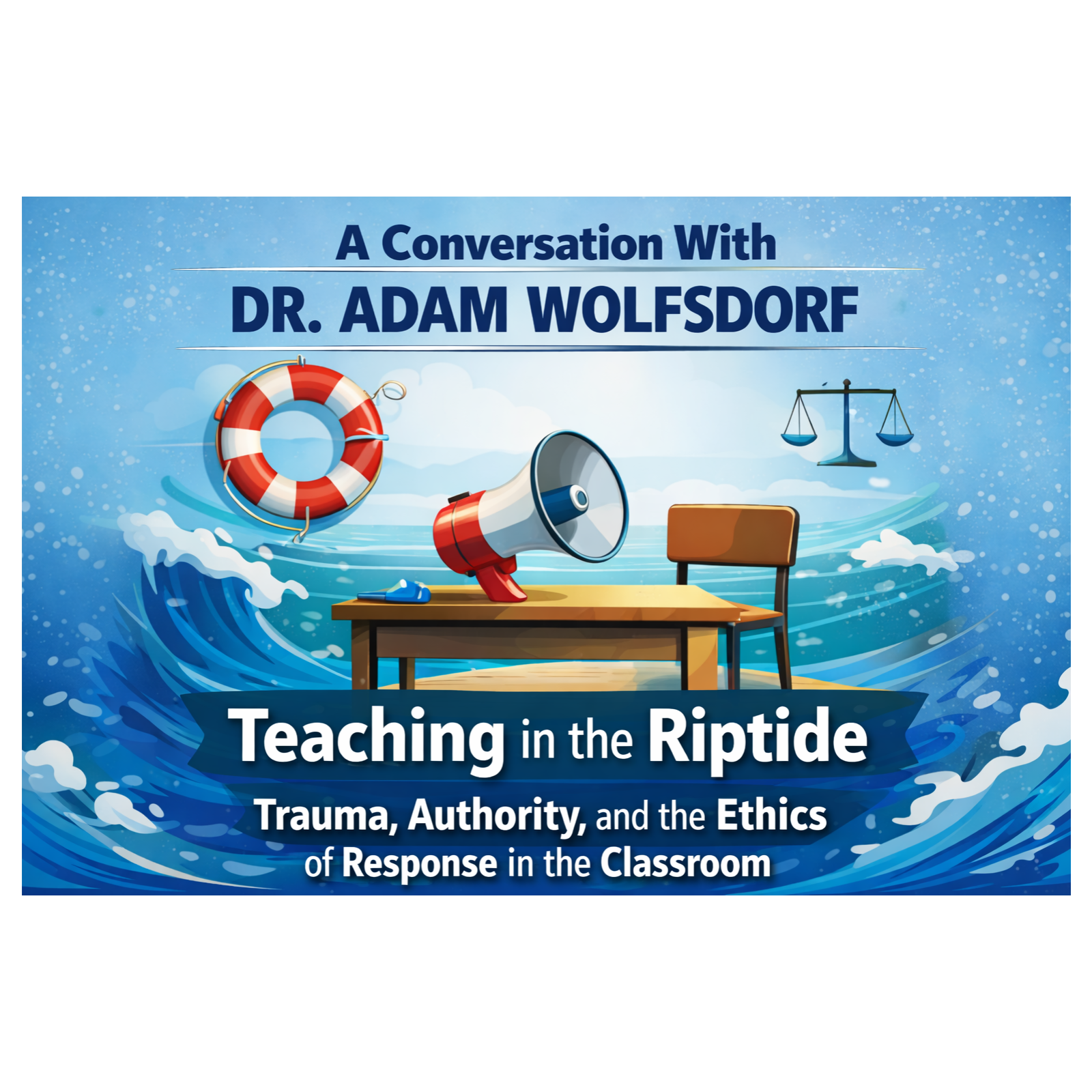
A Conversation With Dr. Adam Wolfsdorf (Pt II): Teaching in the Riptide: Trauma, Authority, and the Ethics of Response in the Classroom
Description
🧭 Episodic Synopsis
In Part II of this conversation, Dr. Joey Weisler sits down again with educator-scholar Dr. Adam Wolfsdorf to examine what happens after disruption—when trauma, authority, and behavior collide in the classroom. Moving beyond theory, this episode focuses on the ethical decisions educators must make in real time: when to intervene, when to pause, and when restraint is the most powerful pedagogical move.
Drawing from personal experience—including a formative moment as a Harvard undergraduate, classroom eruptions involving student crisis, and decades of teaching across secondary and higher education—Wolfsdorf interrogates how educators’ unresolved wounds can shape classroom dynamics, sometimes creating the very behaviors they seek to control. Together, Weisler and Wolfsdorf explore reflective functioning, countertransference, and the danger of reactive discipline in trauma-laden spaces.
This episode reframes classroom management as a relational practice rather than a punitive one, arguing that trust, emotional regulation, and curricular flexibility are not signs of weakness—but prerequisites for meaningful learning. For educators navigating burnout, behavioral challenges, and ethical uncertainty, Teaching in the Riptide, Part II offers a grounded, humane approach to holding both students and ourselves to higher standards.
📝 Show Notes: Key Ideas & Takeaways
- When Teachers Create “Bad Students” Wolfsdorf revisits a pivotal experience as an 18-year-old Harvard student, illustrating how rigid authority and intellectual gatekeeping can wound learners and distort identity—often unintentionally.
- Trauma Does Not Stay Outside the Classroom Both educators and students bring lived experiences into learning spaces; unexamined trauma in teachers can quietly shape grading, discipline, and expectations.
- Countertransference in Education Borrowed from psychology, this concept helps explain why certain students trigger disproportionate reactions—and why self-awareness is essential for ethical teaching.
- Punishment vs. Empathy Not all misbehavior requires escalation. In moments of student crisis, empathy and delayed response often produce better long-term outcomes than immediate discipline.
- Reflective Functioning Under Pressure Wolfsdorf emphasizes the educator’s ability to regulate emotion before responding, especially after explosive incidents, as a defining professional skill.
- The Aftermath Matters More Than the Outburst How teachers handle follow-up conversations—tone, timing, and intent—shapes whether a rupture becomes a turning point or a lasting fracture.
- Reading the Room as Pedagogy Teaching requires the same situational awareness as performance—knowing when to pivot, slow down, or lean into what students are already carrying.
- Good Teaching Is Developmentally Flexible While structure varies across K–12 and higher education, the core principles of trust and intellectual respect remain constant.
- Holding Ourselves to High Standards Wolfsdorf closes by urging educators to be relentless with their own growth, arguing that teacher self-reflection is the most underused assessment tool in education.
🔗 Learn More About Dr. Adam Wolfsdorf
🔗 Get the Book: Teaching in the Riptide