Episode Details
Back to Episodes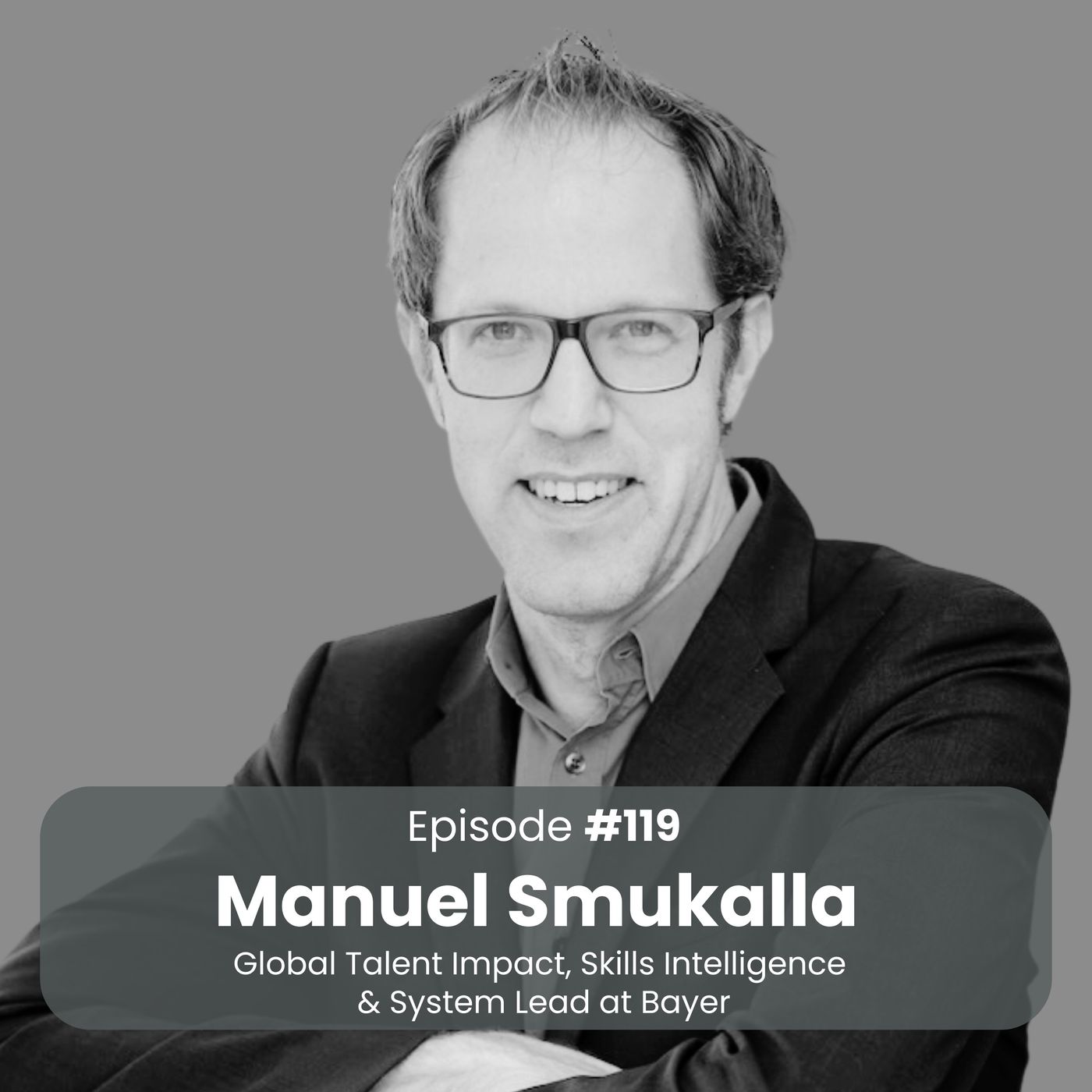
Reimagining Work at Scale: Manuel Smukalla on Skills, Dynamic Shared Ownership, and the Future of Bayer
Episode 119
Published 7 months, 3 weeks ago
Description
Manuel Smukalla, Global Talent Impact, Skills Intelligence, and Systems Lead at Bayer, joins Workplace Stories to unpack one of the most ambitious organizational transformations underway today. As Bayer confronts significant market, legal, and profitability pressures, the company has taken a radically different approach to how work, leadership, and talent are structured, rethinking everything from management layers to career progression.
In this episode, Manuel walks through Bayer’s shift to Dynamic Shared Ownership (DSO), a decentralized operating model built around networks of teams, 90-day work cycles, and leaders who coach rather than control. He explains why skills visibility became a foundational requirement for this model to work and how Bayer is using skills data to democratize opportunities, improve talent flow, and fundamentally rethink careers inside a global enterprise.
You’ll hear how Bayer reduced management layers by more than half, redesigned leadership expectations through its VAC (Visionary, Architect, Catalyst, Coach) model, and moved toward a culture where employees are empowered, and expected, to own their work, development, and impact.
You will want to hear this episode if you are interested in...
At the core of Bayer’s transformation is Dynamic Shared Ownership, an operating model that replaces traditional hierarchies with flexible networks of teams. Manuel explains how Bayer reduced its management layers from thirteen to six and reorganized work into 90-day cycles focused on clear outcomes. After each cycle, teams reflect on what worked, what didn’t, and whether the work should continue at all.
This approach decentralizes decision-making and forces a shift away from command-and-control leadership. Leaders are no longer expected to direct every task; instead, they create the conditions for teams to succeed, setting direction while trusting teams to determine how outcomes are achieved.
Skills as the Engine of Talent Flow
For Dynamic Shared Ownership to function, Bayer needed a new way to understand and deploy talent. Manuel shares a pivotal realization: managers were turning to LinkedIn to understand employee skills because the organization lacked internal visibility. That insight sparked Bayer’s skills journey.
Rather than starting with complex taxonomies, Bayer focused first on skill visibility. Employees created and maintained skills profiles, supported by workshops on how to describe capabilities effectively. Over time, this evolved into a talent marketplace that matches people to work based on skills, not job titles, career level, or location, helping democratize access to opportunities across the enterprise.
Moving Talent to Work, Not Work to Talent
Manuel outlines three defining pillars of a skills-based organization. First, talent must
In this episode, Manuel walks through Bayer’s shift to Dynamic Shared Ownership (DSO), a decentralized operating model built around networks of teams, 90-day work cycles, and leaders who coach rather than control. He explains why skills visibility became a foundational requirement for this model to work and how Bayer is using skills data to democratize opportunities, improve talent flow, and fundamentally rethink careers inside a global enterprise.
You’ll hear how Bayer reduced management layers by more than half, redesigned leadership expectations through its VAC (Visionary, Architect, Catalyst, Coach) model, and moved toward a culture where employees are empowered, and expected, to own their work, development, and impact.
You will want to hear this episode if you are interested in...
- [01:01] Why Bayer embarked on a radical organizational transformation.
- [04:30] What Dynamic Shared Ownership really means in practice.
- [06:55] Moving from hierarchical structures to networks of teams.
- [10:40] Why skills visibility became a critical business problem.
- [14:05] How 90-day work cycles change accountability and outcomes.
- [18:10] Building organizations around customer problems, not functions.
- [21:15] Launching skills profiles as a starting point, not an endpoint.
- [23:00] How Bayer’s talent marketplace democratizes opportunity at scale.
- [27:00] The three pillars of a skills-based organization.
- [33:00] Rethinking careers, performance management, and feedback.
- [43:10] The VAC leadership model explained.
- [52:30] Measuring success in a decentralized organization.
- [53:45] Advice for organizations considering similar transformations.
At the core of Bayer’s transformation is Dynamic Shared Ownership, an operating model that replaces traditional hierarchies with flexible networks of teams. Manuel explains how Bayer reduced its management layers from thirteen to six and reorganized work into 90-day cycles focused on clear outcomes. After each cycle, teams reflect on what worked, what didn’t, and whether the work should continue at all.
This approach decentralizes decision-making and forces a shift away from command-and-control leadership. Leaders are no longer expected to direct every task; instead, they create the conditions for teams to succeed, setting direction while trusting teams to determine how outcomes are achieved.
Skills as the Engine of Talent Flow
For Dynamic Shared Ownership to function, Bayer needed a new way to understand and deploy talent. Manuel shares a pivotal realization: managers were turning to LinkedIn to understand employee skills because the organization lacked internal visibility. That insight sparked Bayer’s skills journey.
Rather than starting with complex taxonomies, Bayer focused first on skill visibility. Employees created and maintained skills profiles, supported by workshops on how to describe capabilities effectively. Over time, this evolved into a talent marketplace that matches people to work based on skills, not job titles, career level, or location, helping democratize access to opportunities across the enterprise.
Moving Talent to Work, Not Work to Talent
Manuel outlines three defining pillars of a skills-based organization. First, talent must