Episode Details
Back to Episodes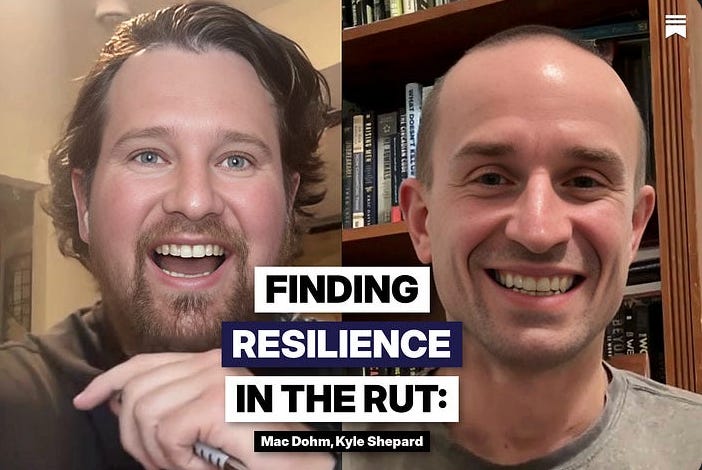
56. Finding Resilience in the Rut: How to Regain Traction When Life Feels Stuck
Description
Podcast Episode Notes
Finding Resilience in the RutHow to Regain Traction When Life Feels Stuck
Host: Mac Dohm Guest: Kyle Shepard
About Our Guest
Kyle Shepard is a U.S. Navy Stress Management and Resilience Instructor with over a decade of experience teaching mental performance, stress adaptation, and recovery under pressure. He also holds a Clinical Doctorate in Audiology, where his work focuses on hearing conservation, balance disorders, tinnitus, and the neurological overlap between stress and physical health.
Kyle is the author of the Resilient Mental State on Substack, where he explores practical resilience through philosophy, fitness, discipline, and grounded self-leadership. His work draws from military training, family life, and lived experience, with a strong emphasis on habits, perspective, and action.
To watch or listen to our previous podcast together, check out 45. How to Build & Maintain a Resilient Identity with Military Resilience and Fitness Instructor - Kyle Shepard.
Episode Overview
This conversation explores the experience of being stuck in life—not in crisis, but not moving forward either. Kyle and I unpack what a rut really is, why it becomes dangerous when left unaddressed, and how resilience is built through perspective, disciplined habits, and meaningful action.
Rather than offering motivational platitudes, this episode focuses on practical frameworks for regaining traction when life feels stalled, disoriented, or quietly off course.
Key Concepts and Takeaways
What a Rut Really Is
Kyle defines a rut as a prolonged, unproductive attitude. Not failure. Not weakness. But a sustained misalignment between how you are living and who you know you are meant to be.
Ruts can last a day, a season, or years if they go unexamined.
Ruts as Feedback, Not Failure
A rut is often a signal rather than a verdict. It points to neglected habits, unresolved stress, disrupted identity, or avoidance patterns that quietly compound over time.
When left unaddressed, ruts increase the likelihood of relapse—whether that relapse shows up as addiction, emotional outbursts, disengagement, or numbing behaviors.
Perspective Matters, But Action Is Required
Reframing your mindset is important, but it only goes so far. As discussed in the episode, you cannot think your way out of a rut.
A quote referenced from James Clear captures this well:
“Don’t ruminate. Activate.”
Reflection without movement turns into stagnation.
The Four Buckets of Health
Kyle frames resilience through four interconnected domains:
* Physical
* Mental
* Social
* Spiritual
When even one of these is neglected long enough, imbalance begins to form.
Ruts often reveal which bucket has been quietly ignored.
Delayed Gratification vs. Delayed Humiliation
The conversation highlights a powerful distinction between two paths.
Delayed gratification involves discomfort now with long-term payoff:
* Training
* Honesty
* Discipline
* Effort
Delayed humiliation offers comfort now with consequences later:
* Avoidance
* Numbing
* Addiction
* Rationalization
Ruts tend to deepen when the second path becomes habitual.
Why Environment Alone Won’t Fix the Problem
Changing