Episode Details
Back to Episodes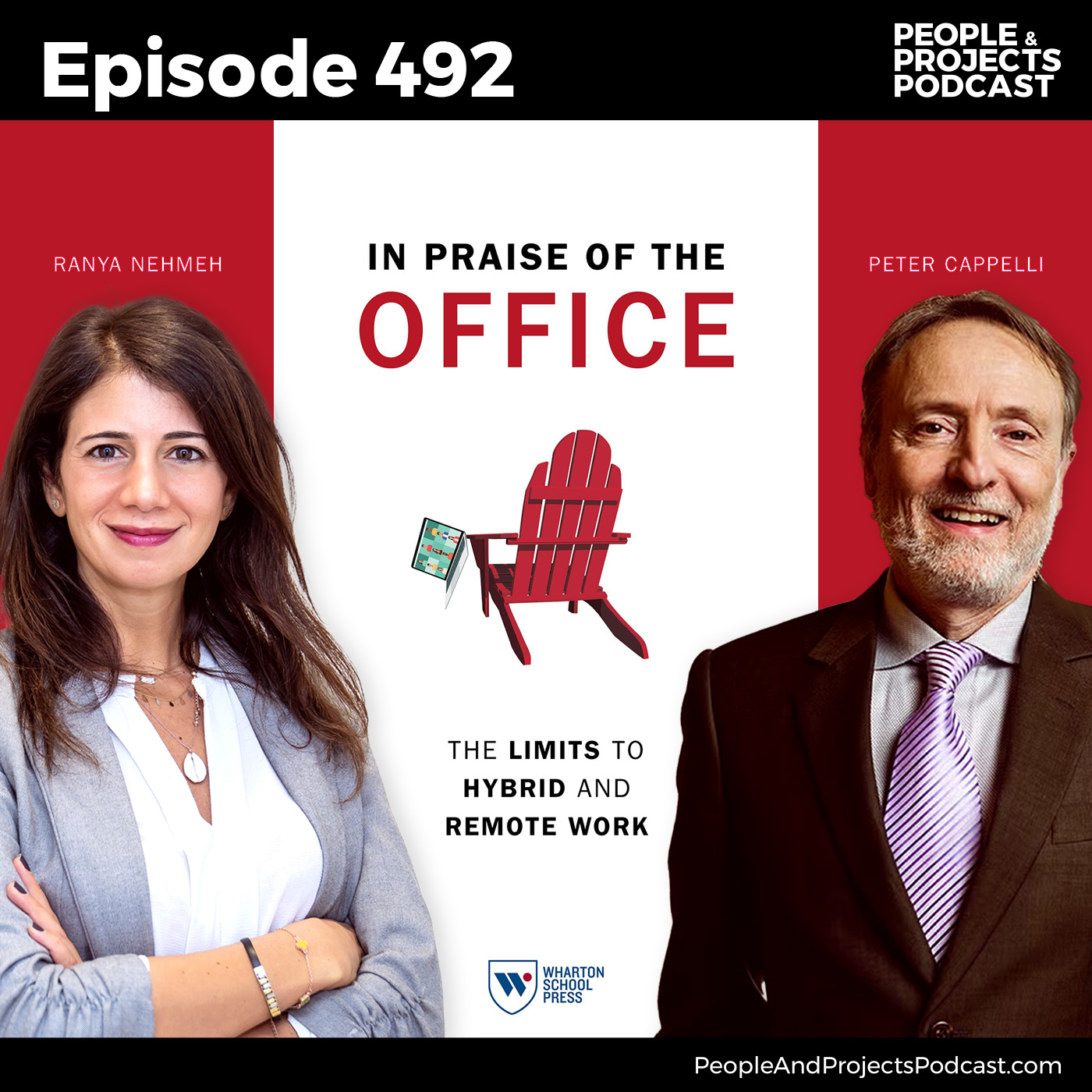
PPP 492 | The Hidden Costs of Hybrid Teams, with Peter Cappelli and Ranya Nehmeh
Description
In this episode, Andy talks with Peter Cappelli and Ranya Nehmeh, co-authors of In Praise of the Office: The Limits to Hybrid and Remote Work. In a world still grappling with virtual work, Peter and Ranya challenge us to take a fresh look at the workplace. Not just where we do work, but how that space shapes learning, culture, visibility, and performance.
In this conversation, you'll hear what gets lost when teams are always virtual, why hybrid work often underdelivers, and how proximity plays a surprising role in mentoring, innovation, and even career progression. Peter and Ranya explore how organizational culture shifts when people are rarely together, and what leaders can do to intentionally design experiences that rebuild connection—even across distance.
You'll walk away with insights on how to lead hybrid teams more effectively, how to help team members think differently about in-person time, and why space is not just a backdrop to work—it's a contributor to how work gets done. If you're leading a team in today's hybrid landscape and wondering what really matters, this episode is for you!
Sound Bites- "Remote work disembodies employees and limits their capacity to build relationships, learn informally, and get noticed."
- "The most frequent way people got promoted was by being visible to their managers."
- "Slack and Teams are a poor substitute for face-to-face interactions and a terrible way to learn culture or figure out who knows what."
- "Informal communication is essential to how work gets done, and it doesn't happen easily when everyone is remote."
- "Hybrid sounds great in theory, but it rarely delivers the benefits of in-person work unless it's intentionally designed."
- "People don't always know what they need to know, and much of what's important is learned indirectly."
- "We're not saying remote doesn't work. But we are saying there are trade-offs, and many companies haven't fully reckoned with them."
- "One big problem with hybrid is that it often ends up being asynchronous. No one's in at the same time."
- "The office was never perfect, but it enabled certain human processes that are hard to replicate at a distance."
- "If you're going to make remote or hybrid work well, it requires real investment in new systems and norms, not just wishful thinking."
- "We have to be honest about what we're losing, not just what we're gaining."
- "Serendipitous learning is one of the most underappreciated losses of remote work."
- 00:00 Introduction
- 01:38 Start of Interview
- 01:45 What Is There to Praise About Remote Work?
- 04:34 Why Is the Push to Return Happening Now?
- 09:51 What Do We Lose with Remote Work?
- 13:18 What Problems Persist in Hybrid Models?
- 17:40 What Are Companies Doing to Make Hybrid Work?
- 20:20 Advice for Leading Hybrid Project Teams
- 25:42 Advice for Individual Contributors Navigating Hybrid Work
- 29:59 How Culture Shapes Remote and Office Decisions
- 33:14 Lessons from Co-Writing the Book
- 35:59 End of Interview
- 36:32 Andy Comments After the Interview
- 40:15 Outtakes
You can learn more about Peter at mgmt.wharton.upenn.edu/profile/cappelli and about Ranya at RanyaNehmeh.com.
For more learning on this topic, check out:
- Episode 457 with Andrew Brodsky. It's an insightful take on how we can avoid the mistakes that happen when teams