Episode Details
Back to Episodes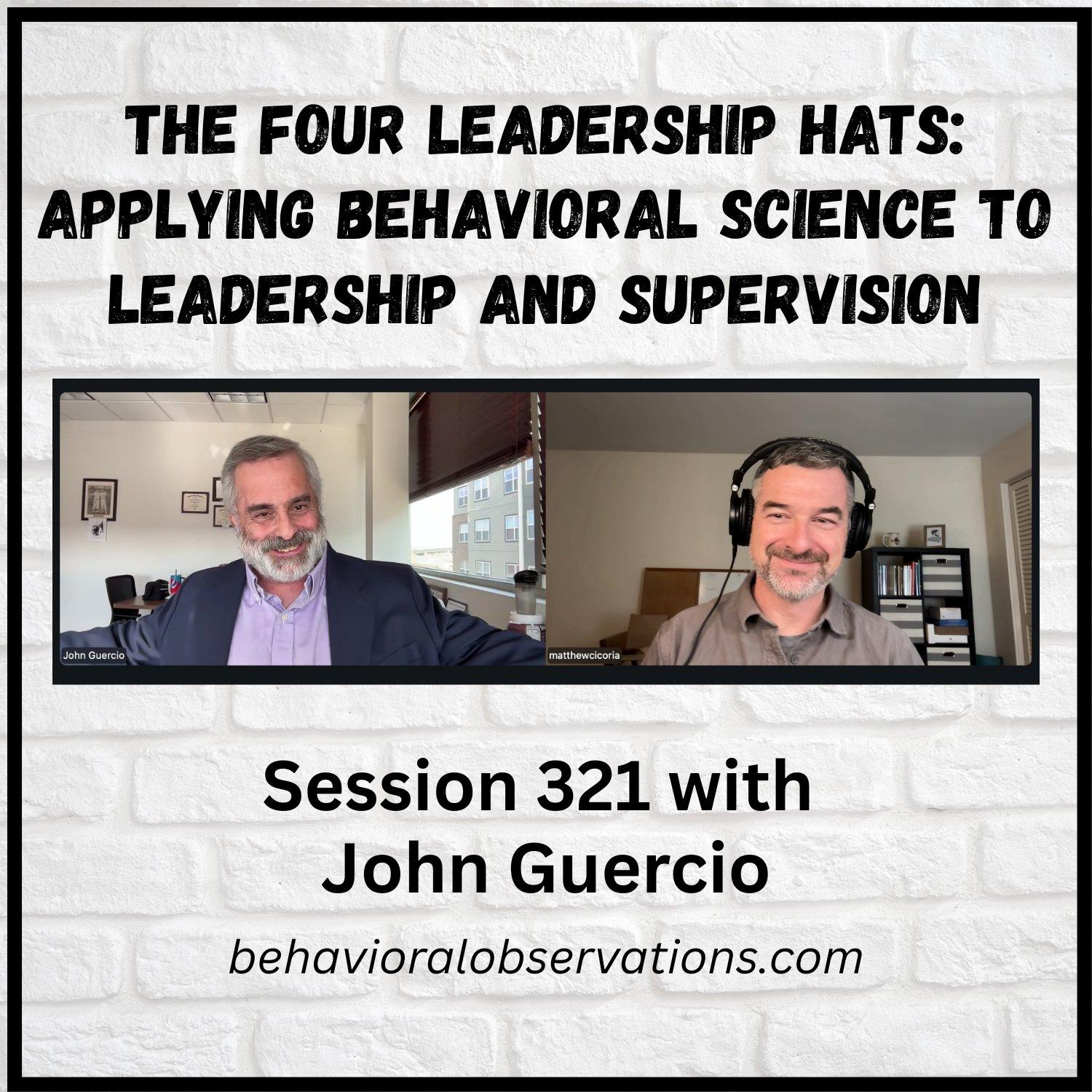
The Four Leadership Hats: Applying Behavioral Science to Leadership and Supervision — Session 321 with John Guercio
Description
In this episode, I'm joined by John Guercio for a wide-ranging and practical conversation about leadership through a behavioral lens. John and I dig into what it actually means to lead in applied behavior analysis, especially when so much of the existing leadership literature is vague, mentalistic, or disconnected from observable behavior.
We start by talking about the need to operationalize leadership in behavioral terms and explore the four leadership hats developed by Dr. Paulie Gavoni: leading, training, coaching, and managing. We break down what each of these roles looks like behaviorally, how they function across time, and why effective leaders need to move flexibly between them rather than relying on a single style.
A major theme of the episode is the role of positive reinforcement in leadership. John shares real-world examples from his OBM coursework and his work at Cornerstone Behavioral Services, highlighting how difficult—but necessary—it can be to shift away from punitive and avoidance-based management strategies. We discuss why punishment often "works" in the short term, why leaders continue to rely on it, and how reinforcement-based leadership creates better outcomes for both staff and organizations.
We also spend time unpacking the distinction between leadership and management. John reflects on his own strengths and limitations, describing how he focuses on vision and direction while intentionally surrounding himself with strong managers who excel at systems, logistics, and follow-through. This leads to a powerful discussion about positional authority, seniority, and the myth that leadership status entitles people to treat others poorly.
Throughout the episode, we return to the importance of psychological safety, consistent feedback, and emotional regulation in leadership roles. John shares practical strategies for navigating tough conversations, including how to balance empathy with accountability, how to manage staff expectations, and how to avoid letting emotion drive professional communication (including when not to send that email).
We also talk through concrete tools and exercises for improving leadership practice, such as symbolic problem-solving activities to surface unspoken team issues, written acknowledgment systems, and using assessment tools like the Performance Diagnostic Checklist to guide supervision and coaching. John closes by sharing future directions for developing empirically grounded management assessment tools, along with a preview of his upcoming work and conference presentations.
This is a practical, honest conversation for anyone supervising staff, leading teams, or trying to build reinforcing, values-consistent organizations in human services.
Resources & Links Mentioned in This Episode-
RBT Course for Adult Services (the 'bridge' course too!)
-
Sims and Szilagyi (1975). Leader reward behavior and subordinate satisfaction and performance
-
Stone Soup Conference Registration (use code PODCAST26 at checkout)
-
Carr and Wilder (2015). The Performance Diagnostic Checklist—Human Services
-
John's previous BOP appearances
Love PodBriefly?
If you like Podbriefly.com, please consider donating to support the ongoing development.
Support Us