Episode Details
Back to Episodes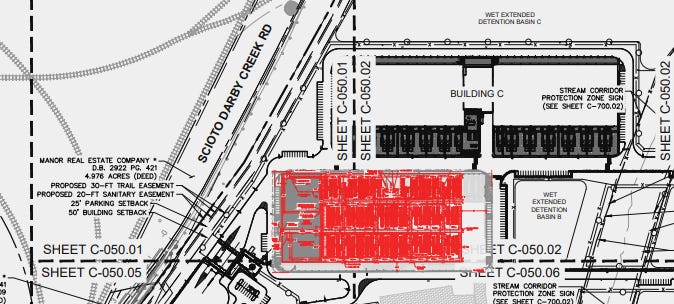
HBAC # 139: Community Advocate Annette Singh
Description
For our first fresh Audio Companion of the new year we featured an in-depth conversation with Annette Singh, a Hilliard resident who has emerged as a leading local advocate around the environmental and governance implications of Amazon’s expanding data center footprint on Scioto Darby Road. Singh described how a neighbor-to-neighbor conversation in October quickly escalated into sustained civic engagement, legal appeals, and coordination with city officials over air permits and on-site power generation plans.
Originally, residents understood the Amazon facility as a conventional grid-connected data center, but later learned that plans included extensive behind-the-meter power generation, including 228 natural gas fuel cells and a subsequent draft permit for diesel generators. Annette described the process as opaque and fast-moving, noting that “the deeper you dig, the less information is known,” with overlapping authority and initiative shared among Amazon, AEP, PJM, the Ohio EPA, and the Ohio Power Siting Board.
She emphasized that while she understands the need for data infrastructure, the addition of large-scale on-site generation fundamentally changes the nature and impact of the facility.
Singh also detailed her role in appealing the fuel cell air permit and monitoring the newer draft permit for diesel generators, which she said would be regulated under a Title V air permit. She described Title V as a significant threshold, stating that it applies when emissions are high enough that “the government needs [to] step in” and require ongoing monitoring.
Particular concern was raised about the lack of a clear (and potentially outdated) definition of “emergency use” for diesel generators and the absence of enforceable penalties if runtime limits are exceeded.
Citizen Advocacy, Public Hearings, and Technology Standards
During the interview, Singh outlined how a small working group of residents has divided research responsibilities, with her focus on EPA air quality standards and permitting frameworks. She confirmed that both she and the City of Hilliard are parties to the appeal of the fuel cell permit, while the diesel generator permit remains in draft form before the Ohio EPA.
Resources
Singh said the group has mailed letters requesting a public hearing on the diesel generator permit, explaining that such hearings are not automatic and must be explicitly requested by the public. She expressed concern that the generators proposed are Tier II technology, which she described as outdated, and questioned why Tier IV generator offering significantly reduced emissions were not required instead. “I think a win would be getting these to a tier four level,” she said, adding that such a change would benefit both the community and the company.
Ward-Based Representation and Ongoing Civic Engagement
Jordan (as usual ;-) turned to the broader question of how Hilliard residents can engage more consistently and effectively with city government as large-scale projects accelerate. The current ad hoc model (where residents organize rapidly around individual issues) is insufficient for a city now hosting multinational corporate developments. He called for “an ongoing