Episode Details
Back to Episodes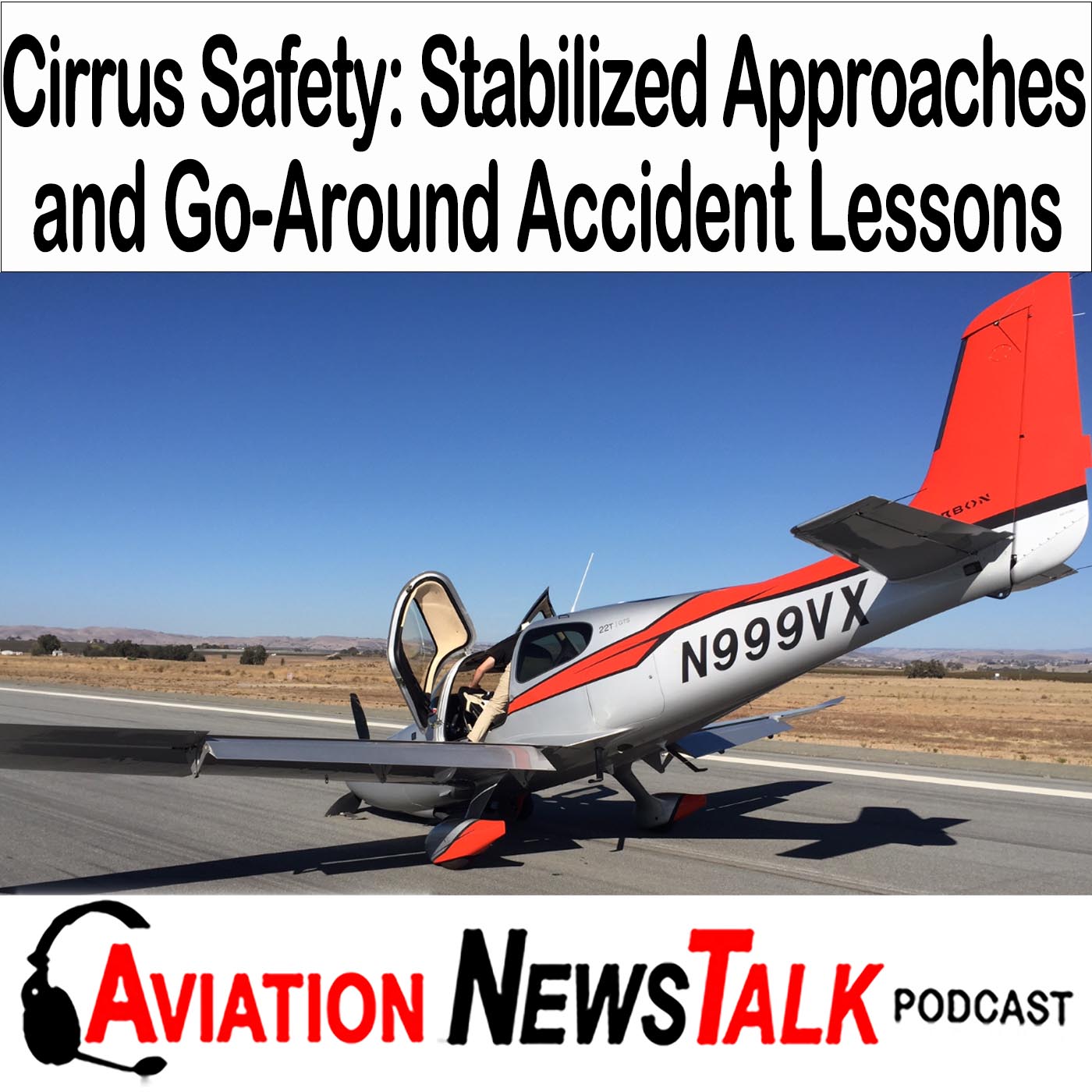
Cirrus SR22 Safety: Stabilized Approaches and Go-Around Accident Lessons
Description
Max talks with Mark Waddell of the Cirrus Owner and Pilots Association (COPA) about how Cirrus pilots can reduce accidents by focusing on the places where the accident chain most often begins: unstable approaches, indecisive go-arounds, and delayed choices during power-loss events. They discuss what pilots are doing in the cockpit that turns routine flights into incidents, and what specific habits and training standards reduce that risk.
Mark explains that 2025 included eight fatal Cirrus accidents and twelve CAPS saves. Mark argues that the big safety wins come from addressing repeatable patterns: how pilots manage energy on final, how quickly they reject a bad approach, and how early they commit to the safest outcome when the engine isn't reliable.
A major theme is decisiveness in abnormal situations, especially anything involving power. Mark walks through how power-loss or engine-roughness events can seduce pilots into flying a normal pattern and hoping things stabilize. That often burns altitude and distance in exchange for false comfort. The operational hazard is simple: the moment a pilot realizes the runway is no longer assured, they're already low, already out of options, and now forced into rushed decisions. Mark emphasizes that when the engine is uncertain, "normal" is the enemy. The airplane doesn't care that the pattern looked tidy; it only cares whether you end up with a survivable outcome.
This ties directly into CAPS decision-making. Mark's message is not "CAPS solves everything," but rather that pilots need an explicit decision framework that prevents them from negotiating with themselves while altitude evaporates. He discusses the idea of a CAPS hard deck—an altitude by which, if a pilot is not certain of a safe landing outcome, they commit to pulling the handle. The point of a hard deck isn't to remove judgment; it's to remove hesitation. If you wait until you're low, you've converted a controlled, survivable deployment into a desperate last-second attempt. In that sense, the hard deck is less about the parachute and more about training the pilot's brain to act early enough for any option to work.
From emergency decisions, the discussion moves to the most universal risk zone: landing and go-around. Mark notes that a large share of reportable events occur during landing or during an attempted go-around. That makes this phase-of-flight a high-leverage target for training, standards, and self-discipline. The trap is that approaches feel "fixable" until they suddenly aren't. Pilots often rationalize small deviations—slightly fast, slightly high, slightly untrimmed—because they believe they can correct it in the last few hundred feet. But each late correction is an energy trade, and those trades frequently end with excessive speed over the threshold, a flat touchdown, a bounce, or a rushed go-around.
They get specific about the "flat landing" pattern. Mark challenges a common cultural habit: equating "smooth" with "good." In many airplanes—and especially in a fast, slick airplane—chasing smoothness can encourage a flatter attitude and higher speed, which increases the chances of touching down on the nose gear or loading it too early. That can lead to nose-gear abuse, shimmy events, prop strikes, and expensive engine tear-downs.
Max reinforces the technique side: trimming matters. If pilots are muscling the airplane through configuration changes and final approach, they're behind the airplane before the flare even begins. A well-trimmed airplane is easier to slow, easier to pitch correctly, and easier to land in the right attitude without forcing it onto the runway.
Go-arounds get treated as a primary skill, not a backup plan. Mark describes why late go-arounds are especially dange